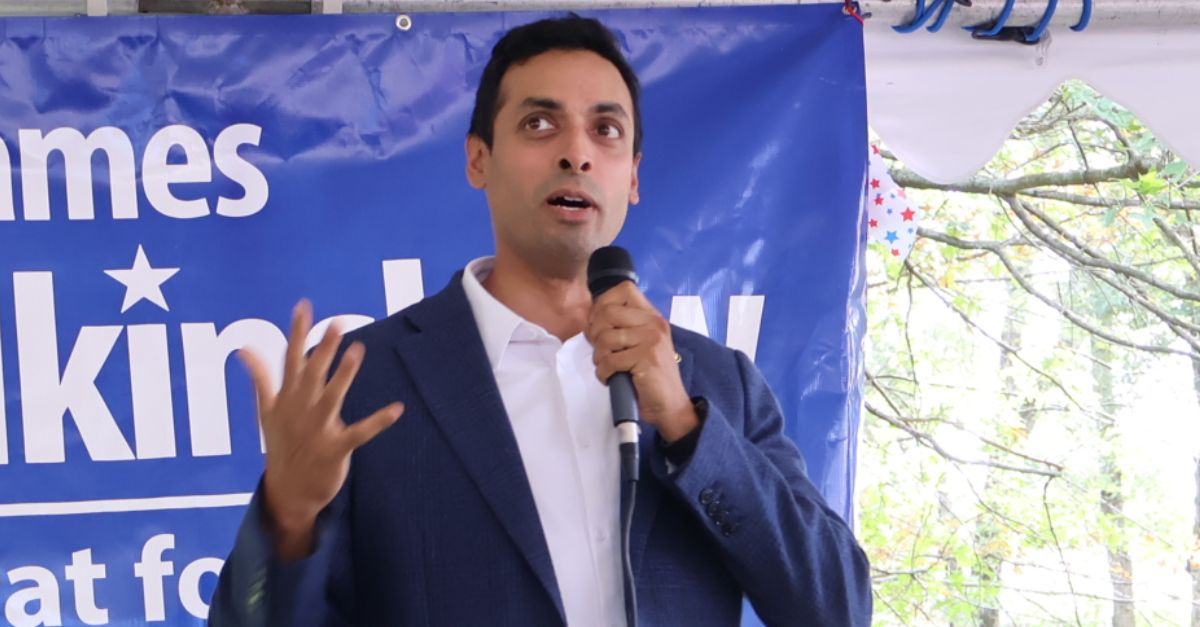
WASHINGTON (Diya TV) — Two bipartisan bills introduced by Indian American Congressman Suhas Subramanyam have cleared a key hurdle in the U.S. House of Representatives, moving one step closer to a full House vote. The legislation aims to strengthen federal supply chain security and modernize government technology purchasing. The measures advanced after winning bipartisan approval in the House Committee on Oversight and Government Reform, signaling broad support for reforms to federal acquisition systems that oversee more than $700 billion in annual government contract spending.
The bills include the Federal Acquisition Security Council Improvement Act and the Federal Improvement in Technology Procurement Act. Lawmakers are expected to take them up for a full House vote in the coming months. Subramanyam, a Democrat from Virginia, introduced both measures with Republican co-sponsors. Supporters say the bills reflect a growing consensus in Congress on the need to protect federal systems from foreign threats while improving government efficiency.
The Federal Acquisition Security Council Improvement Act, also known as H.R. 7274, was co-introduced with Rep. William Timmons, a Republican from South Carolina. The bill focuses on strengthening the Federal Acquisition Security Council, or FASC. The council plays a key role in identifying and reducing supply chain risks tied to federal procurement. Under the legislation, the council would move to the Executive Office of the President. The bill would also create a dedicated program office to support its work and expand its authority.
The measure seeks to improve how the federal government responds to risks linked to foreign adversaries. It would allow members of Congress to formally flag vendors or technologies they believe pose a threat. The council would then review those concerns. Subramanyam said protecting federal systems should not divide lawmakers.
“Protecting federal information technology systems from foreign adversary influence shouldn’t be a partisan issue,” he said. “This bill ensures we are not spending taxpayer dollars on technology or vendors tied to foreign adversaries who could compromise our systems.”
He added that the measure takes a practical approach to reducing risks across federal agencies.
The second measure, the Federal Improvement in Technology Procurement Act, or H.R. 4123, was introduced with Rep. Eric Burlison, a Republican from Missouri. This bill targets outdated federal purchasing rules. It raises micro-purchase and simplified acquisition thresholds, which set limits on how agencies buy goods and services.
Supporters say current thresholds no longer reflect modern costs. As a result, agencies often face delays and higher expenses. The bill aims to speed up government purchases, reduce red tape, and lower costs. It also seeks to expand access for small businesses competing for federal technology contracts.
“The FIT Procurement Act delivers on our goal of improving government efficiency and modernizing federal systems,” Subramanyam said. “It raises the micro-purchase and simplified acquisition thresholds, which will allow federal agencies to move faster and not be delayed by outdated cost assumptions.”
He said the changes would save money while helping small firms grow.
The committee’s vote comes as Congress increases scrutiny of the federal acquisition system. The system governs how agencies buy everything from software to defense equipment. The Office of Federal Procurement Policy and the Federal Acquisition Regulation guide this process. Together, they shape one of the largest procurement systems in the world.
Lawmakers from both parties have called for reforms that balance speed with security. Concerns have grown over efforts by foreign adversaries to exploit weaknesses in federal technology procurement. Experts warn that supply chain vulnerabilities can expose sensitive data and critical systems. Congress has responded with a series of bipartisan measures aimed at closing those gaps.
With committee approval secured, both bills now head to the House floor. Lawmakers are expected to debate the measures later this year. If passed by the House, the bills would move to the Senate for consideration. Supporters remain optimistic, citing strong bipartisan backing.