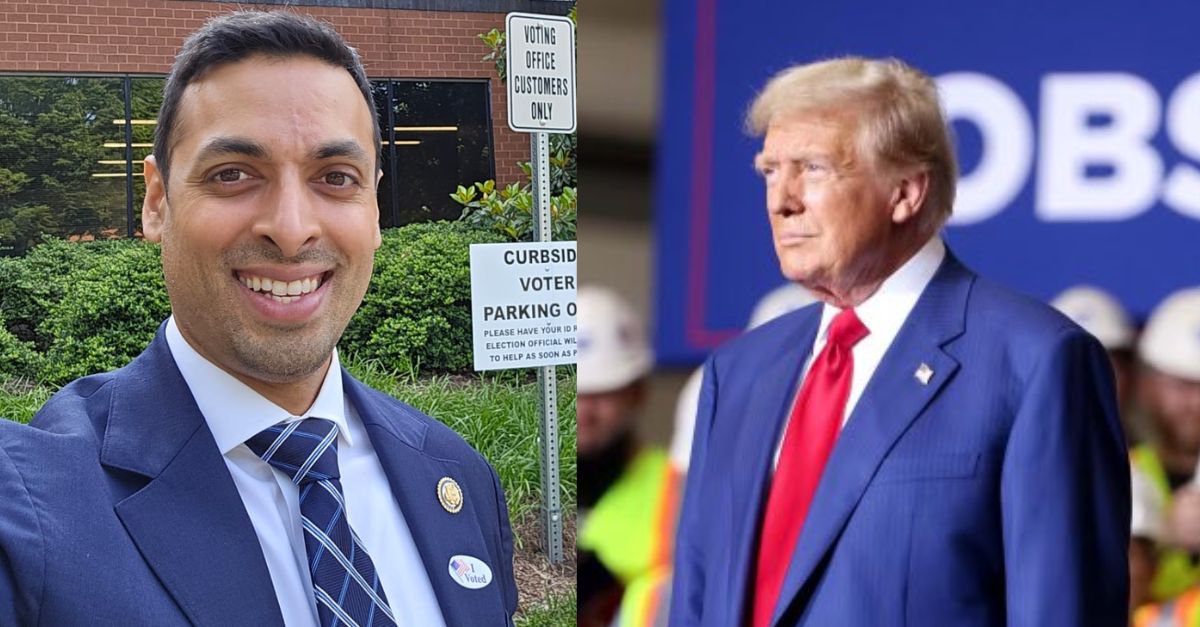
WASHINGTON (Diya TV) — Indian American Congressman Suhas Subramanyam sharply criticized President Donald Trump, saying the administration has badly damaged the U.S.-India relationship at a time when closer ties are vital for both economic growth and regional security. In an interview with IANS, Subramanyam said the downturn marks a major shift from Trump’s first term, when Washington and New Delhi worked closely and publicly highlighted their partnership.
“In the end, the Trump administration has completely messed up the U.S.-India relationship,” Subramanyam said. He noted that Trump once strengthened ties with Indian Prime Minister Narendra Modi but has since reversed course.
Subramanyam said personal differences and policy choices now appear to be driving decisions. He warned that damaged relations hurt both nations and weaken long-term cooperation. The lawmaker said India remains one of America’s most important partners. He stressed that strained ties reduce U.S. influence across Asia and the Indo-Pacific region.
Subramanyam pointed to tariffs imposed by the Trump administration as a major source of friction. He said harsh trade rhetoric and higher duties have slowed progress in economic cooperation.
“It’s difficult when you have these tariffs really hurting the economic relationship,” he said.
He argued that India stands as a natural partner as global companies look to reduce dependence on China. Stronger trade ties could boost manufacturing, technology, and supply chains in both countries. Analysts agree that India plays a key role in reshaping global commerce. Many see closer India-U.S. economic ties as central to long-term growth and stability.
Subramanyam also highlighted defense and security cooperation. He said India is a natural strategic ally as Washington seeks to counter China’s growing influence.
“I’d like to see more strategic defense partnerships,” he said. He also called for deeper cooperation in technology and innovation.
According to the National Defense Authorization Act, India and the United States have expanded defense and people-to-people ties over the past two decades. The law reflects strong bipartisan support in both capitals. A recent Congressional Research Service report described the partnership as essential to balancing China’s rise in Asia.
Beyond India, Subramanyam said U.S. foreign policy has suffered under the Trump administration. He said promises to end wars and strengthen alliances have not been met.
“This was a Trump administration that came in saying they were going to end all wars,” he said. “And it’s been the opposite.”
He added that tariffs and strained alliances have eroded trust among longtime partners. Critics of U.S. policy argue that Congress shares blame for America’s challenges. Some say lawmakers fail to control spending and push aid tied to personal or political interests. Others argue that U.S. foreign policy often turns transactional, with alliances shifting when interests change.
Historical grievances also shape Indian views of Washington. Critics recall U.S. actions during the 1971 India-Pakistan war and earlier policy choices that hurt India during times of crisis. Such memories fuel skepticism about U.S. intentions, especially when Washington appears to pressure India to align against China.
Debates over alliances extend beyond South Asia. Some analysts argue that NATO benefits Europe and Canada more than the United States. They say European nations should shoulder more of the cost of their own security. Others claim Washington should seek stable relations with Russia to reduce global tensions.
These views remain controversial but reflect broader doubts about U.S. global strategy. Despite tensions, Subramanyam said Congress still supports stronger India-U.S. ties. He said lawmakers must work to rebuild relationships damaged over the past year.
“We have to change the tide here,” he said, “including with India.”