
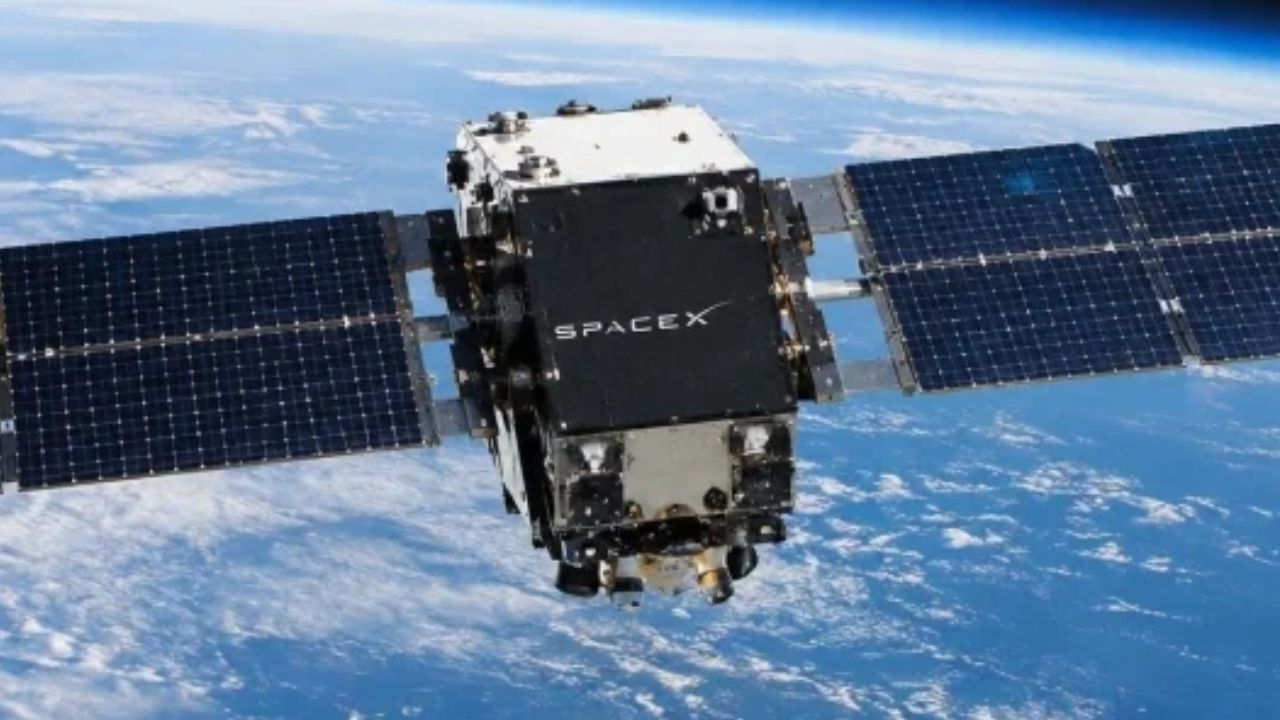
WASHINGTON (Diya TV) — The Federal Communications Commission has authorized SpaceX to deploy up to 1 million satellites for Starmind, a proposed network of orbital data centers. The authorization sets a path for the project but does not mean SpaceX can launch the entire constellation immediately: the company must meet staged deadlines and satisfy additional safety requirements.
The FCC Space Bureau issued its order Nov. 25, granting part of SpaceX’s application and deferring other requests. The satellites would operate in six orbital bands between 500 and 1,002 kilometers above Earth. SpaceX plans to process computing workloads in orbit and send data to Earth through laser links connected to its Starlink network. Its first-generation satellite design uses computing hardware built around Nvidia’s Vera Rubin system.
The FCC set four deployment milestones. SpaceX must place one operational satellite in orbit by Nov. 25, 2033; deploy 100,000 by November 2035; reach 500,000 by November 2038; and complete the authorized constellation by November 2040. The license will become void if the company misses those deadlines. The order authorizes a maximum of 1 million satellites; it does not require SpaceX to launch that many at once.
SpaceX says orbit could give the satellites steady access to solar power and reduce dependence on the electricity, land and cooling systems used by ground-based data centers. But running powerful computers in space presents a separate engineering problem: satellites must release the heat their processors generate in a vacuum, where air cannot carry heat away. The American Astronomical Society warned that the constellation’s heat could affect infrared astronomy. SpaceX has not yet demonstrated Starmind computing in orbit, and its public filings describe orbital AI computing as unproven and potentially uncommercial.
The FCC imposed a key debris safeguard. It found SpaceX’s current plan meets agency rules for satellites operating below 600 kilometers. Before deploying any Starmind satellite above that altitude, SpaceX must submit a final debris-mitigation plan and seek a license modification. The FCC also deferred the company’s request to dispose of retired satellites through routes other than atmospheric reentry until SpaceX provides more information.
The American Astronomical Society, Amazon’s Kuiper Systems and satellite operator Viasat had urged the FCC to reject the application. Astronomers warned that Starmind’s larger, brighter satellites and higher orbits could interfere with optical and infrared observations and make satellites visible in the night sky for longer periods. They also cited possible radio interference, atmospheric effects from launches and reentries, and collision risks in an already crowded orbit.
The FCC rejected those petitions. It said SpaceX’s commitment to coordinate with the National Science Foundation addressed concerns about optical astronomy and declined to impose further conditions. The agency also said broader environmental effects fell outside its review, citing its position that the Federal Aviation Administration handles environmental reviews of rocket launches.
SpaceX’s deployment plan relies on Starship’s ability to carry large payloads at lower cost. On its Nov. 13 test flight, Starship deployed 26 Starlink satellites, then returned to Earth and was caught by the launch tower. The Super Heavy booster failed to reach its planned catch and splashed down in the Gulf of Mexico. The flight demonstrated progress in recovering Starship’s upper stage, but it did not test a Starmind satellite or prove the economics of launching a million orbital data centers.