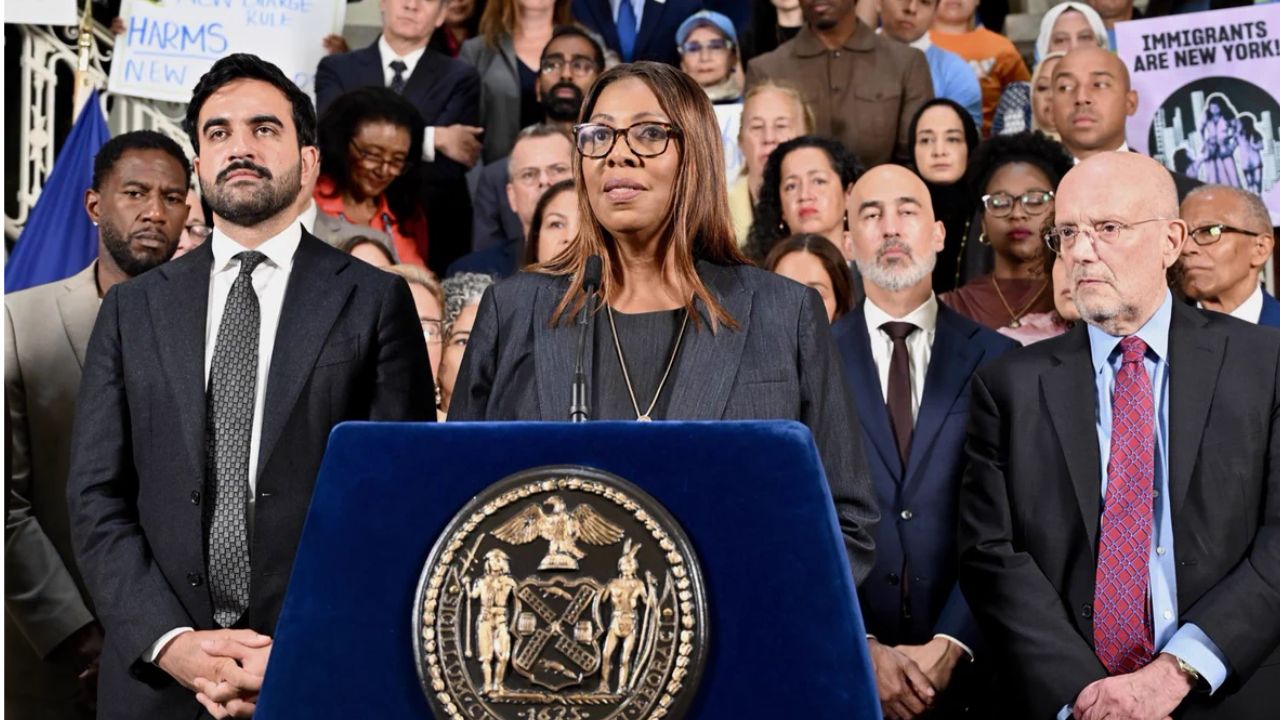
NEW YORK (Diya TV) — New York and 21 other states, along with the District of Columbia, sued the Trump administration Monday to block a new immigration rule that expands the public benefits immigration officials may consider when deciding whether some noncitizens are likely to become a “public charge.”
The Department of Homeland Security plans to implement the rule Sept. 18. It will apply to applications for admission filed on or after that date and applications for permanent resident status submitted on or after Sept. 18.
Under the rule, immigration officers may consider an applicant’s use of means-tested benefits, including Medicaid, food assistance and housing benefits, when evaluating the applicant’s overall circumstances. DHS said it will not limit officials to a fixed list of means-tested benefits.
The policy rescinds a 2022 Biden administration rule that generally limited public charge considerations to cash assistance for income maintenance and long-term institutional care at government expense.
New York, California and Illinois are leading the lawsuit in federal court in Manhattan. The states argue that DHS exceeded its statutory authority and violated the Administrative Procedure Act by expanding how immigration officials apply the public charge provision.
New York City, Chicago, San Francisco, Seattle and other local governments filed a separate lawsuit challenging the same rule.
The states argue that the policy could discourage eligible immigrants and their families from using public benefits. DHS acknowledged in the final rule that some people could leave or avoid programs such as Medicaid, CHIP, food assistance and housing assistance.
DHS estimates that those changes could reduce annual state Medicaid and CHIP transfer payments by about $4.05 billion.
A DHS spokesperson defended the rule, saying the administration wants immigrants subject to the public charge provision to support themselves without primarily relying on government assistance.
The plaintiffs are asking the U.S. District Court for the Southern District of New York to block the rule before it takes effect.