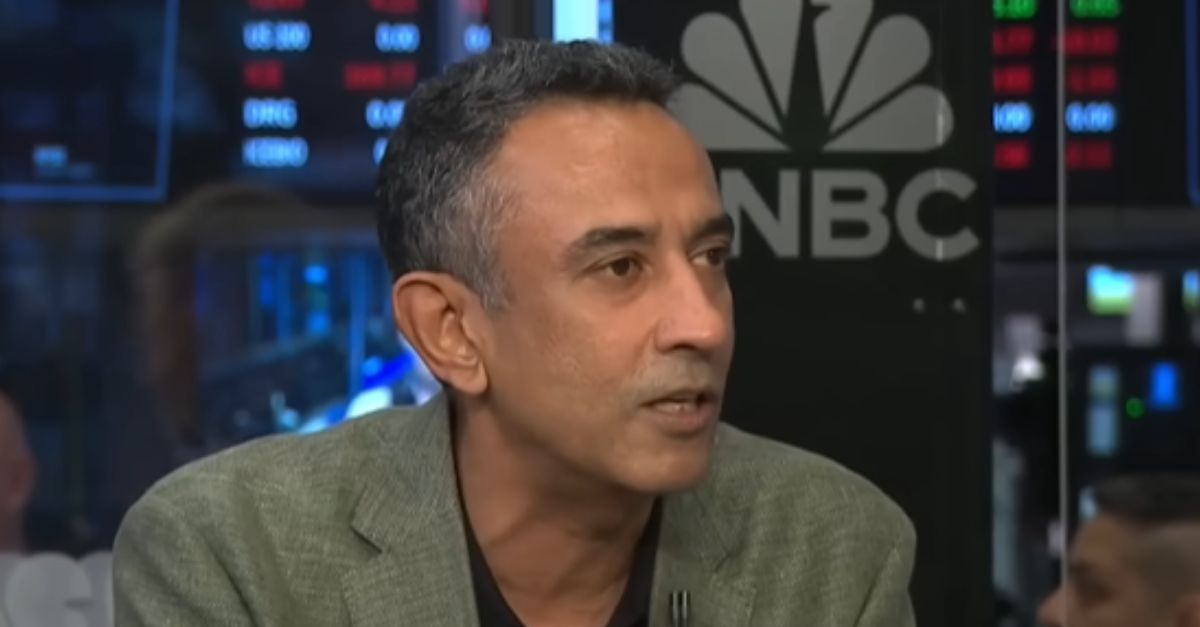
BELLEVUE, Wash. (Diya TV) — T-Mobile US has named Srinivasan “Srini” Gopalan, its chief operating officer and longtime Deutsche Telekom executive, as its next chief executive officer. The company announced Gopalan will take over on Nov. 1 from Mike Sievert, marking a major leadership transition as the carrier seeks to defend its 5G lead in a highly competitive U.S. wireless market.
Gopalan, 53, has spent decades in global telecom and finance. He has held senior positions at Bharti Airtel, Capital One, and Vodafone. Most recently, he led Deutsche Telekom’s Germany business, where he was credited with doubling growth rates and expanding its fiber network.
As COO at T-Mobile, Gopalan oversaw daily operations and customer growth strategies. Analysts say his international background and operational focus make him well-suited to continue T-Mobile’s momentum in the U.S.
Craig Moffett, an analyst at MoffettNathanson, said the company managed the transition “exceptionally well” and added that he does not expect “any fall-off at all in T-Mobile’s performance.”
The leadership shift comes as wireless carriers face slowing subscriber growth, tougher competition, and more cost-conscious consumers. Many Americans have grown hesitant to pay for expensive mobile plans, forcing companies to sharpen promotions and customer perks.
T-Mobile has leaned on aggressive discounts, streaming bundles, and exclusive offers to attract and retain subscribers. Those tactics, along with its 2020 merger with Sprint, helped the company surpass AT&T in total subscribers. It now stands as the nation’s second-largest wireless carrier behind Verizon.
The $26 billion Sprint merger reshaped the U.S. telecom industry, creating a dominant “big three” of Verizon, AT&T, and T-Mobile. While the deal drew antitrust scrutiny, it gave T-Mobile a massive boost in customers, spectrum, and scale.
Looking ahead, Gopalan told Reuters that T-Mobile does not plan major acquisitions in the near term. Instead, the company will prioritize investment in wireless spectrum and fiber infrastructure. That strategy reflects broader industry trends, as carriers race to improve network quality and prepare for future demand in mobile data.
Fiber expansion is also key to T-Mobile’s growing home internet business, which it markets as an alternative to traditional cable and DSL providers. The company has pushed its 5G Home Internet service nationwide, tapping into rising demand for affordable broadband.
Sievert, who became CEO in April 2020, will move into a newly created role as vice chairman. In that position, he will advise on long-term strategy, innovation, and talent development.
Under his leadership, T-Mobile cemented itself as the industry’s fastest-growing carrier. It expanded its 5G network, strengthened its prepaid offerings, and outperformed AT&T and Verizon in share price growth. Sievert guided the company through the Sprint integration while maintaining customer satisfaction.
“T-Mobile’s shares outpaced both AT&T and Verizon during Sievert’s time as CEO,” the company said in its announcement.
T-Mobile continues to highlight its 5G coverage as the widest in the country. It has marketed that advantage aggressively, positioning itself as the network leader in speed and availability. The company also leans on customer-friendly perks, such as bundled streaming subscriptions and in-flight Wi-Fi, to distinguish itself from rivals.
Industry experts say the next challenge is maintaining growth as the U.S. wireless market nears saturation. With fewer first-time mobile customers, carriers must compete by luring users away from rivals and expanding into home broadband.