SEOUL, South Korea (Diya TV) — More than 300 South Korean workers returned home Friday after a week-long detention in the United States, setting off a storm of anger in Seoul and raising questions about trust between the two allies.
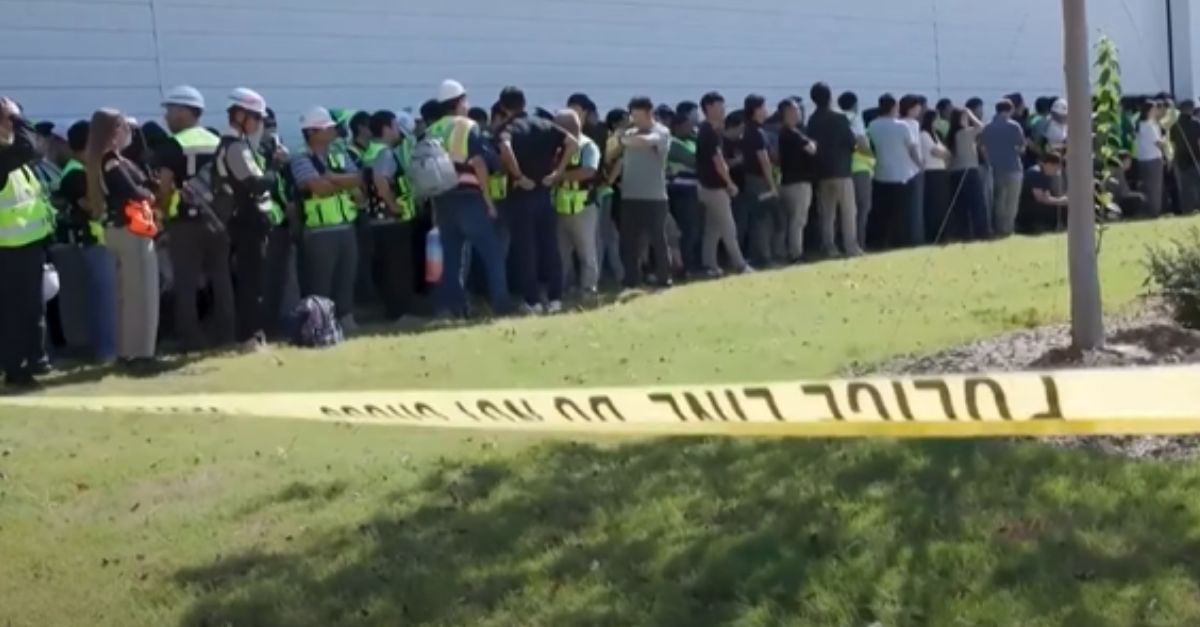
The workers arrived at Incheon International Airport on a chartered Korean Air flight shortly after 3 p.m. local time. They had been held since Sept. 4 following a massive raid by U.S. Immigration and Customs Enforcement agents at a Hyundai-LG battery plant construction site in Georgia.
South Korea’s government and public reacted with shock and fury at the treatment of its citizens. Many said the U.S. had humiliated a key ally at a time when both nations rely on each other for economic and security cooperation.
The 316 Koreans, along with 14 other foreign workers, stepped off the flight wearing masks and carrying only small bags. Their weary faces showed relief but also exhaustion from an ordeal that lasted more than a week.
Reporters kept their distance after the workers asked for privacy. Small groups boarded waiting buses in silence, avoiding cameras and questions.
At the airport, Kang Hoon-sik, the presidential chief of staff, greeted the workers. “We did our best, but I’m sorry we couldn’t bring them back to their homeland sooner,” Kang said. He added that relations with Washington now require constant negotiation. “We’re in an age of new normal in dealing with the United States,” he said.
The group had been building a $4.3 billion battery plant. The facility is central to Hyundai’s electric vehicle expansion in the U.S. and a major project for LG Energy Solution and its subcontractors.
ICE said the workers used business visas or the 90-day visa waiver program for employment. Those visas allow for meetings or training, not hands-on work. Korean companies have long relied on this “grey zone” because the official H-1B visas are slow to obtain. Other U.S. trade partners have dedicated quotas, but South Korea does not.
Past administrations often overlooked the practice. This time, ICE agents carried out the largest single-site raid in its history. The video showed workers led away in chains, sparking outrage in Seoul.
President Lee Jae Myung gave his strongest warning yet to Washington on Thursday. He said Korean firms may hesitate to invest further in the U.S. unless visa rules are resolved. “This isn’t long-term permanent employment,” Lee said. “We need technicians to install machinery and equipment. The U.S. doesn’t have such personnel, and they won’t give visas for our workers to stay and work.”
The dispute delayed the workers’ departure from Georgia by a day. Former President Donald Trump offered to let them stay and train Americans, but only one worker accepted.
South Korea’s foreign minister, Cho Hyun, rushed to Washington to meet Secretary of State Marco Rubio. He secured assurances that workers would not be restrained while being transported back to Seoul.
The raid and detentions triggered rare anger across South Korea’s political spectrum. A survey by broadcaster MBC found 68% of respondents believed the U.S. failed to show respect to its ally.
Newspapers published harsh editorials. Seoul Economic Daily described the workers as being treated like “prisoners of war.” The conservative Chosun Ilbo called the raid a “merciless arrest operation” and a “breach of trust.” The progressive Hankyoreh asked: “Is this what you do to an ally?”
Outside the airport, protesters expressed the same rage. “Trump, who do you think you are?” shouted 75-year-old Hong Jung-sik, who called the episode a “national humiliation” and “evil behavior.”
The battery plant at the center of the dispute remains vital to both Hyundai and LG. Yet the raid has shaken confidence among Korean businesses that once saw the U.S. as a safe investment destination.
The episode underscores how visa rules, trade policies, and labor practices can quickly escalate into diplomatic crises. For many in South Korea, the sight of their citizens led away in chains will not be forgotten soon.