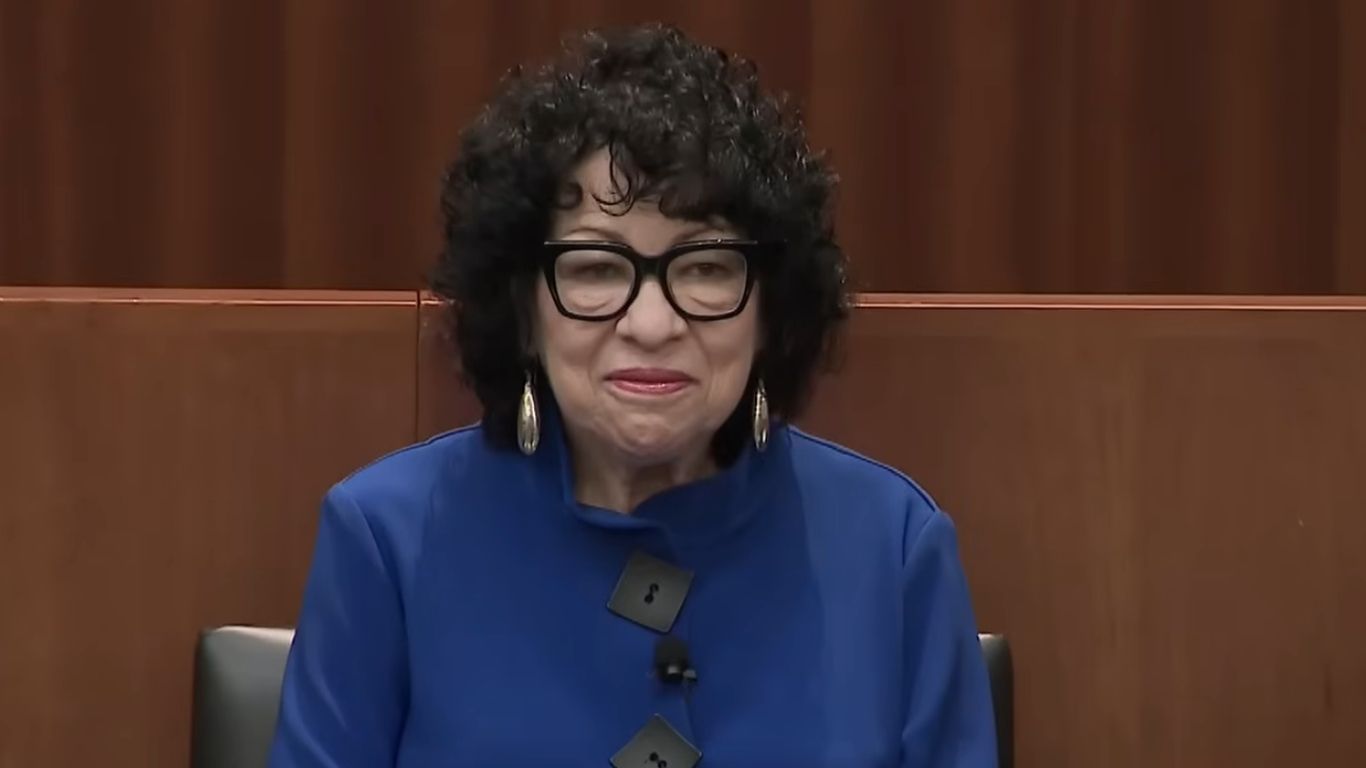
WASHINGTON (Diya TV) — Sonia Sotomayor issued a rare public apology this week after criticizing fellow Justice Brett Kavanaugh over his opinion in a recent immigration case. The unusual move drew attention to tensions inside the Supreme Court, where justices often disagree sharply but rarely make personal remarks in public.
Sotomayor said her comments, made during a recent appearance at the University of Kansas School of Law, crossed a line. She acknowledged that her words were unfair and expressed regret.
“At a recent appearance, I referred to a disagreement with one of my colleagues in a prior case, but I made remarks that were inappropriate,” Sotomayor said in a statement. “I regret my hurtful comments. I have apologized to my colleague.”
Her apology came days after she criticized Kavanaugh’s concurring opinion in a high-profile immigration ruling. The case focused on immigration enforcement tactics used by federal agents.
Public disagreements between Supreme Court justices are common in written opinions. Justices often challenge each other’s reasoning in dissents or concurring opinions. However, direct and personal criticism outside official rulings is rare. That is why Sotomayor’s remarks stood out. She questioned Kavanaugh’s perspective during her speech in Kansas.
“I had a colleague in that case who wrote, you know, these are only temporary stops,” she said, according to reports. “This is from a man whose parents were professionals and probably doesn’t really know any person who works by the hour.”
Her comment appeared to criticize Kavanaugh’s background and understanding of how immigration enforcement affects working-class people.
The controversy stems from a Supreme Court decision earlier this year involving immigration enforcement practices. The court allowed federal agents to continue certain “roving patrols” in Southern California.
Critics argue these patrols may violate constitutional protections against unreasonable searches. Lower courts had previously raised concerns about the practice under the Fourth Amendment. The Supreme Court’s majority did not explain its decision. However, Kavanaugh wrote a concurring opinion to outline his reasoning.
He argued that immigration officers can rely on a combination of factors to justify brief stops. These factors may include a person’s location, language, or other observations. Kavanaugh emphasized that ethnicity alone cannot justify a stop. Still, he said it can be considered as one factor among others.
“Reasonable suspicion means only that immigration officers may briefly stop the individual and inquire about immigration status,” he wrote.
Kavanaugh’s opinion sparked strong reactions from civil rights groups and immigration advocates. Many argue that the standard he described could lead to racial profiling. Some advocacy groups have labeled these encounters “Kavanaugh stops.” They claim the stops often last longer and feel more intrusive than described in the opinion.
Supporters of the ruling argue that law enforcement needs flexibility to address immigration violations. They say the standard follows existing legal precedent. The case reflects broader national debates over immigration policy and enforcement. It also highlights deep ideological divides within the court.
Despite sharp legal disagreements, Supreme Court justices often emphasize respect and collegiality. They frequently note that personal relationships remain strong even when opinions differ. Sotomayor herself has spoken in the past about the importance of maintaining mutual respect on the bench. Her recent remarks, therefore, surprised many legal observers.
Kavanaugh has not publicly responded to Sotomayor’s comments or her apology.