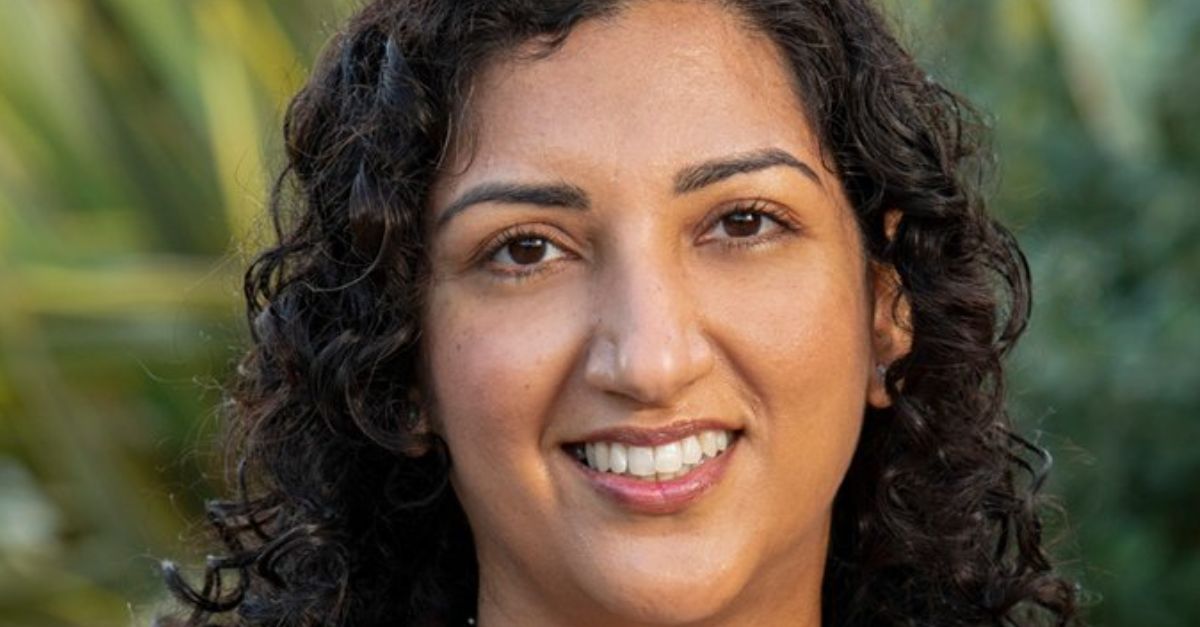
PALO ALTO, Calif. (Diya TV) — Indian American surgeon and Stanford University professor Shipra Arya has received a $300,000 grant from the American Heart Association to advance care for patients with peripheral artery disease. The award will fund a three-year project aimed at improving diagnosis and treatment using artificial intelligence.
Arya, who also serves as section chief of vascular surgery at the VA Palo Alto Healthcare System, will develop an automated tool to detect and measure calcium deposits in the arteries of the legs. The technology, known as the Peripheral Artery Calcium Score, or PACS, could transform how doctors assess risk and plan treatment for patients with peripheral artery disease, commonly called PAD.
Peripheral artery disease affects
millions of people worldwide. It occurs when arteries in the legs and lower extremities narrow due to plaque buildup. PAD can lead to pain, mobility issues, and in severe cases, limb amputation. Early diagnosis and proper risk assessment are critical for preventing serious complications.
Arya’s project will use deep learning, a form of artificial intelligence, to automatically calculate PACS from lower extremity CT scans. Researchers will then compare these results with current diagnostic methods, such as the ankle-brachial index and toe-brachial index. The team will also examine how well PACS predicts outcomes like mortality, amputation, and major limb events.
“This project is the first step toward integrating automated PACS into diagnosis, risk stratification, and treatment for PAD—similar to how coronary artery calcium scoring has transformed the care of coronary artery disease,” Arya said.
Arya’s research team brings together experts from multiple fields. Biomedical data scientist Akshay Chaudhari will help design and train the deep learning models. Cardiologist Fatima Rodriguez will focus on linking PACS results to patient outcomes. Research manager Jillian Melbourne and medical student Benjamin Liu will support data collection and analysis.
Together, the team aims to create a tool that eliminates the need for manual or semi-automated measurements. The goal is to make PAD diagnosis faster, more accurate, and easier to integrate into routine clinical care.
Arya earned her medical degree from the All India Institute of Medical Sciences. She completed advanced training at Harvard, Creighton University, and the University of Michigan. She has led multiple national research projects focused on surgical quality improvement and patient-centered care.
She currently heads the VA-funded PAUSE trial, which studies outcomes for vascular surgery patients. Arya also serves as president of the Surgical Outcomes Club, an organization dedicated to improving surgical care and patient safety.
Peripheral artery disease often goes undiagnosed until serious complications occur. By automating calcium scoring, Arya’s team hopes to provide doctors with a reliable, easy-to-use tool for early detection. If successful, PACS could guide treatment decisions and improve patient outcomes nationwide.
The project will run from July 2025 through June 2028. During this period, researchers will refine the PACS system and test its accuracy in predicting critical outcomes. The use of artificial intelligence in PAD diagnosis could mark a major shift in how doctors approach vascular health.
Arya’s work reflects a broader trend in medicine: using technology to streamline care, reduce errors, and personalize treatment. By applying AI to vascular imaging, this project could set a new standard for PAD management and improve the quality of life for thousands of patients.