
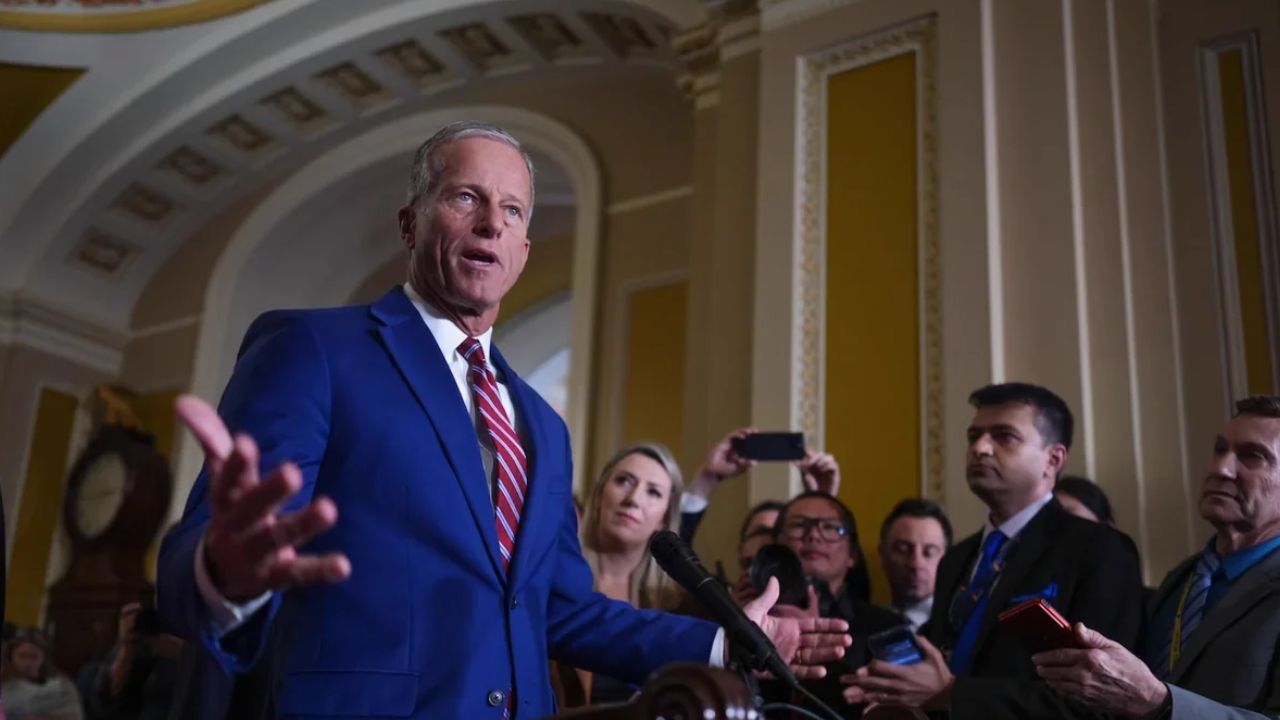
WASHINGTON (Diya TV) — Senate Republicans are delaying a party-line push for $350 billion in Pentagon funding while they test whether Democrats will support a bipartisan deal. The pause reflects two pressures: the Pentagon’s request to replenish weapons and munitions strained by the Iran war, and Republicans’ concerns about voter backlash and adding to the federal debt.
Majority Leader John Thune said Wednesday that Republicans should first see whether Democrats are willing to negotiate. “We ought to at least explore that possibility,” he said. Thune has not ruled out reconciliation, which would let Republicans pass a budget bill with a simple majority. Deputy Defense Secretary Steve Feinberg met with GOP senators Wednesday to explain the Pentagon’s request and argue for the funds.
The $350 billion is mandatory funding in the administration’s $1.45 trillion fiscal 2027 defense request, which also includes $1.1 trillion in discretionary spending. The Pentagon says the money would cover systems such as F-35 fighter jets and precision missiles, along with munitions and other equipment strained by the Iran war.
Republicans hold 53 Senate seats and could lose three votes on a party-line measure if all senators vote and Vice President JD Vance breaks a tie. But the conference has not agreed on either the package or how to pay for it. Sen. Rand Paul of Kentucky opposes a bill that increases borrowing, warning that voters were concerned about gas prices and the war. Sen. John Boozman of Arkansas supports funding, arguing that lawmakers must provide troops with needed resources.
Senate Appropriations Chair Susan Collins of Maine favors the regular bipartisan spending process. House Budget Chair Jodey Arrington of Texas supports more defense money but wants offsets, including savings from efforts to combat fraud.
Democrats have opposed Trump’s request because the money could fund military operations in Iran. They are pressing for a short-term government funding bill to avoid a December shutdown and defer major spending decisions until they take control of Congress in January. That leaves negotiations over the defense package tied to the broader fight over federal funding.
The Senate’s timing adds pressure. Republican Sen. Jon Husted’s appointment to represent Ohio ends Dec. 15. Democrat Sherrod Brown won the special election for the seat, though Ohio’s certification process will determine when he takes office.
Republicans tried to advance a third reconciliation package before the midterm recess, pairing Pentagon funding with farmer assistance, but internal opposition stalled it. Reconciliation offers a route around the Senate’s 60-vote threshold; it does not guarantee passage. GOP leaders still need to unite their caucus and resolve the cost.