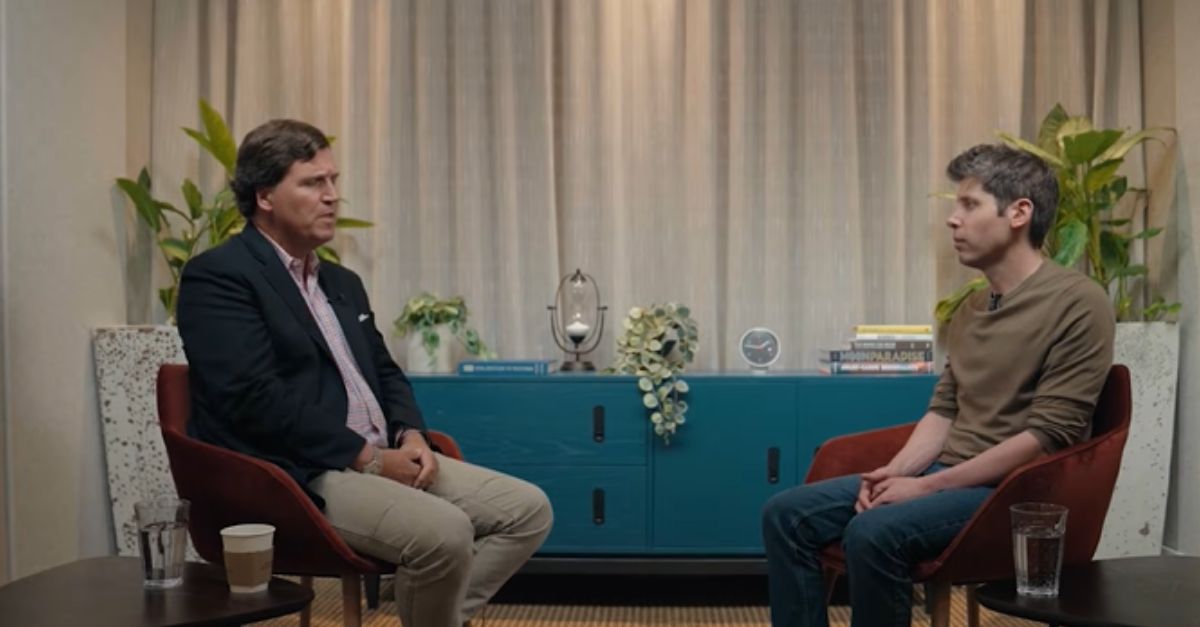
SAN FRANCISCO (Diya TV) — A heated exchange between American commentator Tucker Carlson and OpenAI CEO Sam Altman has reignited debate over the death of Suchir Balaji, a 26-year-old Indian-origin researcher and former OpenAI employee. Balaji was found dead in his San Francisco apartment in November 2024, just weeks after he accused the company of unlawfully using copyrighted material to train its artificial intelligence models.
During a recent interview, Carlson pressed Altman about Balaji’s death, pointing to what he described as suspicious details. “There were signs of a struggle, surveillance wires were cut, and blood was found in more than one room. He had just returned from a vacation and even ordered food that night. Does that sound like suicide?” Carlson asked.
Altman called the case “a great tragedy” and insisted that investigators had ruled it a suicide. “He was like a friend of mine. I spent a lot of time reading everything I could about what happened. It looks like a suicide to me,” Altman said.
When Carlson pushed further, Altman stood by the findings. “I really do believe it was suicide. I read the full medical records, and the trajectory of the bullet was consistent with self-inflicted injury,” he added.
Altman also acknowledged how difficult the subject was, saying, “I understand how this sounds like an accusation. But I also care a lot about respect for him and his family. This is incredibly sad.”
Tesla CEO Elon Musk, a co-founder and now fierce critic of OpenAI, added to the controversy. After a clip of the Carlson interview circulated online, Musk bluntly wrote on X, “He was murdered.”
Musk has frequently criticized Altman and OpenAI, accusing the company of abandoning its original mission of transparency and safety. His latest remark further inflamed speculation around Balaji’s death.
Balaji was a talented computer scientist who studied at the University of California, Berkeley. He interned with OpenAI and Scale AI before joining OpenAI full-time. During his four years at the company, he worked on major projects including WebGPT and GPT-4’s pretraining. His later work focused on reasoning and post-training for ChatGPT.
In October 2024, Balaji spoke to The New York Times about his concerns over OpenAI’s use of copyrighted content to train AI models. He had also published a blog post questioning the ethical and legal consequences of training artificial intelligence on copyrighted works without permission.
Reports suggest Balaji was named in a court filing connected to a copyright lawsuit against OpenAI. His claims reportedly prompted the company to review some of its data practices.
Authorities said Balaji died from a single self-inflicted gunshot wound. The San Francisco Police Department and the city’s medical examiner reported that his apartment door was locked from the inside, with no signs of forced entry. Autopsy results showed alcohol and amphetamines in his system.
Despite those findings, Balaji’s parents and several public figures rejected the suicide ruling. His mother called it a “cold-blooded murder.” The family said an independent autopsy revealed a second gunshot wound and physical evidence of a struggle.
They also denied claims that Balaji suffered from depression, releasing CCTV footage that showed him picking up dinner the evening of his death and appearing calm and relaxed.
The conflicting narratives have created a storm of speculation around Balaji’s death. Carlson’s sharp questioning, Altman’s defense of the official account, and Musk’s claim of murder have fueled widespread debate online and in the tech community.
For Altman, the interview was a rare moment of personal confrontation. “I haven’t done too many interviews where I’ve been accused of murder,” he told Carlson, who continued to challenge the suicide ruling.
As questions linger, Balaji’s story has become part of a larger discussion about corporate accountability, the risks of whistleblowing, and the transparency of powerful AI companies.
Diya TV will air a special report featuring Suchir Balaji’s parents Sunday, September 15th at 6 pm ET/PT. The program hosted by Diya TV’s Ravi Kapur goes in depth into the case with footage and forensic evidence being shared with the public for the first time.
The program will air commercial-free on television stations across the country, via Sling TV Freestream and through Diya TV’s website.