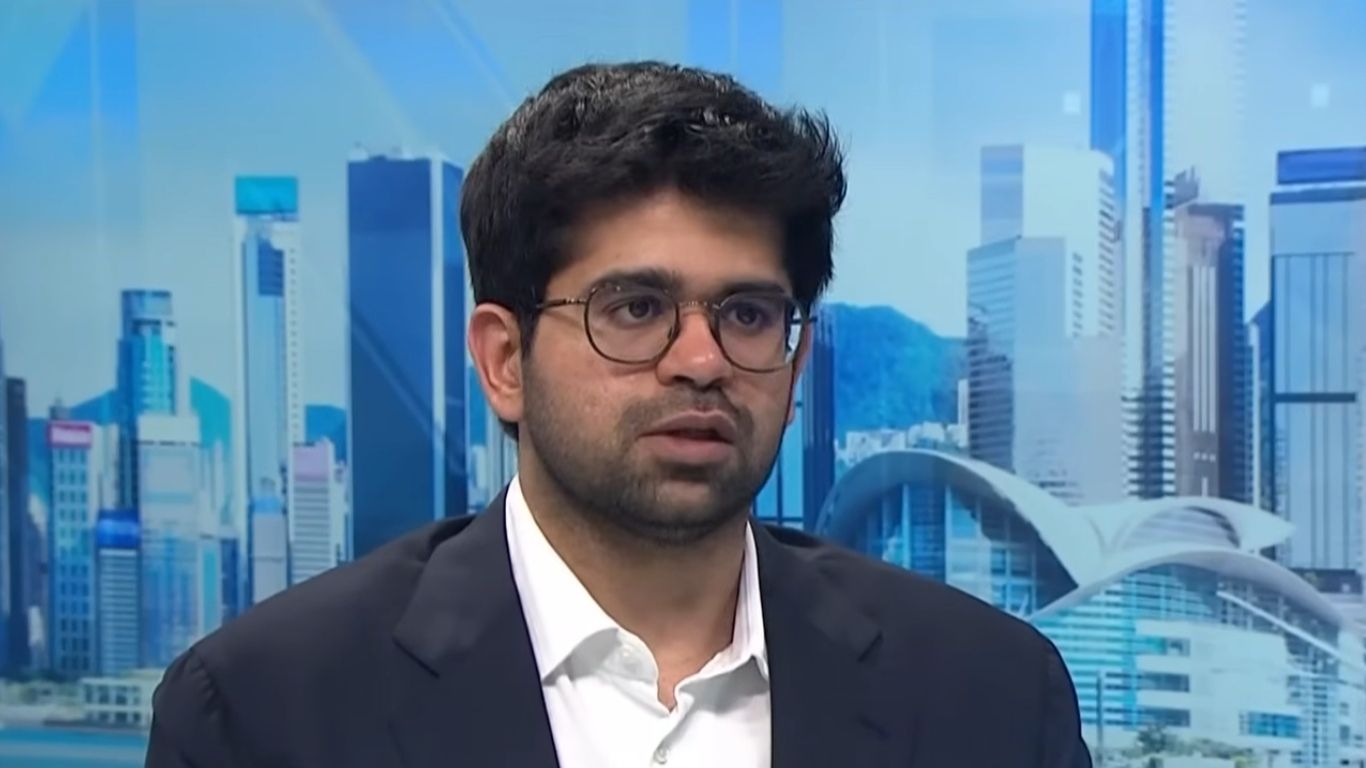
SAN FRANCISCO (Diya TV) — Perplexity plans to move forward with a public stock offering in 2028, regardless of how investors respond to upcoming initial public offerings from OpenAI and Anthropic, according to CEO Aravind Srinivas.
Speaking in an interview with CNBC that aired Tuesday, Srinivas said the company’s long-term plans remain unchanged despite growing attention on the artificial intelligence industry’s biggest IPO candidates.
“Agnostic of these two companies, we were planning for something in 2028, so that remains the case,” Srinivas said.
His comments provide the clearest indication yet that the AI-powered search company intends to pursue a public listing within the next two years.
Perplexity has emerged as one of the fastest-growing AI startups. The company offers an AI-powered search platform that combines large language models with real-time information retrieval.
Srinivas has previously stated that Perplexity did not plan to go public before 2028. His latest remarks suggest that the company remains committed to that timeline, even as the broader AI market faces increasing scrutiny. The announcement comes during a pivotal period for the artificial intelligence industry. Investors are closely watching several high-profile IPOs that could shape market sentiment toward AI companies.
Last week, Anthropic, the developer of the Claude AI model, confidentially filed for an initial public offering. OpenAI followed with its own confidential IPO filing on Monday. Both companies rank among the world’s leading AI developers. Industry experts often describe them as frontier AI labs because they build some of the most advanced AI models available today.
These offerings could become some of the largest technology IPOs in history. Investors will likely use them as a benchmark for future AI-related public listings. Srinivas acknowledged that poor market performance from these offerings could affect the broader sector.
“I certainly think there will be ripple effects if they don’t go well,” he said.
He also pointed to SpaceX, which is expected to attract significant investor attention, as another important indicator of market demand for large technology IPOs.
Despite concerns about valuations, Srinivas expressed confidence in both OpenAI and Anthropic. He said their valuations reflect their leadership positions in artificial intelligence research and development.
“They are on the frontier,” Srinivas said.
However, he noted that investors expect continued progress. If major AI companies fail to improve their models over an extended period, market confidence could weaken.
“If for six months you don’t see a model capability advance from one of these two companies, then it’s a problem for them,” he said.
For now, Srinivas sees no signs of a slowdown in AI innovation.
The discussion around AI company valuations comes as businesses take a closer look at their AI spending. OpenAI CEO Sam Altman recently highlighted concerns about rising AI costs. According to reports, Altman said companies are increasingly evaluating how much they spend on artificial intelligence tools. As AI adoption expands, businesses want stronger returns on their investments.
Srinivas pointed to a growing trend known as “tokenmaxxing,” where employees increase their use of AI tools to appear more productive. However, he believes companies will focus less on usage volume and more on practical results. People want the most effective AI model for each task, he said.
Perplexity’s platform uses models from multiple AI providers. Its system selects the most suitable model based on performance and cost. Srinivas said businesses will increasingly seek cost-effective solutions rather than automatically choosing the most advanced and expensive AI systems.
“If there is an open-source model that gets the job done 90% of the time, I’d probably use that if it’s 10 to 20 times cheaper than the frontier model,” he said.
That approach could help companies manage AI costs while still benefiting from the technology.
The next several years could prove critical for the artificial intelligence sector. Investors, businesses, and consumers continue to watch how leading AI companies balance innovation, growth, and profitability. While uncertainty remains around upcoming AI IPOs, Perplexity appears committed to its own path toward the public markets. Srinivas remains optimistic about the industry’s future. He believes advanced AI will continue to create value, but companies will spend more carefully as the market matures.
“The future is still awesome for frontier intelligence,” he said, “but it’s not going to be mindless spending.”