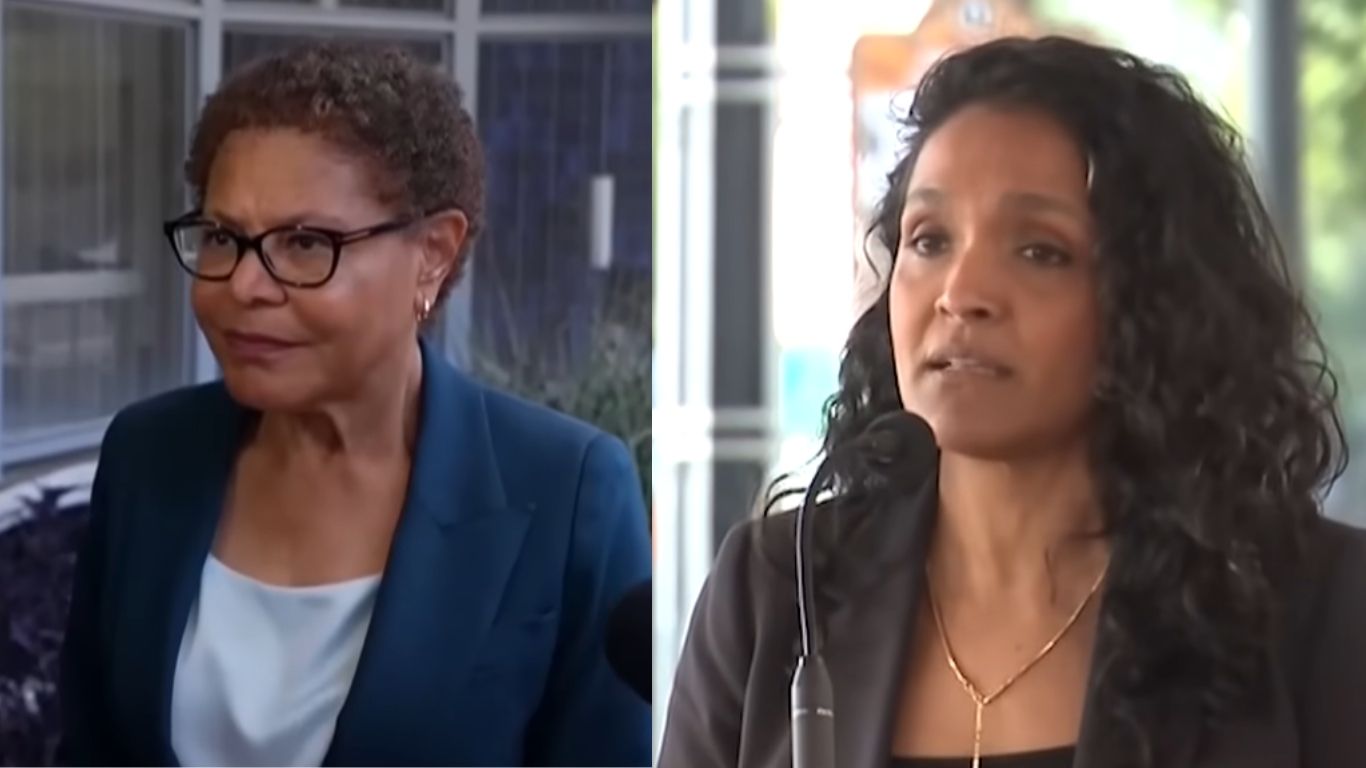
LOS ANGELES (Diya TV) — Los Angeles voters will choose between two Democrats in November after City Councilmember Nithya Raman secured a spot in the mayoral runoff election, defeating Republican reality television star Spencer Pratt in a closely watched primary race.
The result ended one of the most unusual mayoral campaigns in recent Los Angeles history. Pratt, known for his role on the reality TV series “The Hills,” drew national attention with a campaign fueled by conservative donors and criticism of Mayor Karen Bass. However, late-arriving mail-in ballots helped Raman overtake him and claim second place. The November runoff now pits Bass, the incumbent mayor, against Raman, a progressive city councilmember and member of the Democratic Socialists of America. The contest is expected to highlight divisions within Los Angeles’ Democratic coalition while renewing debate over election reforms such as ranked-choice voting.
Raman entered the race late but quickly emerged as the strongest challenger to Pratt among progressive voters. Her campaign benefited from growing support among voters who wanted to prevent a Republican candidate from reaching the general election. The race sparked intense debate on the left. Progressive candidate Rae Huang also ran on a platform that emphasised police accountability, public housing, and expanded transit services. Some activists argued Huang represented a bolder progressive vision. Others believed supporting Raman offered the best chance to stop Pratt from advancing. With Raman’s victory, many Democrats now face the challenge of uniting behind a single candidate ahead of November.
The outcome has intensified discussions about ranked-choice voting in Los Angeles. Supporters argue the system would allow voters to rank candidates in order of preference rather than choosing only one. They say it reduces pressure to vote strategically and encourages candidates with similar platforms to cooperate instead of competing for the same voters. The debate gained momentum after the successful mayoral campaign of Zohran Mamdani in New York City. Advocates point to New York’s ranked-choice voting system as an example of how progressive candidates can build broader coalitions without dividing support.
Rachel Hutchinson, deputy director of research and policy at FairVote, said ranked-choice voting would allow voters to support their preferred candidates without worrying about helping elect someone they oppose. The Los Angeles City Council has until June 26 to decide whether to place a ranked-choice voting measure on the November ballot.
Bass enters the runoff with strong institutional support and a well-established political network. However, she also faces growing frustration from some voters over issues including homelessness and public safety. The mayor has directed much of her criticism toward Raman. Although the two politicians previously worked together, their relationship changed after Raman launched her mayoral campaign.
Bass has argued that Raman cannot present herself as an outsider after serving on the City Council for several years. The mayor has also questioned Raman’s attempts to distance herself from challenges facing the city. Meanwhile, Raman has faced criticism from some progressives who believe she moved closer to establishment politics after taking office. Critics have pointed to her votes on police funding and her acceptance of endorsements that angered some left-wing activists.
The handling of the 2025 Pacific Palisades wildfire remains one of the biggest issues in the race. Bass faced heavy criticism after attending an event in Ghana when the fire erupted. She returned to Los Angeles the next day, but the controversy damaged her public image. Critics also questioned the city’s response and later reports about emergency management decisions.
Bass supporters argue that extreme Santa Ana winds played the largest role in spreading the fire. They also blame delays in federal disaster aid for slowing recovery efforts. The wildfire became a central theme of Pratt’s campaign. He frequently criticised Bass and highlighted the destruction of his own home during the disaster.
Although Pratt failed to reach the runoff, his campaign exposed voter frustration over homelessness and city leadership. Pratt called for aggressive measures against homeless residents and frequently used inflammatory language during the campaign. Housing experts and policy analysts rejected many of his claims, arguing they lacked factual support. Still, political observers say his strong showing reflected public dissatisfaction with the pace of progress on homelessness and recovery efforts after the wildfire.
As the general election approaches, Bass and Raman will compete for voters seeking solutions to housing affordability, homelessness, public safety, and disaster preparedness. Their contest will also test whether Los Angeles voters prefer establishment leadership or a more progressive vision for the city’s future.