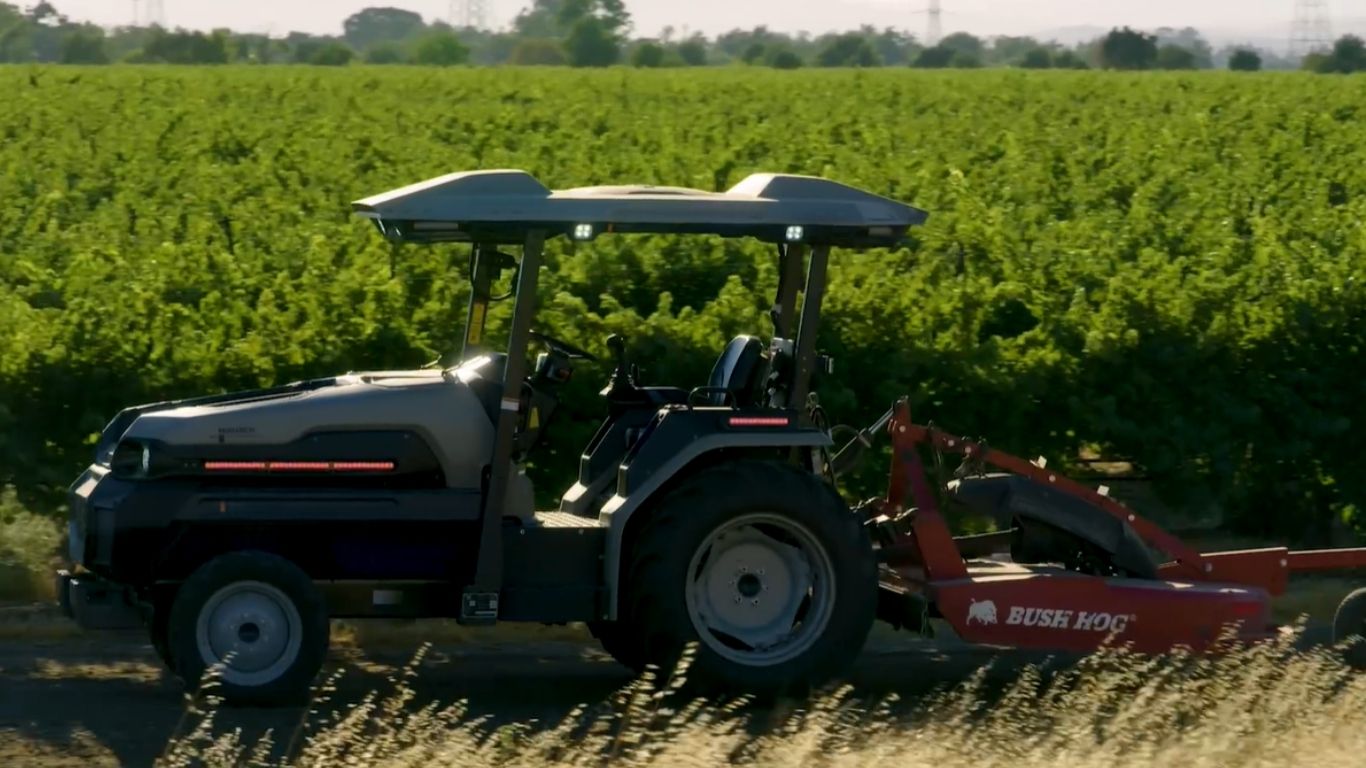
LIVERMORE, Calif. (Diya TV) — A once-promising agricultural technology startup that aimed to transform farming with artificial intelligence and electric vehicles appears to have collapsed after burning through hundreds of millions of dollars. Monarch Tractor, based in California’s Bay Area, has laid off nearly all of its employees and abandoned its headquarters in Livermore. The company had raised more than $240 million to develop self-driving, electric tractors designed to modernize farming and reduce reliance on chemicals.
Monarch Tractor launched its flagship AI-powered tractor in 2023. That same year, Time magazine named it one of the year’s greatest inventions. Forbes predicted the company could become a billion-dollar startup. At its peak, the company was valued at $518 million.
The startup promised to revolutionize agriculture. Its tractors are aimed at handling tasks such as weed control and crop monitoring without human drivers. The company targeted vineyards and organic farms, where labor-intensive practices often replace chemical pesticides.
However, that vision did not translate into real-world success. By last year, Monarch Tractor had already warned it might shut down. Soon after, it let go of its workforce and vacated its headquarters. The company has not publicly responded to recent requests for comment.
Some early users say the technology failed to deliver on its promises. California winemaker Patrick O’Connor shared a blunt assessment in a viral Instagram video that has drawn hundreds of thousands of views. He tested the tractor for three years on his steep vineyard.
“It totally failed,” he said.
O’Connor told SFGATE that he found no reliable use for the machine. He also raised safety concerns when the tractor operated in self-driving mode.
“I wouldn’t let anyone else around it,” he said.
He described several issues. The automated row-following system did not work properly. The tractor sometimes hits vines. Its hydraulic systems often malfunctioned. He said the machine never reached a stage where it could operate fully without a driver.
Despite its problems, the tractor showed some limited value. O’Connor said he used it to transport tools and power equipment. The electric battery worked like a mobile generator. He even used it for tasks like splitting wood. Still, he said these uses fell far short of the company’s original goals. Organic farmers had hoped the tractor would reduce the need for manual labor and chemical weed control. Instead, many found it unreliable.
“It was theoretically promising,” O’Connor said. “But it never worked well in practice.”
The company’s leadership also faced challenges. Co-founder Carlo Mondavi, a member of a well-known Napa Valley wine family, said he left the company about a year earlier. He cited disagreements with CEO Praveen Penmetsa. In a public comment, Mondavi expressed regret about the product’s performance.
“The tractor had real first-generation challenges,” he said. “Farmers shouldn’t be the ones carrying that burden.”
Monarch Tractor was also co-founded by Mark Schwager, who previously worked at Tesla. The startup drew attention for combining electric vehicles with AI-driven automation.
The company’s problems extended beyond product performance. Several tractor dealerships filed lawsuits against Monarch Tractor. They claimed the company sold defective machines. According to reports, Monarch denied those allegations in court.
In at least one case, attorneys stopped representing the company due to concerns that it could not pay legal fees. These developments added to doubts about its financial stability. Monarch’s tractors carried a price tag of up to $100,000. However, government subsidies significantly reduced costs for some buyers. The company promoted programs that could cut prices by as much as 85%. Even with those incentives, adoption remained limited.
The collapse of Monarch Tractor raises questions about the future of AI-driven agriculture. Experts still see strong potential in electric and autonomous farming equipment. Many believe such tools could reduce labor costs and limit the use of harmful chemicals. O’Connor remains cautiously optimistic. He supports innovation but urges companies to deliver reliable products before selling them to farmers.
“I hope for better in the future,” he said.
At the same time, he warned that advanced machines could also enable more aggressive pesticide use if not properly regulated. For now, Monarch Tractor’s downfall serves as a reminder. Even well-funded startups with bold ideas can struggle when technology fails to meet real-world demands.