NEW DELHI (Diya TV) — Philippine President Ferdinand Marcos Jr. will visit India next week as the two nations deepen defense ties, with their first-ever bilateral naval exercise set to take place in the contested South China Sea. The visit, scheduled for August 4–8, marks Marcos’s first trip to India since taking office in June 2022.
The timing coincides with a major milestone in India-Philippines defense relations—a two-day maritime cooperative activity (MCA) that will unfold near the Scarborough Shoal, a key flashpoint in the South China Sea. During his five-day visit, Marcos is expected to meet with Indian Prime Minister Narendra Modi.
He will also deliver a speech on August 6 highlighting the growing partnership between the Philippines and India in maintaining a rules-based international order. The speech will underline shared concerns over regional security and maritime cooperation. While official confirmation is pending from both governments, reports suggest that Marcos will meet Indian officials and business leaders to boost economic and security collaboration.
The trip comes amid rising tensions between the Philippines and China over maritime disputes in the South China Sea. Marcos has been vocal about expanding strategic alliances with “like-minded” partners to counter aggressive Chinese actions in the region.
On August 3, just a day before Marcos’ arrival, the navies of India and the Philippines will kick off a two-day bilateral MCA. The exercise will take place near the Scarborough Shoal, located about 198 kilometers off Luzon island and well within the Philippines’ exclusive economic zone (EEZ).
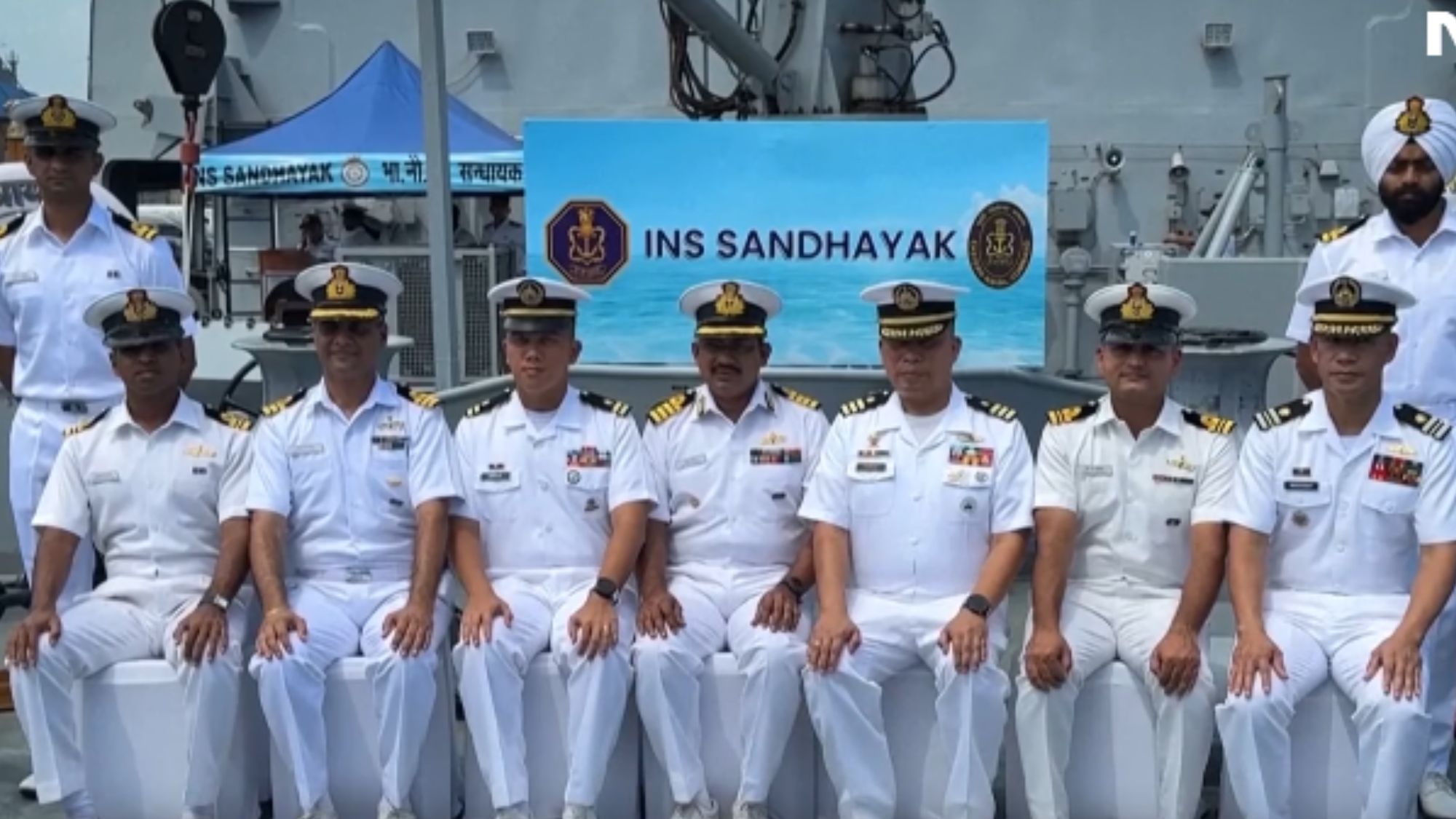
The Indian Navy will deploy four vessels for the mission: the guided missile destroyer INS Delhi, the fleet tanker INS Shakti, the anti-submarine corvette INS Kiltan, and the survey ship INS Sandhayak. Except for the survey vessel, all ships will participate in the drill. The Indian ships are expected to dock in Manila on August 2 ahead of the operation.
Philippine Navy Capt. Roy Vincent Trinidad confirmed that the MCA will focus on enhancing interoperability and maritime cooperation between the two navies. He said the activity aims to build a more robust maritime relationship between the countries.
The exercise near Scarborough Shoal signals growing defense cooperation in response to China’s expanding influence in the South China Sea. The shoal has remained under Chinese control since a tense standoff with the Philippines in 2012. Chinese coast guard vessels continue to block Filipino fishermen from accessing the area’s rich fishing grounds.
Tensions have grown in recent years as Chinese vessels frequently enter the Philippines’ EEZ. In his recent State of the Nation Address, Marcos stressed the importance of security alliances. “Our confidence is higher because we have more allies, which would support us in the time of grave need,” he said.
India’s involvement reflects its evolving position on the South China Sea dispute. In 2023, New Delhi moved from a neutral stance to openly supporting the 2016 international arbitration ruling that rejected China’s claims. The shift aligns India more closely with the Philippines, the U.S., and other regional partners like Japan and Australia.
The planned naval exercise marks a new chapter in India-Philippines military relations. Until now, cooperation has been limited to passing exercises and humanitarian efforts. The MCA raises the level of engagement and highlights mutual concerns about maritime security.
In 2022, the Philippines became the first foreign buyer of India’s BrahMos supersonic cruise missiles. A second batch was delivered in April 2025. Manila is also in talks to purchase India’s Akash missile system.
Collin Koh, a maritime security expert at Singapore’s Nanyang Technological University, said the timing of the MCA sends a strong message. “If this is the first bilateral MCA between India and the Philippines as designated officially, it sends a clear signal that India is overtly supporting the Philippines in the South China Sea row with Beijing,” he told Newsweek.
As Marcos arrives in India, the symbolic and strategic impact of his visit—coupled with the naval exercise—could redefine Indo-Pacific partnerships in an increasingly contested region.