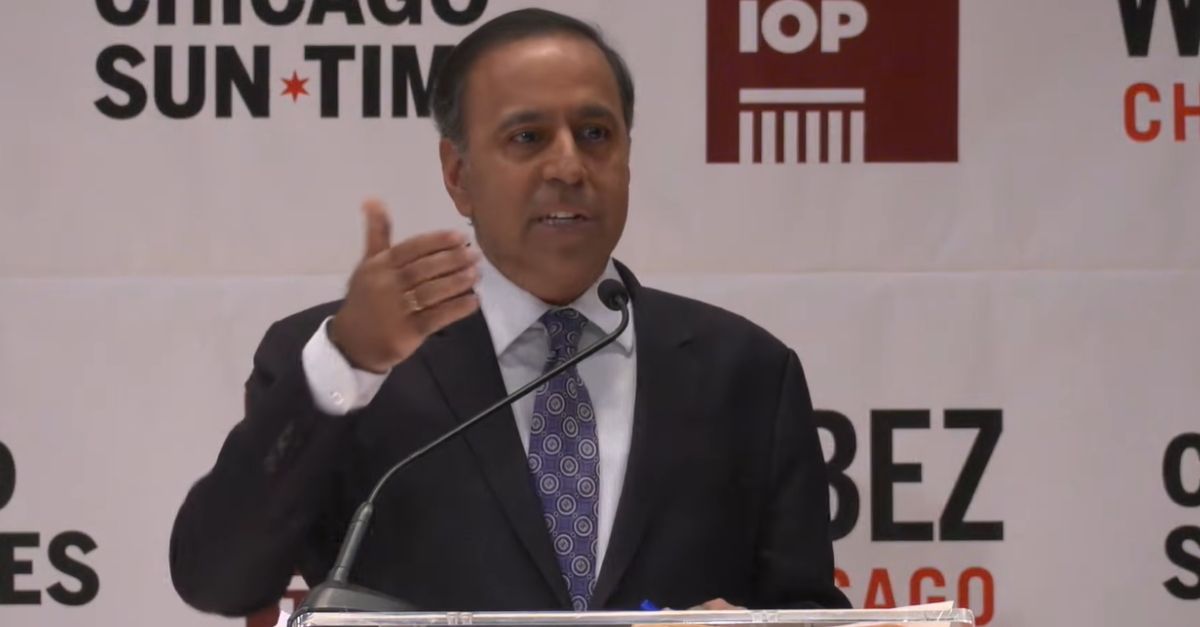
CHICAGO (Diya TV) — Rep. Raja Krishnamoorthi emerged as a central figure in the first Illinois Democratic U.S. Senate primary debate, highlighting his policy record on lowering costs and confronting President Donald Trump, while Lt. Gov. Juliana Stratton faced sustained scrutiny over campaign finances and strategy.
The hourlong debate took place Jan. 25 in Chicago and marked the first live, televised clash in the race to succeed retiring Sen. Dick Durbin. With the March primary approaching, the event gave voters a clearer look at the leading contenders in one of the nation’s most closely watched Senate primaries.
Krishnamoorthi used the debate to stress his legislative efforts aimed at easing financial pressure on families. He pointed to proposals to help first-time homebuyers and expand access to skilled job training programs. He also discussed his work on immigration oversight and accountability.
Throughout the night, Krishnamoorthi framed himself as a lawmaker with experience standing up to Trump. He cited his investigations into federal agencies and said he has worked directly to hold U.S. Immigration and Customs Enforcement accountable.
“I’m the only candidate on this stage who has actually inspected an ICE facility,” Krishnamoorthi said, describing conditions he called “shocking.” He added that he supports abolishing what he described as “Trump’s ICE.”
When challenged over a House resolution that praised ICE, Krishnamoorthi rejected the criticism. He said the measure overwhelmingly focused on condemning antisemitism and said he would not shy away from voting against hate.
Stratton took an aggressive approach from the opening minutes of the debate. She questioned Krishnamoorthi’s record and accused him of failing to show leadership when it mattered. She criticized his past votes and campaign donations tied to ICE contractors.
“That is not the example of somebody who’s going to stand up to Donald Trump,” Stratton said, adding that she wants to abolish ICE.
Stratton also used the debate to challenge Krishnamoorthi’s legislative effectiveness. She claimed he passed only four bills in a decade, which she said involved renaming post offices. Krishnamoorthi pushed back, saying the correct number is 76 and noting his role in broader legislative efforts.
Observers noted that Stratton entered the debate trailing in polls and facing a significant fundraising gap. With less than two months until Election Day, her campaign strategy drew attention both on stage and afterward.
Much of the post-debate discussion focused on Stratton’s campaign finances. She has pledged not to accept corporate PAC money in her Senate race. That stance has featured prominently in her messaging.
However, records show Stratton accepted corporate PAC and direct corporate donations in her state campaigns dating back to 2016. During the current cycle, she returned a $5,000 donation from the Marquis Energy Corporate PAC but accepted $21,000 from members of the family that controls the company.
Her affiliated super PAC, Level Up PAC, has also come under scrutiny. The group, formed in January ahead of her Senate run, received $5,000 from a corporate PAC and $46,000 from corporations this year. Stratton has also accepted donations from corporate executives and company leaders, though those contributions came from individuals rather than PACs. Krishnamoorthi called the situation hypocritical and pointed to reporting that detailed Stratton’s long history of accepting corporate money.
U.S. Rep. Robin Kelly, another leading contender, also faced attacks from Stratton over campaign donations. Kelly defended her record and said her votes reflect the wishes of her constituents.
“Check the record. Check how I vote,” Kelly said, adding that she is transparent about the corporate PAC money she accepts.
Kelly also weighed in on the broader theme of opposing Trump. She said standing up to him requires more than rhetoric and pointed to her record of accomplishments.
When asked to name a Trump policy they support, the candidates offered starkly different answers. Stratton said she could not name any policy she agrees with. Krishnamoorthi cited concerns about manufacturing workers affected by trade policies. Kelly pointed to a general focus on wellness.
The candidates will meet again in a televised debate on Thursday. The Democratic primary winner will advance to the November general election to face the Republican nominee. With sharp exchanges, policy contrasts, and questions of credibility, the first debate set the tone for a competitive and closely watched Illinois Senate primary.