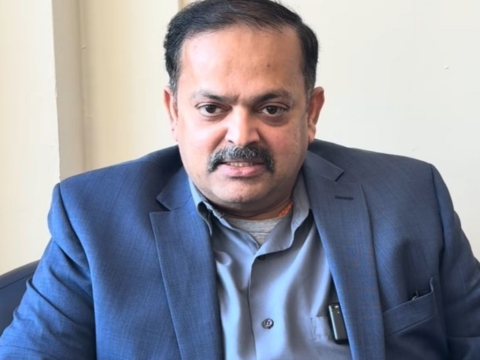
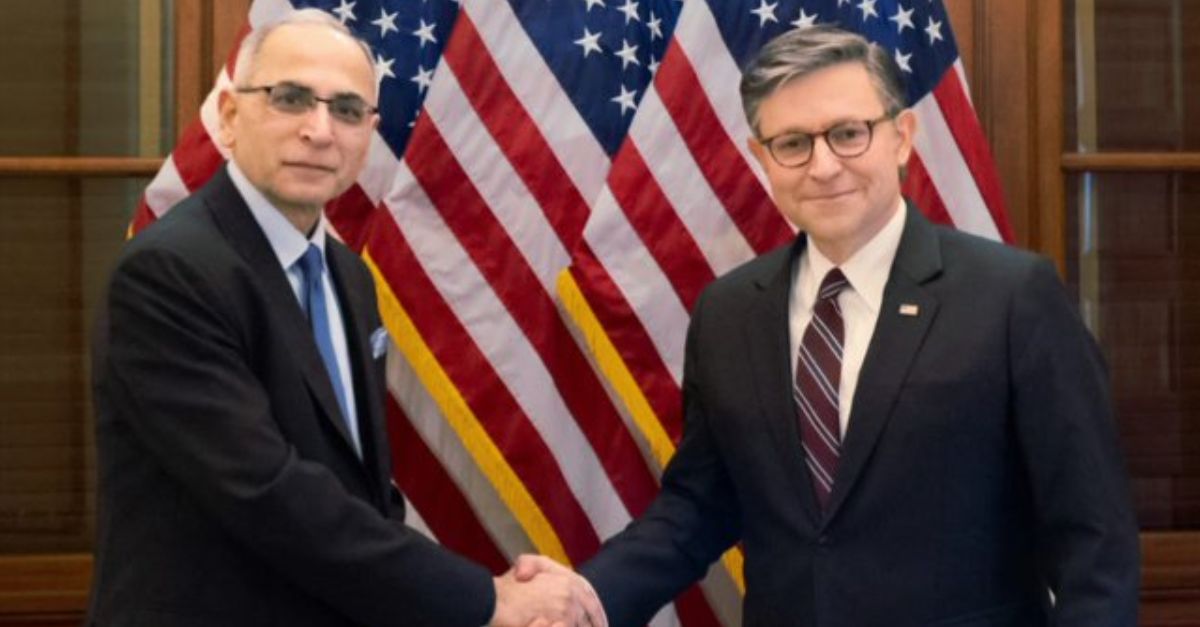
WASHINGTON (Diya TV) — Indian Ambassador to the United States Vinay Kwatra met with House Speaker Mike Johnson at Capitol Hill this week. Their meeting focused on counterterrorism cooperation, defense ties, trade negotiations, energy security, and advanced technology, including artificial intelligence and quantum computing.
The discussions came amid renewed diplomatic engagement between New Delhi and Washington, as both sides push to strengthen a partnership that plays a central role in global security and economic stability.
During the meeting on January 6, Kwatra expressed India’s gratitude for Johnson’s support following the terrorist attack in Pahalgam in April 2025. Kwatra thanked the Speaker for showing solidarity with India’s counterterrorism efforts, a key pillar of bilateral cooperation.
“Honored to meet Speaker Mike Johnson at Capitol Hill today,” Kwatra said in a post on X. He added that he deeply appreciated Johnson’s support for strengthening the U.S.-India bilateral relationship.
Counterterrorism remains a major area of collaboration between the two democracies. India and the United States have worked closely in recent years to share intelligence, curb terror financing, and promote regional stability in South Asia and beyond.
Kwatra briefed Johnson on defense and security cooperation, highlighting progress in military partnerships and strategic alignment. India and the United States have expanded joint military exercises, defense technology transfers, and cooperation in the Indo-Pacific region.
Both countries see defense ties as a cornerstone of their strategic partnership. The collaboration supports shared goals, including maritime security, freedom of navigation, and regional deterrence. The meeting reflected Washington’s continued bipartisan support for closer defense relations with India, which U.S. officials view as a key partner in maintaining balance in the Indo-Pacific.
Energy trade also featured prominently in the talks. Kwatra discussed oil and gas cooperation, which has grown as India seeks to diversify its energy sources and strengthen energy security. The envoy also highlighted advanced technology cooperation, with a focus on artificial intelligence. Technology partnerships form a major driver of India-U.S. relations, as both sides work to align innovation ecosystems and promote responsible tech development.
Artificial intelligence, semiconductors, and emerging technologies remain high priorities for policymakers in both countries. These sectors support economic growth and enhance national security.
Trade negotiations formed another key part of the discussion. Kwatra stressed India’s interest in achieving a “fair, balanced and mutually beneficial trade deal” with the United States. Trade talks between the two nations have gained momentum in recent months. Leaders on both sides have signaled a desire to resolve outstanding issues and unlock greater market access. The United States ranks among India’s top trading partners. A comprehensive trade deal could deepen economic ties, boost job creation, and strengthen supply chains.
A day before the Capitol Hill meeting, Kwatra visited the IBM Thomas J. Watson Research Center Think Lab in Westchester, New York. He observed cutting-edge research in quantum computing and emerging technologies.
Kwatra said discussions focused on IBM’s expanding footprint in India and the country’s National Quantum Mission. Under the mission, India aims to build world-class research collaborations and dedicated innovation hubs. Quantum computing represents a new frontier in India-U.S. technology cooperation. Both countries see strong potential for joint research, talent exchange, and industry partnerships.