
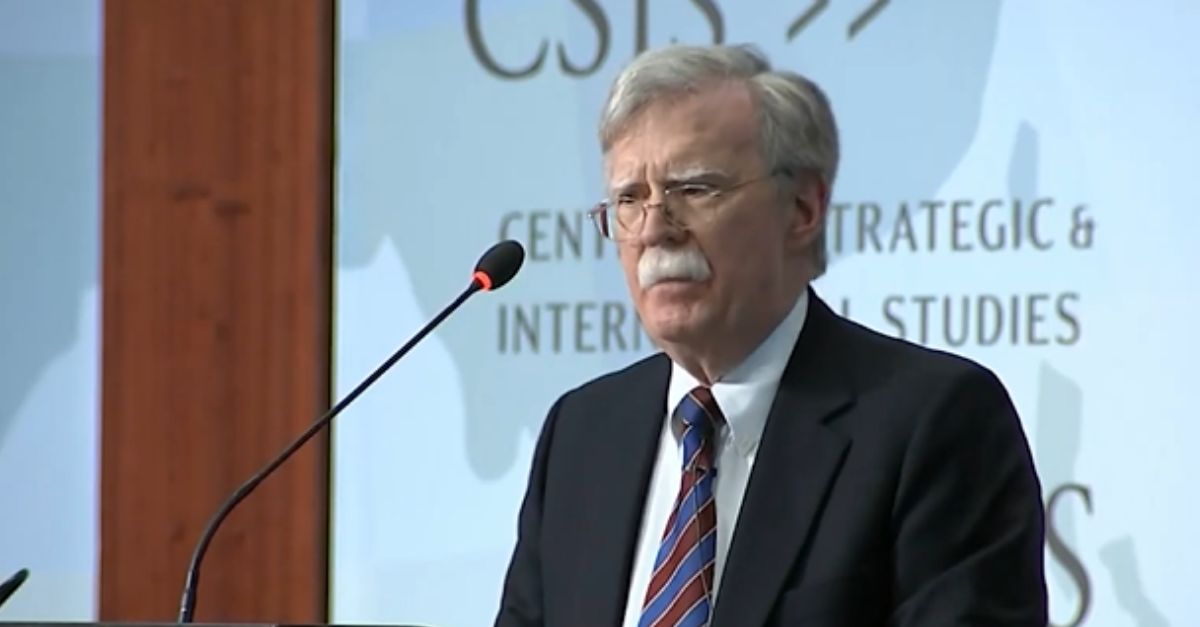
GREENBELT, Md. (Diya TV) — John Bolton, former national security adviser to President Donald Trump, pleaded not guilty Friday to charges accusing him of sharing classified information with relatives and storing sensitive documents at his home.
Bolton, who served as Trump’s national security adviser during his first term, surrendered to authorities at a federal courthouse in Greenbelt. He appeared before U.S. Magistrate Judge Timothy Sullivan on an 18-count indictment that includes eight counts of transmitting national defense information and 10 counts of retaining it, all under the Espionage Act. Each count carries a potential 10-year prison sentence.
The indictment alleges Bolton shared more than a thousand pages of notes detailing his daily activities, meetings with senior officials, and intelligence briefings. Prosecutors say he sent the information through personal email accounts to two people who did not have security clearance, reportedly his wife and daughter. The indictment also notes that a foreign actor tied to Iran hacked Bolton’s personal email after he left government service and accessed some of the classified material.
Bolton called the charges politically motivated. In a statement, he said, “Now, I have become the latest target in weaponizing the Justice Department to charge those [Trump] deems to be his enemies.” Bolton’s lawyer, Abbe Lowell, insisted that he did not unlawfully share or store classified information.
The case marks the latest legal action involving former Trump associates and critics. In recent weeks, the Justice Department has also charged former FBI Director James Comey and New York Attorney General Letitia James in separate cases. Trump has frequently pushed federal law enforcement to pursue investigations against his political adversaries.
Career prosecutors in Maryland filed the Bolton indictment, which was signed by U.S. Attorney Kelly Hayes. Prosecutors said Bolton handwrote daily notes on yellow pads at secure locations in the White House before retyping them in Word documents. Some of these notes were then sent via group chat to his “editors,” his relatives, for use in a book he was writing, including the 2020 memoir The Room Where It Happened, which was critical of Trump.
The Justice Department said the case involved “aggregating factors,” including the willful mishandling of classified information, storing a large quantity of sensitive material, and using unauthorized channels. Investigators also noted that Bolton printed classified notes and kept them at his home.
The investigation into Bolton began in 2022, before Trump left office, but it gained renewed attention after U.S. intelligence agencies discovered more about his email accounts through foreign spy services. Officials also noted the role of Bolton’s notes as potential transcriptions of classified material, which drew the Justice Department back into the investigation.
Trump criticized Bolton’s indictment, calling him “a bad guy” in a White House briefing. Bolton, who also served as U.S. ambassador to the United Nations, became one of Trump’s most vocal critics after leaving the administration. He publicly described Trump as unfit for office and detailed his concerns in his memoir, prompting legal action from the Trump administration to delay its release.
Experts say the Bolton case highlights tensions over the handling of classified information by former officials. In other high-profile cases, including one involving U.S. Defense Secretary Pete Hegseth, sensitive information was shared with family members and journalists without apparent criminal consequences. Critics say the selective prosecution raises questions about consistency in enforcing the Espionage Act.
Bolton did not speak to reporters outside the courthouse. His next court appearance has not been scheduled. Legal analysts expect the trial could take months, given the complex nature of the classified material and the high-profile political context surrounding the case.