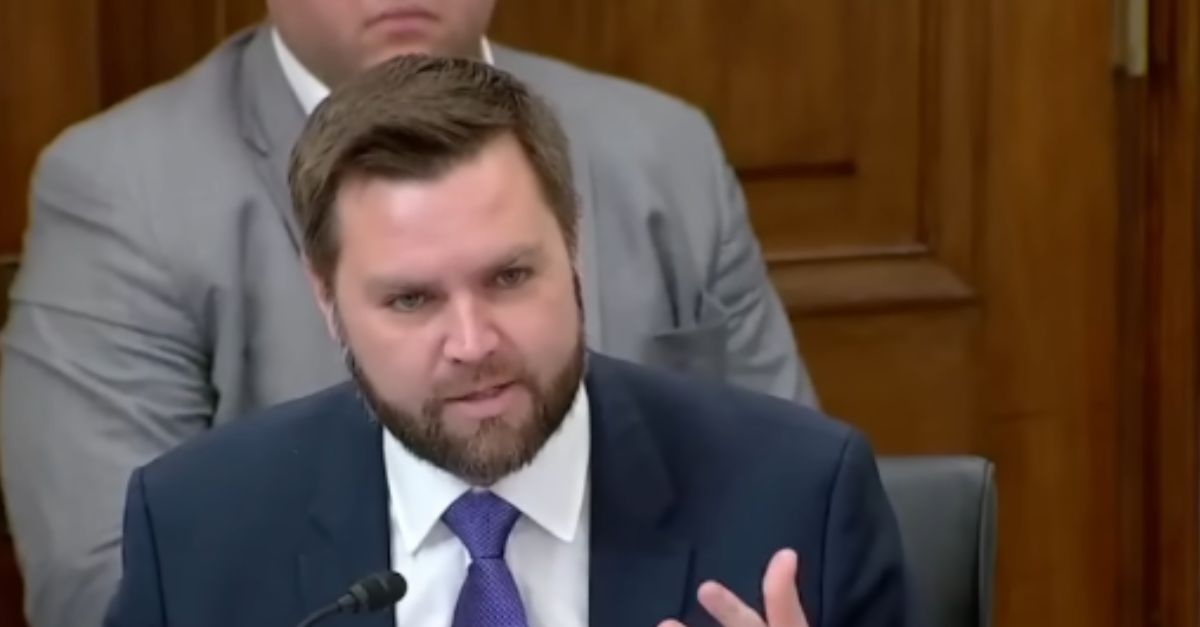
WASHINGTON (Diya TV) — Vice President JD Vance sparked a fresh political firestorm this week after he claimed that mass migration amounts to “theft of the American Dream.” His comment, posted on X, drew sharp reactions from supporters and critics and reignited an ongoing national debate over immigration, identity, and opportunity.
Vance remarked in response to an online post praising recent ICE raids in Louisiana. He argued that mass migration limits access to jobs, wages, and growth for American citizens. He said it weakens the core promise that has long defined the United States.
“Mass migration is theft of the American Dream,” Vance wrote. “It has always been this way, and every position paper, think tank piece, and econometric study suggesting otherwise is paid for by the people getting rich off of the old system.”
Vance’s criticism fit with his broader political message. He often points to the struggles of working-class Americans and calls for strict immigration limits. His supporters say his stance reflects growing concern over border security and economic pressure.
But the vice president’s post quickly drew online backlash. Many X users accused Vance of hypocrisy because his wife, Usha Vance, is the daughter of Indian American immigrants. Users circulated family photos showing her relatives living in the United States.
One viral post included the caption: “21 members of Vance’s family ‘stealing’ the American Dream.” Another user wrote, “That means you have to send Usha, her Indian family, and your biracial kids back to India. Let us know when you buy the plane tickets. You must lead by example.”
The posts highlighted a key theme in the criticism: Vance’s remarks about migration appeared to conflict with his own family’s history. Users argued that his statement overlooked the contributions of immigrants who, like his in-laws, built lives in the United States.
The controversy underscored the political tension surrounding immigration policy. Public debate over the U.S. border remains polarized, with strong views on both sides. Supporters of immigration argue that newcomers fuel growth, create jobs, and enrich American culture. Critics say the system is overwhelmed and threatens wages, security, and social stability.
Vance positioned his comments within this broader dispute. He framed mass migration as a threat to economic fairness. His critics countered that he was targeting immigrant families while ignoring their long-term role in shaping the country.
The online reaction was swift and strategic. Users employed humor, sarcasm, and personal images to challenge his argument. The photos of his wife’s relatives served as a visual counterpoint to his claim that migration harms the nation.
These responses helped the debate spread across platforms. They also kept attention on the contrast between Vance’s public statements and his personal life. For many, the images reinforced their belief that immigrant families remain central to the American experience.
Despite the backlash, Vance received support from conservative commentators and online followers. They said his remarks focused on policy, not individuals. They argued that legal immigration and mass illegal migration are different issues. Supporters also said that Vance has consistently spoken about the need to protect American workers from economic pressure caused by uncontrolled migration.
The divide reflected the national split on the topic, with each side seeing the comments through its own political lens.
The uproar around Vance’s post shows how immigration continues to dominate U.S. political dialogue. It also highlights the personal nature of the debate, especially when family histories and cultural identity become part of the conversation.