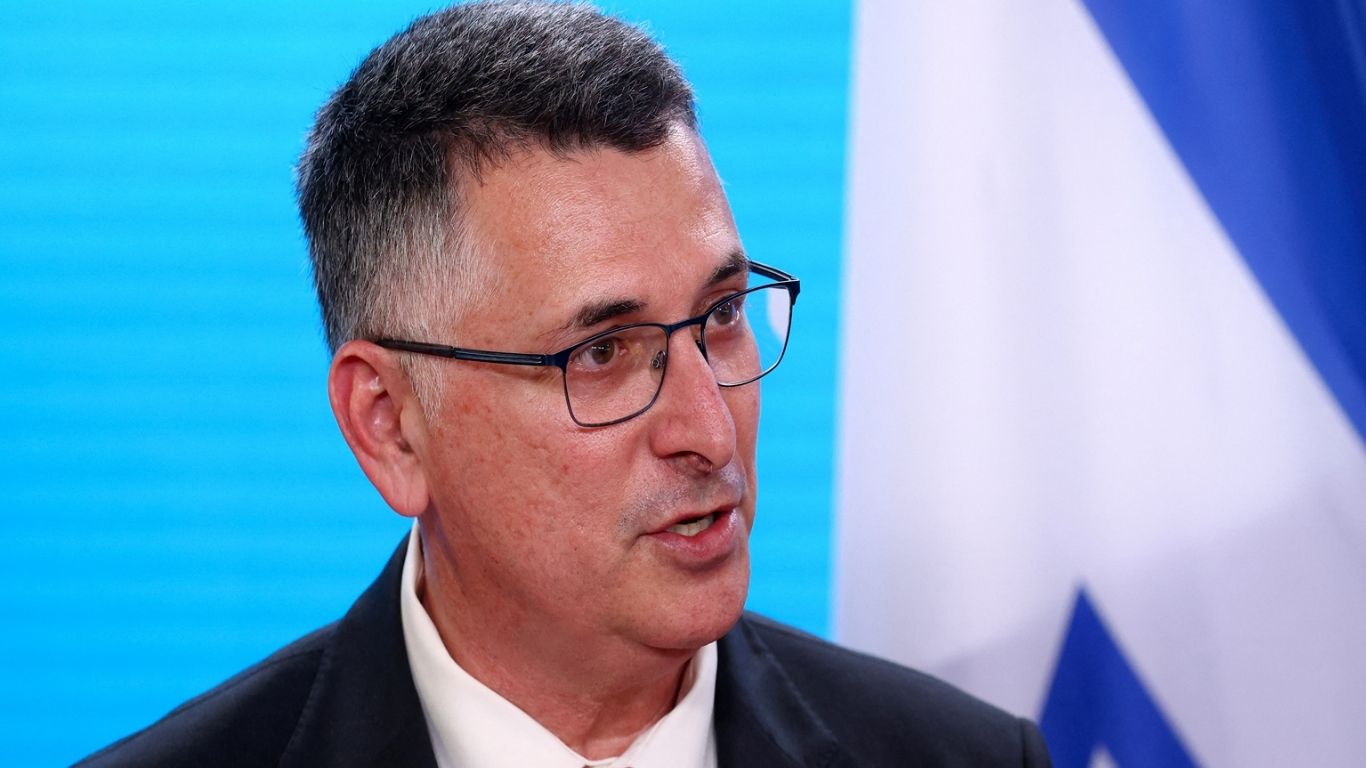
NEW DELHI (Diya TV) — Israel has renewed its call for India to designate Hamas as a terrorist organization, citing alleged links between the Palestinian group and other global militant networks, including Lashkar-e-Taiba. Israel’s Foreign Minister Gideon Sa’ar appealed for a recent engagement with a global delegation. He highlighted growing ties between Israel and India and stressed the importance of stronger cooperation on counterterrorism.
Sa’ar said India plays a key role in shaping regional and global responses to terrorism. He urged New Delhi to formally list Hamas under its domestic terror laws. He argued that such a move would send a strong signal across South Asia and beyond.
India has not officially designated Hamas as a terrorist organization. However, it has condemned the group’s October 2023 attacks on Israel. Israeli officials believe India’s position carries weight, especially among neighboring countries such as Bangladesh and the Maldives. Sa’ar described Hamas as part of a broader network of militant groups. He said these networks share resources, strategies, and support systems. He specifically pointed to alleged ties with Lashkar-e-Taiba, which India already classifies as a terrorist group.
Israeli officials have increasingly emphasized connections between Hamas and other organizations. They claim these ties extend beyond ideology and include operational coordination. According to a senior Israeli foreign ministry official, Hamas maintains “significant” links with Lashkar-e-Taiba. The official also pointed to the role of Iran in supporting multiple militant groups. These include Hamas and Hezbollah.
The official said these groups often rely on indirect methods to carry out attacks. Instead of acting directly, they may use criminal networks or intermediaries in different countries. This approach makes it harder for authorities to track and prevent operations. Israel views this network as a growing global threat. Officials argue that coordinated international action is needed to counter it effectively.
Israel considers India a key partner in addressing security challenges. Both countries have expanded defense and intelligence cooperation in recent years. Sa’ar described the relationship as strong and improving.
He said India’s decision to designate Hamas could influence other nations in the region. Israeli officials believe such a move would strengthen global efforts to isolate militant groups. They also argue that even a symbolic designation would have practical effects. It could restrict financial flows, limit travel, and increase scrutiny of suspected operatives.
Sa’ar also addressed the broader conflict involving Israel. He said the country has faced sustained attacks over the past two and a half years. He described the threat as existential and ongoing.
He claimed Israel has weakened what he called a network of “radical Islamist” groups. He said Israeli forces have gained the upper hand in several areas. However, he warned that the threat has not disappeared. Israeli defense officials have expressed concern about Hamas attempting to rebuild its capabilities. They believe international pressure can help prevent the group from regaining strength.
India has taken a balanced approach to the Israel-Palestine conflict. It has maintained diplomatic relations with both sides. While it has condemned acts of violence, it has avoided formally labeling Hamas as a terrorist organization.
Experts say India’s decision involves complex geopolitical considerations. These include its relationships in the Middle East and its domestic security priorities. Still, Israeli officials remain hopeful. They believe India understands the risks posed by interconnected militant networks. They continue to engage with Indian counterparts on the issue.