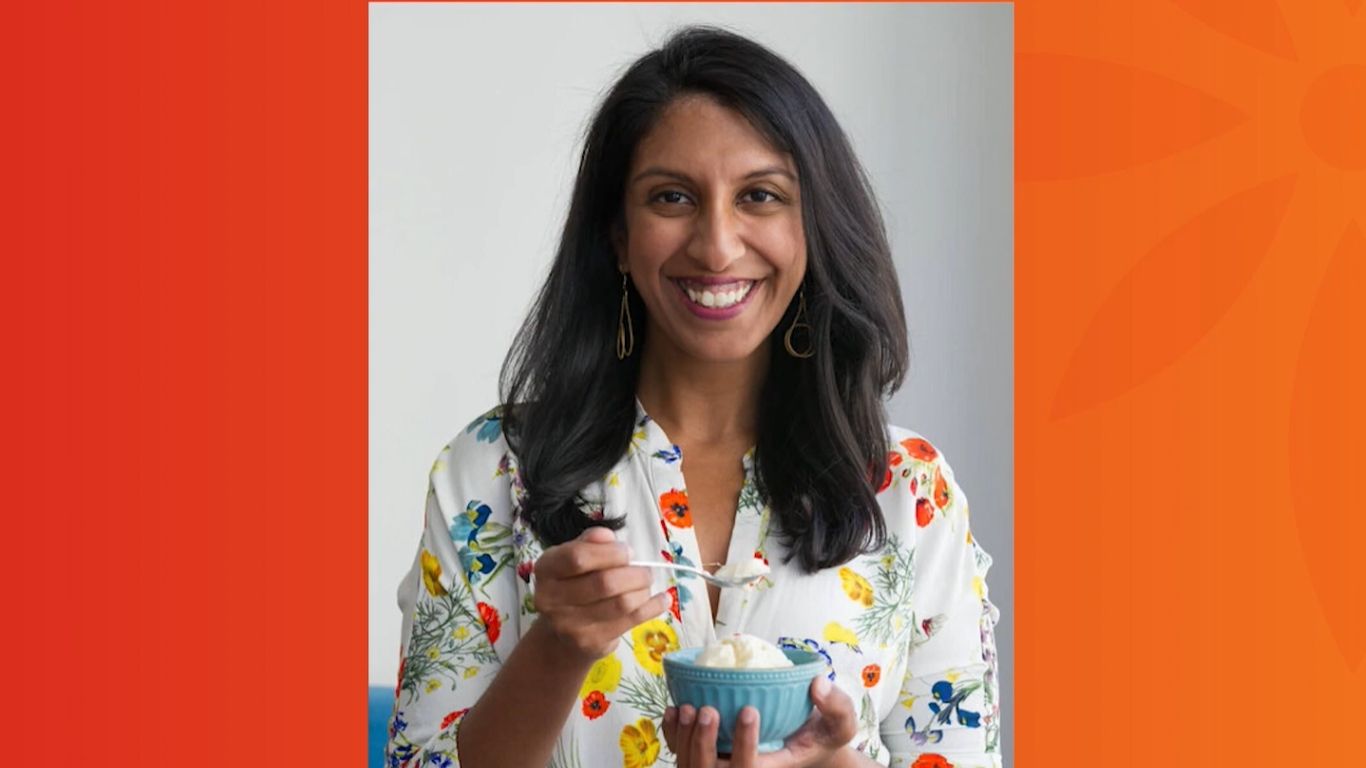
NEW YORK (Diya TV) — Indian-origin entrepreneur Pooja Bavishi turned a homemade dessert idea into a multi-million-dollar business by introducing Indian flavors to the American ice cream market.
Bavishi, 42, is the founder and CEO of Malai, a premium ice cream brand known for flavors inspired by Indian spices and ingredients. The company generated $2.8 million in sales in 2025 and recently became profitable after years of steady growth and expansion.
Founded in 2015, Malai now operates four stores across New York, Philadelphia, and Washington, D.C. The company also runs wholesale and e-commerce businesses. Its products feature flavors such as cardamom, saffron, rose, and nutmeg, which helped the brand stand out in the crowded dessert market.
Bavishi said she wanted to introduce familiar Indian flavors to mainstream American consumers. She believed people were ready for desserts that offered something beyond traditional chocolate and vanilla.“Indian flavors are not experimental,” Bavishi told CNBC Make It. “These flavors have been enjoyed by billions of people all over the world daily for generations.”
The entrepreneur said her passion for desserts started years before she launched the business. However, she had no professional experience in the food industry when she began. Before founding Malai, Bavishi studied urban planning at The London School of Economics. She later worked as a civil rights project coordinator for a nonprofit organization in Washington.
The idea for Malai started in 2014 while Bavishi pursued her MBA at New York University. During a dinner party, she served homemade ice cream flavored with ginger and star anise. Her friends reacted positively and encouraged her to explore the idea further.“I just remember my friends being like, ‘We’ve never had anything like this before,’” she said.
Soon after, Bavishi began making ice cream in her home kitchen. She sold her products at outdoor markets across New York City. Friends helped her serve customers from a camping freezer while she gathered feedback about flavors and buying habits. Bavishi said customer research played a key role in shaping the business during its early days.“I needed to make sure that there was a market for my products and that my idea actually made sense,” she said.
A breakthrough came in 2015 when a food writer from The New York Times sampled Malai’s ice cream and featured the company in an article. The media coverage increased online orders for pints and frozen desserts. Bavishi handled packing and shipping on her own as demand grew.
To keep the business running, she relied heavily on credit cards to pay for ingredients and commercial kitchen rentals. In 2017, she raised a small friends-and-family investment round that helped fund pop-up shops and food stalls around New York. Bavishi later took on nearly $200,000 in credit card debt to open Malai’s first permanent store in Brooklyn. She said it took almost two years to repay the amount.
Malai expanded steadily over the years as more consumers embraced unique ice cream flavors and premium desserts. Today, about 80% of the company’s revenue comes from its physical stores, according to Bavishi. She said each location operates profitably.
The company has raised about $1.8 million in outside funding. Bavishi said the money helped support production growth and new store openings. Despite outside investment, she remains Malai’s majority owner. Industry experts have noted growing demand for global flavors in the U.S. food market. Malai’s success reflects how immigrant entrepreneurs continue shaping American food trends by introducing culturally inspired products to wider audiences.
Looking ahead, Bavishi plans to expand Malai’s wholesale business into more grocery stores and retail chains across the United States.
She said she feels proud to help bring Indian flavors into mainstream American desserts.
The entrepreneur believes consumers increasingly want authentic and diverse food experiences. Malai’s growth shows how cultural storytelling and unique flavors can help brands connect with modern audiences. As the company continues expanding, Bavishi hopes more Americans will embrace flavors long celebrated in Indian households and kitchens around the world.