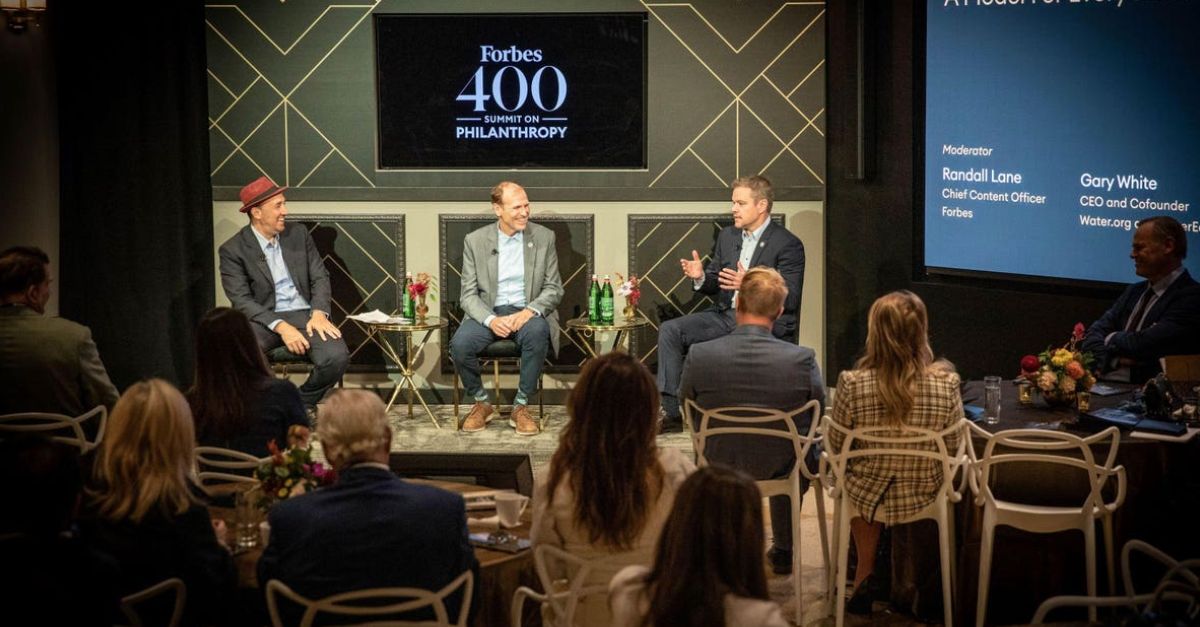
WASHINGTON (Diya TV) — More than 170 leaders from across the United States and India gathered for the Philanthropy Summit hosted by Indiaspora and the India Philanthropy Alliance (IPA) to celebrate the rapid rise of Indian American giving and chart a path for greater social impact. The event highlighted new data showing major growth in Indian American philanthropy and a shared commitment to building a stronger, more sustainable future for India and beyond.
A new report by Dalberg, commissioned by Indiaspora and IPA, revealed that Indian American giving has nearly tripled in six years, reaching between $4 billion and $5 billion annually. The study showed a dramatic narrowing of the “giving gap”—the difference between how much the Indian American diaspora gives and how much it would give if matching national U.S. averages adjusted for income.
In 2018, that gap was about $2.5 billion. By 2024, it had dropped to $1 billion, marking a milestone for diaspora-driven philanthropy. Participants at the summit hailed this progress as a turning point in U.S.-India giving.
Philanthropist Sunil Wadhwani, who first set this bold vision at the 2018 summit, was praised for inspiring this transformation. The study also found that the wealthiest Indian Americans now give at higher rates than the U.S. average, reflecting a growing culture of strategic generosity.
Participants debated how to measure nonprofit effectiveness. They agreed that efficiency should not be confused with impact and that donors must give with both “their hearts and their minds.” The summit reinforced that open dialogue and accountability are vital to ensure every dollar drives real change in India’s human development and environmental protection.
The event also previewed the UDARTA-EG study from GivingTuesday India, which explores how Indian nonprofits can better engage everyday donors and volunteers. The findings emphasized the power of local giving and called for more support to strengthen India’s social sector.
The summit celebrated the next generation of philanthropists, spotlighting Aneesh Gupta from Indiana and Eesha Kondapalli from North Carolina, winners of IPA’s sixth annual Youth Essay Competition. Their essays earned them $1,000 donations to CRY America and the Stray Animal Foundation of India, respectively.
Young leaders like these, participants said, represent the future of Indian American philanthropy, bringing fresh ideas and a strong sense of service rooted in Gandhi’s ideals of compassion and community.
Technology also played a key role in the summit. Organizers used the Slido app to make discussions interactive, allowing attendees to share questions and insights in real time. Panels explored how Silicon Valley’s innovation culture can inspire nonprofits and how philanthropy, in turn, can help the tech world become more inclusive and equitable.
The event’s timing on Gandhi Jayanti, Mahatma Gandhi’s birthday, underscored the moral foundation of the discussions. In his keynote address, Desh Deshpande urged participants to embody Gandhi’s principles of truth, nonviolence, trusteeship, and service. He reminded attendees that Gandhi would want the best of business and nonprofit cultures to unite for community good.
Indian Consul General Dr. K. Srikar Reddy echoed that spirit in his opening remarks, stressing the vital role philanthropy plays in shaping the future of both nations.
The summit closed with renewed commitments to two key initiatives: India Giving Day and the Forum for Good. The fourth India Giving Day campaign launched during the event, with nonprofit applications open until October 31, 2025. The day of giving will be held on March 13, 2026, followed by the Forum for Good in Bangalore from March 22–25.
These initiatives aim to make American giving to India more impactful, inclusive, and joyful. Summit organizers also acknowledged key supporters, including the Sehgal Foundation, the MacArthur Foundation, the Jain Family Foundation, and Avestar Capital.
Throughout the day, speakers and participants reaffirmed that collaboration is central to progress. They emphasized that “partnership is the new leadership” and called for greater sharing of open-source knowledge to drive scalable impact. With the Indian American diaspora’s giving power growing faster than ever, summit leaders agreed that this moment represents more than just a milestone—it is a movement.