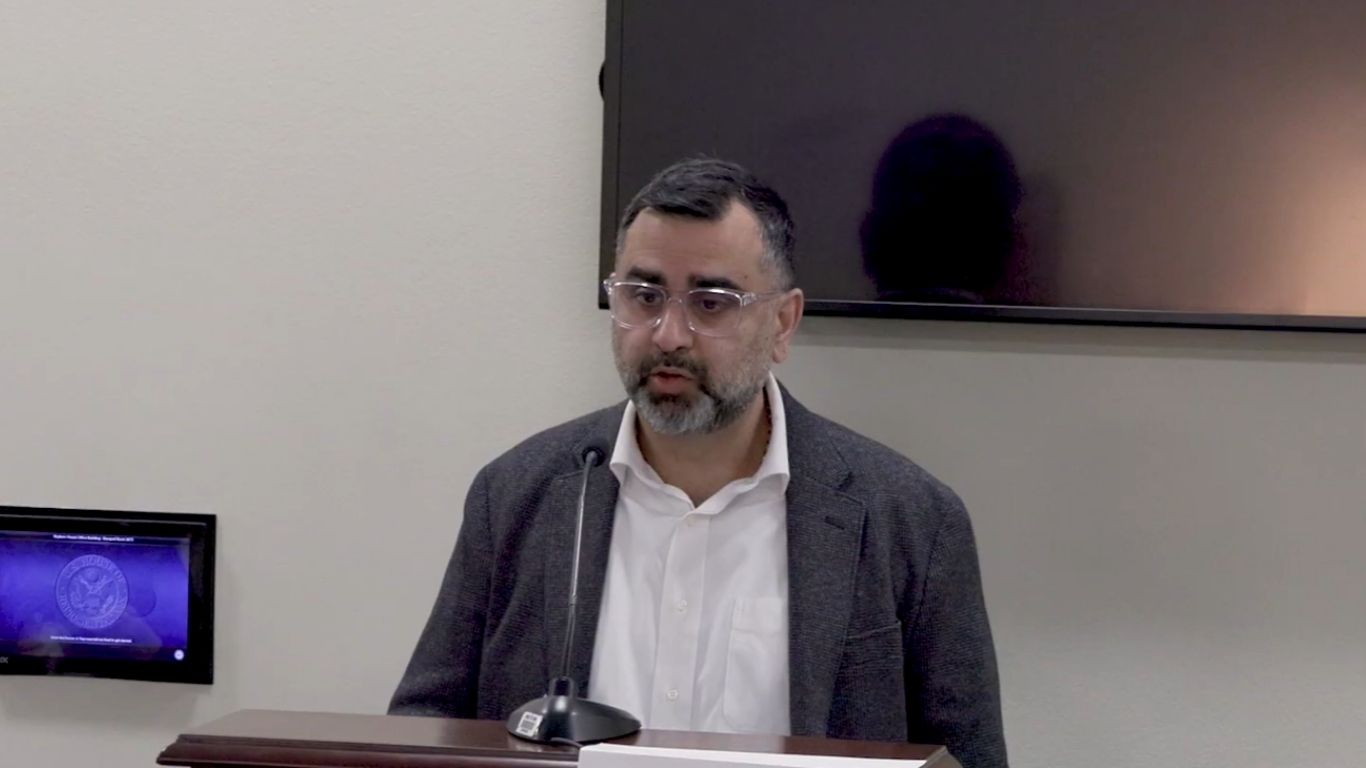
BALTIMORE, Md. (Diya TV) — Indian American economist Bhaven N. Sampat has joined Johns Hopkins University as a Bloomberg Distinguished Professor of Science and Innovation Policy. He will study how public policies and institutions can support scientific progress and encourage innovation that addresses major public challenges.
Sampat’s research focuses on science funding, patent policy, and the relationship between scientific research and innovation. His work aims to improve public policy while helping society benefit from new discoveries and technologies. Johns Hopkins said his research combines historical analysis with modern data to better understand how government decisions shape science and innovation.
“I’m interested in science policy with the ultimate goal of solving public problems and improving social outcomes,” Sampat said. “New knowledge and technologies have the potential to drive tremendous improvements in human well-being. That’s my North Star.”
Throughout his career, Sampat has explored how government policies influence scientific research and technological development. He has studied the lasting impact of World War II research programmes on the U.S. science system. In addition, he has examined pharmaceutical patent policies in the United States and other countries. His work also covers the history, economics and politics of the U.S. National Institutes of Health, which remains the world’s largest single funder of biomedical research.
Moreover, Sampat studies how different groups shape science policy. These groups include taxpayers, universities, industry leaders, scientific organisations and members of Congress. He believes that strong policies can improve research outcomes while creating long-term public benefits.
Much of Sampat’s recent research focuses on healthcare. He says better science policies can speed up medical progress and improve lives. At the same time, they can help governments and research organisations invest resources more effectively.
“The economic value of new and better treatments, to say nothing of the human benefits, runs into the trillions of dollars,” Sampat said. “The rate and direction of medical progress depend not just on scientific and technical factors but also on institutional design and policy choices. Improving our approaches to funding and governing science and innovation can yield large benefits for generations to come.”
Sampat also believes the United States has reached an important moment in science policy. He noted that the framework created after World War II, which shaped the relationship between the federal government and scientific research, now faces growing pressure. As a result, he says policymakers must rethink how they support scientific discovery while preparing for future challenges.
His appointment comes through the Promoting and Governing Technology Bloomberg Distinguished Professorship cluster at Johns Hopkins. The university created the programme to bring together experts from different fields to solve complex global issues. Sampat’s experience in economics, innovation and public policy fits closely with that mission.
Before joining Johns Hopkins, Sampat spent much of his academic career at Columbia University. Later, he moved to Arizona State University, where he worked with the Consortium for Science Policy and Outcomes and the School of Public Affairs. During that time, he continued his research on science funding, innovation policy and public institutions.
Sampat said joining Johns Hopkins carries special meaning because of the university’s long history in scientific research and medicine. He has spent years studying universities, federal research funding and life science innovation. Therefore, he sees the institution as an ideal place to continue his work while contributing to national conversations about science policy.
Johns Hopkins officials said Sampat’s research offers valuable insights into how governments can build stronger systems for scientific discovery. His work also highlights the importance of policies that encourage innovation while serving the public interest.
As governments around the world invest heavily in research, experts continue to debate how funding should be distributed and managed. Sampat’s research seeks to provide evidence that helps leaders make informed decisions. In turn, those decisions could strengthen scientific institutions, improve healthcare, support economic growth and encourage breakthrough discoveries.
With his move to Johns Hopkins, Sampat plans to continue exploring how thoughtful policies can shape the future of science and innovation. His research aims to ensure that scientific advances not only expand knowledge but also improve lives and address society’s most pressing challenges.