NEW DELHI (Diya TV) — India has stepped back from trade negotiations with the United States after Washington imposed steep tariffs on Indian goods, sparking renewed tensions between the two countries.
The U.S. Treasury announced a 50% tariff on Indian goods last week. Treasury Secretary Scott Bessent said the decision came after India purchased Russian oil and delays in trade talks. Speaking to Fox Business, Bessent explained that he expected a deal by early summer but claimed India slowed the process.
Despite the dispute, Bessent took a conciliatory tone. India is the world’s largest democracy. The U.S. is the world’s largest economy. I think at the end of the day we will come together,” he said.
Former Indian finance secretary Subhash Garg sharply rejected Bessent’s explanation. In an interview with NDTV, Garg said India had already “effectively walked away” from the talks. He warned that the high tariffs make meaningful trade impossible.
“No one can trade at those tariff levels,” Garg said. “But India should never formally close the door; one must always hope sanity prevails at some point.”
Garg defended India’s decision to buy Russian crude. He stressed that India remains within the global price-cap framework and should not give in to U.S. pressure. “Yielding to U.S. demands would only embolden Washington, not serve India’s interests,” he said.
Bloomberg reported that while formal trade talks are stalled, informal communication between the two sides continues. A senior Indian commerce official confirmed that discussions on defense, foreign policy, and security remain active even as trade negotiations pause.
India has called the tariffs “unjustified” but has responded cautiously. Sources told the Hindustan Times that New Delhi still hopes to reach an agreement through dialogue.
Garg also criticized India’s rigid approach to agricultural and consumer goods. He suggested that India should rethink its ban on imports such as genetically modified oils and dairy. According to him, farmers’ interests would not suffer from these imports. “It’s about consumer preference, and that should come with a choice, not bans,” Garg said.
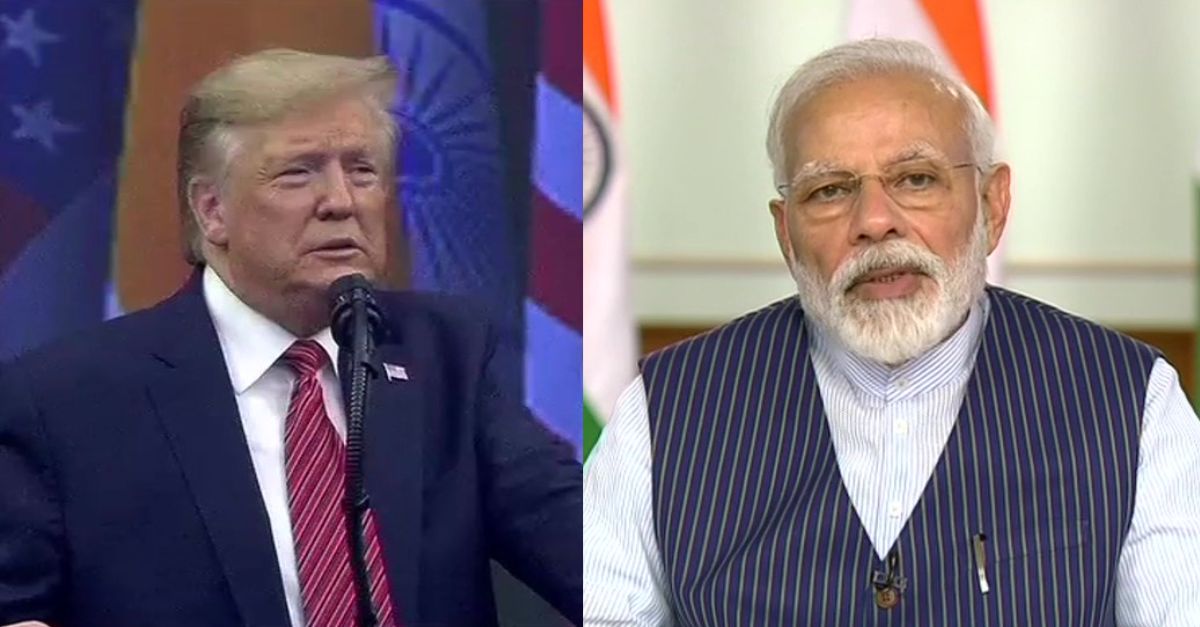
Indian Prime Minister Narendra Modi has taken a different tone. Earlier this month, he promised to protect India’s farmers at any cost. “The interests of our farmers are our topmost priority,” Modi said. “India will never compromise the interests of its farmers, its cattle rearers and fisherfolk.”
Last week, Modi repeated his stance, saying India is ready to bear the pressure. Sources familiar with trade talks told the Hindustan Times that protecting farmers, small producers, and micro, small, and medium enterprises remains non-negotiable for India.
The trade dispute comes as President Donald Trump faces setbacks on his tariff policies at home. A divided U.S. appeals court ruled last week that most of the tariffs imposed on several countries are illegal. The U.S. Court of Appeals for the Federal Circuit allowed the tariffs to stay in place until October 14 while the administration considers an appeal to the Supreme Court.
Trump rejected the ruling and insisted all tariffs would continue. He called the court “highly partisan” and said its decision was wrong.
The tariff clash has added strain to one of the world’s most important trade relationships. The U.S. is India’s largest trading partner, with billions of dollars in goods and services exchanged each year. Analysts warn that prolonged disputes could hurt businesses on both sides.
For now, India appears unwilling to return to the negotiating table under the current tariff regime. While Washington insists that a deal is still possible, New Delhi has drawn red lines around protecting its farmers and local industries.
As Garg noted, the best hope lies in keeping communication channels open. “No one can trade at those tariff levels,” he said. “But one must always hope sanity prevails at some point.”