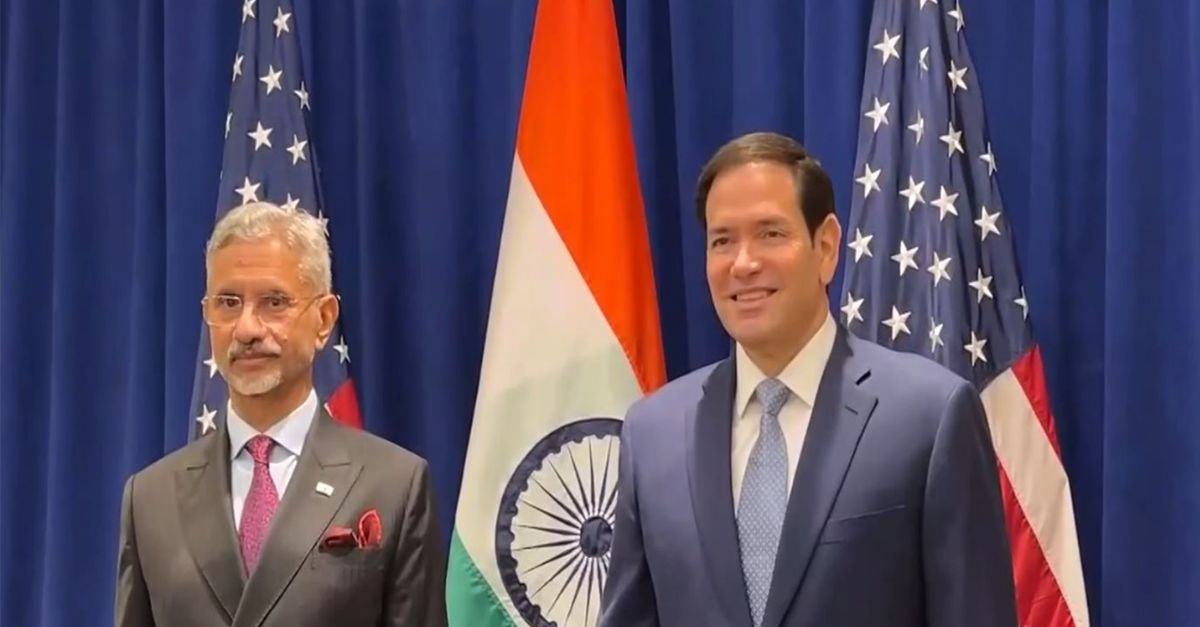
NEW YORK (Diya TV) — Indian External Affairs Minister S. Jaishankar met U.S. Secretary of State Marco Rubio in New York on Monday, signaling efforts by both countries to ease trade tensions and rebuild trust. The talks came amid disputes over tariffs, the recent hike in H-1B visa fees, and concerns surrounding India’s purchase of Russian oil.
The meeting was the first face-to-face interaction between Jaishankar and Rubio since July. It took place on the sidelines of the 80th session of the United Nations General Assembly (UNGA). Both sides described the discussion as candid and positive. They agreed that sustained engagement is needed to make progress on priority issues.
In a post on X, Jaishankar said, “Our conversation covered a range of bilateral and international issues of current concern. Agreed on the importance of sustained engagement to progress on priority areas. We will remain in touch.”
The State Department also released a readout. It said Secretary Rubio expressed appreciation for India’s cooperation in areas such as trade, defense, energy, pharmaceuticals, and critical minerals. The statement reaffirmed that India is of “critical importance” to the United States.
Indian Commerce Minister Piyush Goyal also traveled to New York to meet U.S. Trade Representative Jamieson Greer. Their talks focused on moving forward with the first stage of a trade deal. Sources said both sides remain hopeful of reaching an interim understanding soon.
The negotiations follow months of strain after U.S. President Donald Trump doubled tariffs on Indian imports to 50% in response to India’s purchase of Russian oil. The move created friction in the economic relationship, which had been close to sealing a bilateral trade agreement earlier this year.
Officials said the Jaishankar-Rubio meeting was aimed at giving political direction to ongoing negotiations. Technical discussions will continue this week in Washington, led by Goyal, U.S. Commerce Secretary Howard Lutnick, and Trade Representative Greer.
Jaishankar and Rubio also discussed regional security and reaffirmed their commitment to the Quad partnership, which includes Japan and Australia. They agreed to continue working together to promote a free, open, and inclusive Indo-Pacific region.
The Quad has grown in importance as a counterbalance to China’s influence in the region. Both India and the United States view it as a vital platform for cooperation in defense, technology, and maritime security.
The New York meetings followed a phone call last week between Trump and Indian Prime Minister Narendra Modi. The President called Modi on the eve of his 75th birthday, marking their first conversation since tariffs were increased. Both leaders also mentioned the Russia-Ukraine conflict in their social media posts after the call.
The outreach came after weeks of tension. In August, trade talks collapsed at the last minute despite being close to an agreement. Earlier this month, however, Trump described India and the United States as having a “special relationship.” Modi quickly responded, saying he “deeply appreciated” Trump’s sentiments.
These gestures signaled that both governments are willing to reset ties, even as sensitive issues like tariffs, visa fees, and energy imports remain unresolved.
Jaishankar’s meeting with Rubio was part of a packed diplomatic schedule during UNGA week. On Sunday, he met Philippine Foreign Affairs Secretary Theresa P. Lazaro to discuss cooperation in the Indo-Pacific. He also held talks with Sergio Gor, the U.S. ambassador nominee to India.
Jaishankar will address the UNGA on September 27, while Trump is set to deliver his speech on September 23. Both speeches are expected to draw global attention, particularly as the world watches how Washington and New Delhi navigate their differences while seeking common ground.
India and the United States have described each other as natural partners for decades. But recurring trade disputes and policy differences often test the relationship. The recent round of meetings in New York suggests that both sides are willing to move past recent strains.
For India, securing a trade deal with the United States would boost exports and attract investment. For Washington, cooperation with New Delhi is key to advancing strategic goals in the Indo-Pacific and countering regional challenges.
The Jaishankar-Rubio meeting, along with ongoing trade talks, may mark the beginning of a new phase in India-U.S. relations. Both governments appear ready to put recent tensions behind them and work toward a stronger, more stable partnership.