NEW YORK (Diya TV) — India strongly rebuked Pakistan at the United Nations, accusing its neighbor of a long and continuing history of sexual violence in conflict situations, including crimes dating back to the 1971 Bangladesh Liberation War.
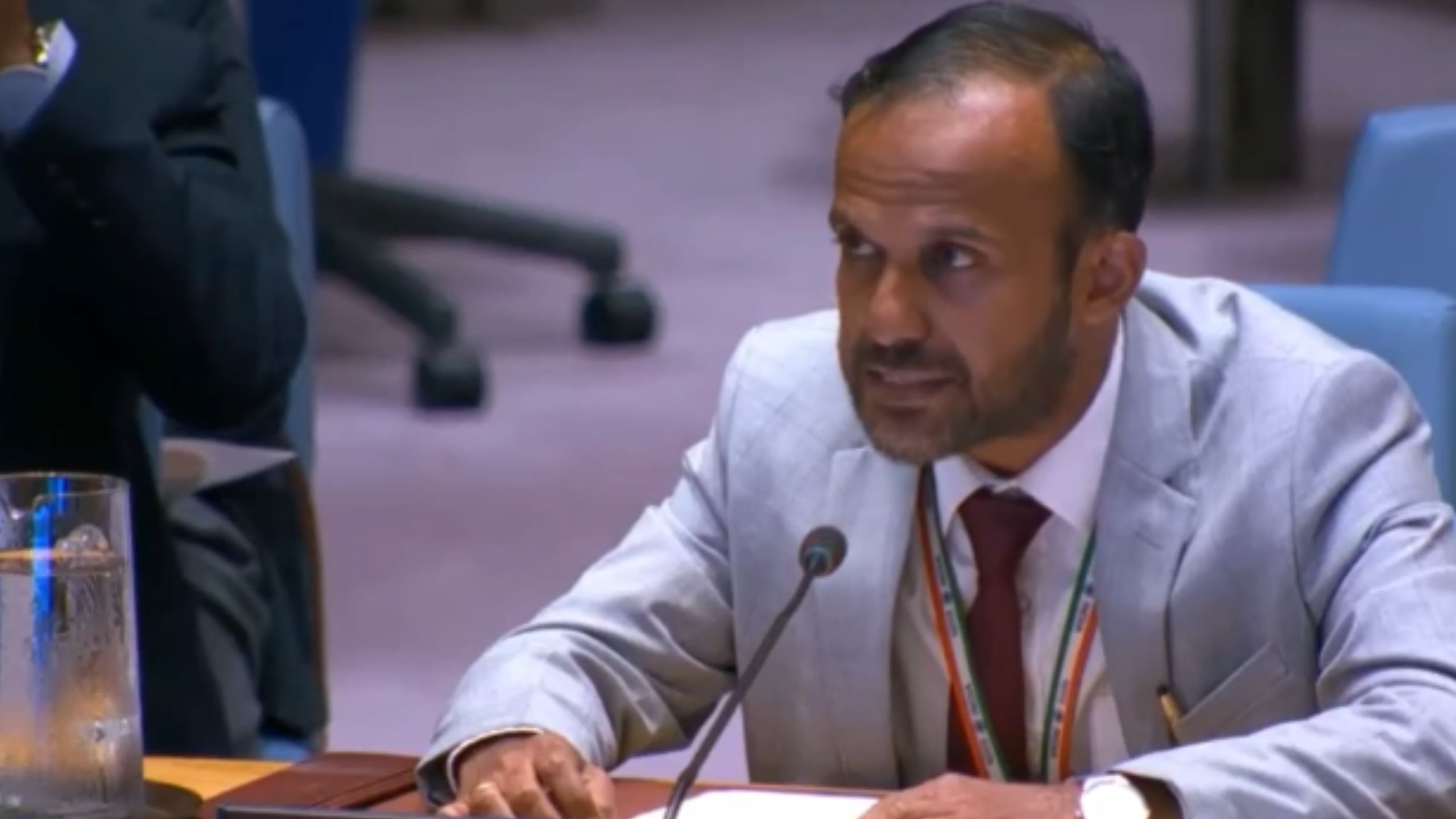
India’s Charge d’Affaires at the UN, Eldos Mathew Punnoos, spoke Tuesday at the UN Security Council’s open debate on conflict-related sexual violence. He dismissed Pakistan’s allegations of abuse in Jammu and Kashmir and turned the focus on Islamabad’s “shameful record” of crimes against women.
“The utter impunity with which the Pakistan Army perpetrated heinous crimes of gross sexual violence against hundreds of thousands of women in erstwhile East Pakistan in 1971 is a matter of shameful record,” Punnoos said. He stressed that the same pattern of abuse continues today.
Punnoos reminded the council that Pakistan, while serving as a non-permanent member of the UNSC, continues to persecute women from minority communities through abductions, trafficking, forced marriages, and religious conversions. He cited reports from the UN Human Rights Office that documented these violations.
According to Punnoos, Pakistan’s judiciary often validates crimes against women. He pointed to widespread cases of child marriages, sexual violence, and forced conversions. He said these practices target vulnerable groups, particularly Hindus and Christians in Sindh province.
A 2024 report by the Sustainable Social Development Organization showed Pakistan recorded more than 24,000 cases of abductions, 5,000 cases of rape, and 500 “honor” killings last year. Many victims were Hindu girls forced into marriage and religious conversion.
“It is ironic that those who perpetrate these crimes are now masquerading as champions of justice. The duplicity and hypocrisy are self-evident,” Punnoos said.
Punnoos urged the international community to hold perpetrators accountable. He said conflict-related sexual violence destroys individual lives and tears apart societies. Survivors, he added, need access to health care, psychosocial support, legal aid, and reintegration programs.
He underlined the importance of UN Security Council Resolution 2467, which calls for survivor-centered approaches, reparations, and justice mechanisms.
“Perpetrators of heinous acts of conflict-related sexual violence must be condemned in the strongest possible terms and brought to justice,” Punnoos said.
The Indian envoy highlighted his country’s contributions to global peacekeeping. He said India was among the first to contribute to the UN Secretary-General’s Trust Fund for victims of sexual exploitation and abuse. India also signed a voluntary compact in 2017 to prevent such crimes in UN operations.
Punnoos recalled that India deployed the world’s first all-women police unit to Liberia in 2007. These women, he said, connected with local communities and addressed gender-sensitive issues with great success. India continues to send female contingents to missions such as MONUSCO, UNICEF, and UNMAS.
Training centers in New Delhi now specialize in preparing peacekeepers to handle gender-sensitive challenges and prevent sexual violence in conflict zones.
Punnoos also spoke about India’s domestic measures to protect women. He said the government launched the $1.2 billion Nirbhaya Fund to improve women’s safety. A nationwide emergency number (112) and Sakhi One Stop Centers provide shelter, legal aid, and medical assistance across districts.
India has also set up fast-track courts and trained investigators and medical officers to ensure swift justice for victims of gender-based crimes. These efforts, Punnoos said, serve as a model for providing life-saving services in conflict situations.
India has implemented a comprehensive domestic strategy for women’s safety. It could offer insights for ensuring access to life-saving services and protection for survivors in conflict situations,” he told the council.
As he concluded, Punnoos reaffirmed India’s commitment to eliminating sexual violence in conflict. He said New Delhi would continue to support survivors and push for accountability on a global scale.
“Sexual violence in conflict zones not only destroys individual lives but tears apart the very fabric of societies, leaving lasting scars on communities for generations,” Punnoos said. “India remains committed to rooting out such violence and helping survivors rebuild their lives.”