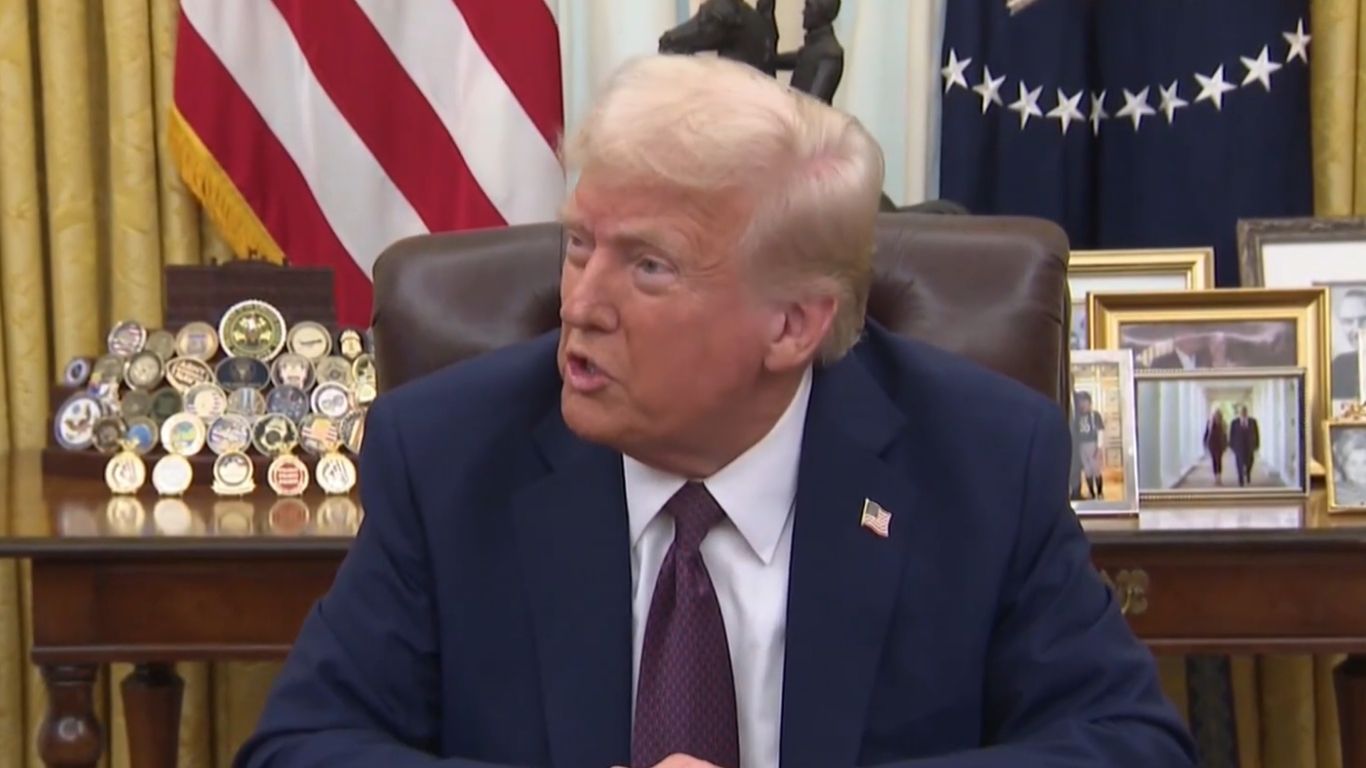
WASHINGTON (Diya TV) — The House on Tuesday approved a sweeping Republican-backed immigration enforcement and border security bill, handing President Donald Trump a major legislative victory and advancing his immigration agenda.
Lawmakers passed the $70 billion measure in a narrow 214-212 vote after months of partisan battles over immigration funding. The legislation, known as the Secure America Act, now heads to Trump’s desk, where he is expected to sign it into law. The bill provides billions of dollars for Immigration and Customs Enforcement (ICE) and Customs and Border Protection (CBP) through fiscal year 2029. Republican leaders hailed the measure as a critical investment in border security, while Democrats sharply criticized it for expanding enforcement powers without reforms.
The legislation allocates $38 billion to ICE and $26 billion to the Border Patrol. It also creates a $5 billion funding pool under the control of Homeland Security Secretary Markwayne Mullin.
Every Republican lawmaker present voted for the Senate-approved bill. The only lawmaker to break with GOP leadership was Rep. Kevin Kiley of California, an independent who caucuses with Republicans. The vote marked a significant win for House Speaker Mike Johnson, who faced little room for error because of the Republican Party’s slim majority in the House. Johnson said the measure ensures long-term funding for immigration enforcement agencies and prevents future funding battles.
“By funding it for three years, we’ve taken away their ability to cut that funding or to take hostage the funding for the remainder of the Trump administration,” Johnson told reporters after the vote.
Republican leaders argued that increased funding is necessary to strengthen border security and support immigration enforcement operations. House Majority Leader Steve Scalise said Democrats repeatedly blocked Homeland Security funding efforts and forced Republicans to seek alternative legislative options.
Democrats unanimously opposed the bill. They argued that Congress should pair new funding with policy changes and stronger oversight measures. House Democratic Caucus Chairman Pete Aguilar accused Republicans of expanding ICE’s authority without addressing concerns about accountability. Aguilar said lawmakers should not provide large amounts of funding to federal agencies without implementing reforms.
For months, Democratic lawmakers pushed for immigration policy changes as a condition for approving additional money for ICE and the Border Patrol. Those disagreements contributed to a lengthy government funding standoff that lasted until Trump signed a partial Department of Homeland Security funding bill in April. Democrats also pointed to concerns surrounding federal immigration enforcement actions during Trump’s administration. Party leaders maintained that increased funding should include safeguards and policy updates.
Kiley emerged as the lone vote against the measure from the Republican-aligned side of the aisle. He said his opposition centered on the legislative process rather than the bill’s funding levels. Kiley argued that Congress should continue using the traditional appropriations process, which typically requires bipartisan cooperation. He warned that relying on budget reconciliation to pass major funding measures could weaken Congress’s normal budget process.
“The whole reason I became an independent is that I think that extreme partisanship here has completely run amok,” Kiley said.
Republicans used the budget reconciliation process to advance the legislation. The procedure allowed the party to avoid the Senate’s usual 60-vote threshold and pass the bill with a simple majority.
Although Republicans largely remained united, some conservative lawmakers pushed for stronger immigration policy provisions alongside the funding package. Reps. Chip Roy of Texas and Tim Burchett of Tennessee initially withheld support during a procedural vote earlier Tuesday. They sought commitments from House leadership to advance additional border security legislation.
Johnson later assured conservatives that the House would consider further immigration measures in the coming weeks. Those discussions helped secure enough support to move the bill forward. Roy said he expects lawmakers to take up provisions from H.R. 2, a broader Republican immigration and border security proposal, before the July Fourth holiday.
The bill’s passage follows weeks of intense negotiations and internal Republican disagreements. Some GOP lawmakers previously objected to a proposed $2 billion “anti-weaponization fund” supported by Trump, which contributed to delays in the legislative process. Despite those disputes, Republican leaders ultimately unified their conference and secured final passage. The approval of the Secure America Act marks one of the most significant immigration and border security funding victories of Trump’s presidency. It also sets the stage for continued debate over immigration enforcement, border security policies, and federal funding priorities ahead of the 2026 election cycle.