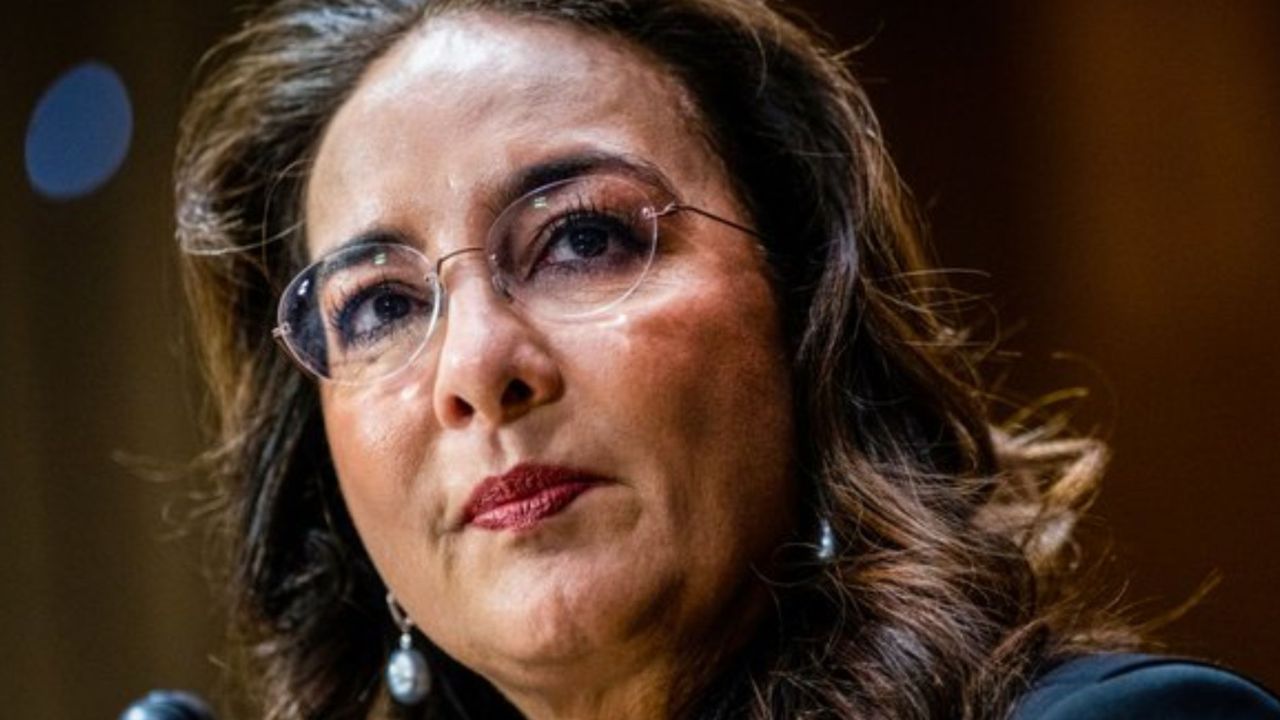
WASHINGTON (Diya TV) — Harmeet Dhillon resigned Thursday as head of the Justice Department’s Civil Rights Division after 19 months in which she redirected the unit’s enforcement priorities and oversaw the departure of hundreds of career attorneys. Attorney General Todd Blanche accepted her resignation and praised her leadership.
Her announcement came two days after Democrats won control of Congress, but Dhillon said she decided to leave before Election Day. She said she told White House Chief of Staff Susie Wiles in October that she had accomplished what she came to Washington to do and wanted to return to private practice. Wiles asked her to wait until after the midterms to announce the decision, Dhillon said.
Dhillon took office in April 2025 after Senate confirmation. She arrived with a different view of the division’s mission from many career attorneys, who had spent decades enforcing federal protections in voting, employment, housing, education and policing. Dhillon argued that the division should enforce civil rights laws, not what she called “woke ideology.” Critics said she shifted its power toward conservative causes and away from protecting minority groups from discrimination.
The shift showed up in the division’s cases. In May 2025, Dhillon moved to end federal police reform agreements involving Minneapolis and Louisville and close investigations into several other departments, including those in Phoenix, Memphis and Oklahoma City. The investigations had examined alleged patterns of unconstitutional policing. The administration argued that the agreements imposed federal control over local departments; critics said the move abandoned oversight before the cities completed reforms.
Dhillon also made universities a major focus. The division investigated admissions and diversity programs for alleged race discrimination and pursued claims that campuses failed to address antisemitism. In October, the Justice Department and Education Department reached a settlement with the University of North Carolina. It requires the school to use race-blind admissions, strengthen its response to antisemitism complaints and report compliance to federal officials through 2028. The department also reached agreements with other universities, including Northwestern and the University of Virginia. The Virginia agreement came before university president Jim Ryan resigned amid pressure from the Trump administration.
The division’s election work drew another legal fight. It sued more than 30 states to obtain detailed voter registration records, arguing the information would help enforce federal voter-registration laws and protect election integrity. States challenged the requests as an intrusion on voter privacy and state authority. Courts rejected many of the department’s demands; in October, a federal judge ruled that the department could not require states to provide complete lists for comparison against a federal immigration database.
The division also lost much of its experienced staff. More than three-quarters of its workforce from the start of Trump’s second term left, including roughly 300 attorneys, according to estimates reported during Dhillon’s departure. Some employees objected to the administration’s priorities; others accepted buyouts. Dhillon called the departures the largest personnel “self-purge” in Justice Department history.
Stacey Young, a former division attorney who now leads a network of Justice Department alumni, called Dhillon the division’s “most destructive, lawless and hateful” leader. Young said the unit had spent nearly 70 years enforcing civil rights protections and accused Dhillon of decimating that work. Blanche offered a sharply different assessment, saying Dhillon defended Americans’ civil liberties and enforced the law “without fear or favor.”
Born in Chandigarh, India, Dhillon built a career in conservative legal circles before joining the administration. She founded Dhillon Law Group and the Center for American Liberty, a nonprofit that brings civil-liberties cases. She said she plans to return to private practice. The Justice Department has not announced who will lead the division next.