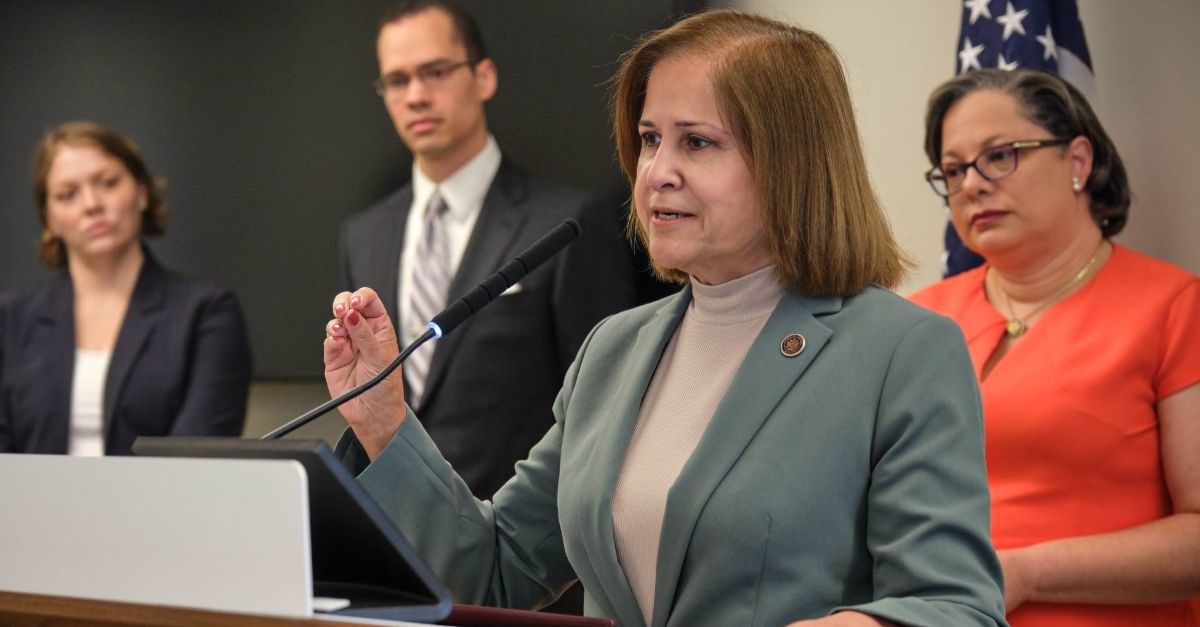
RICHMOND, Va. (Diya TV) — Democrat Ghazala Hashmi, a state senator of Indian origin, has made history by winning the race for Virginia’s lieutenant governor, becoming the first Muslim American woman elected to statewide office in the United States. With 80% of votes counted, Hashmi earned 54.3% of the vote, defeating Republican John Reid, who received 45.7%, according to projections released Nov. 4. More than 2.8 million Virginians cast ballots in the race.
Hashmi’s victory marks another milestone in her political career. In 2019, she became the first Muslim and first South Asian American elected to the Virginia Senate, representing a district southwest of Washington, D.C. Born in India, Hashmi immigrated to the United States at the age of four. She graduated as valedictorian of her high school class, earned a bachelor’s degree from Georgia Southern University, and later received a doctorate in American literature from Emory University.
As lieutenant governor, Hashmi will preside over the Virginia Senate and cast tie-breaking votes. The position is also first in line to succeed the governor if a vacancy occurs. Her victory could prove crucial for Democrats, as her move from the Senate leaves the party with a narrow 20-19 majority.
Virginia is one of 17 states where voters elect the governor and lieutenant governor separately, a system that often produces close statewide contests. Hashmi’s win came on the same night that former Rep. Abigail Spanberger was projected to become the first woman elected governor of Virginia. Both Democrats ran independent statewide campaigns, reflecting Virginia’s unique electoral process.
The pair’s victories mark a turning point in Virginia politics. The state, once considered reliably conservative, has now elected two women to its highest offices — one of them the first Muslim American woman ever to hold statewide office in the nation. Hashmi’s campaign emphasized diversity, education, and equality. Speaking to The Washington Post before Election Day, she said she hoped her candidacy would “serve as a statement against prejudice.”
“We’re really showing the rest of the country that Virginia embraces diversity,” Hashmi said.
During her Democratic primary in June, Hashmi narrowly defeated former Richmond Mayor Levar Stoney and state Sen. Aaron Rouse, securing 28% of the vote in a crowded field. She gained support from the progressive wing of the Democratic Party and received an endorsement from Rep. Ro Khanna of California. Her Republican opponent, John Reid, a former conservative talk show host, made history as Virginia’s first openly gay statewide nominee. He centered his campaign on education and cultural issues, echoing themes used by Republican Gov. Glenn Youngkin in 2021.
Reid also announced plans to support laid-off federal workers and to uphold Virginia’s Right to Work law, which prevents mandatory union membership. While Reid has supported former President Donald Trump, he did not receive Trump’s endorsement. The race drew attention after Hashmi declined to participate in a live debate with Reid. In response, he debated an AI-generated version of Hashmi in October — a move that drew national media coverage but little impact on the outcome.
Hashmi’s victory builds on her record as a Virginia lawmaker. She first won her Senate seat in 2019, defeating a Republican incumbent and helping Democrats flip control of the chamber. She often cites Trump’s 2017 Muslim travel ban as a key reason she entered politics. Her campaign focused on protecting public education, expanding health care access, and promoting economic opportunity across Virginia.
Political analysts say her win could make her a rising star in the Democratic Party, with the lieutenant governor’s office often serving as a launchpad for gubernatorial campaigns. In Virginia, governors cannot serve consecutive terms, making the lieutenant governor’s position one of the most visible roles in state politics.
“This moment shows what’s possible when communities come together,” Hashmi said on election night. “Virginia’s future is bright, inclusive, and ready to lead.”