WASHINGTON (Diya TV) — A federal judge on March 16, 2026, temporarily blocked Health Secretary Robert F. Kennedy Jr.’s changes to the childhood immunization schedule, ruling that the process used to make those changes likely violated federal law.
U.S. District Judge Brian Murphy of Boston sided with the American Academy of Pediatrics and a coalition of medical organizations that had sued the Department of Health and Human Services, arguing Kennedy’s actions were arbitrary, capricious, and unlawful. In his ruling, Murphy wrote that there is “a method to how these decisions historically have been made, a method scientific in nature and codified into law through procedural requirements,” and that the government “has disregarded those methods and thereby undermined the integrity of its actions.”
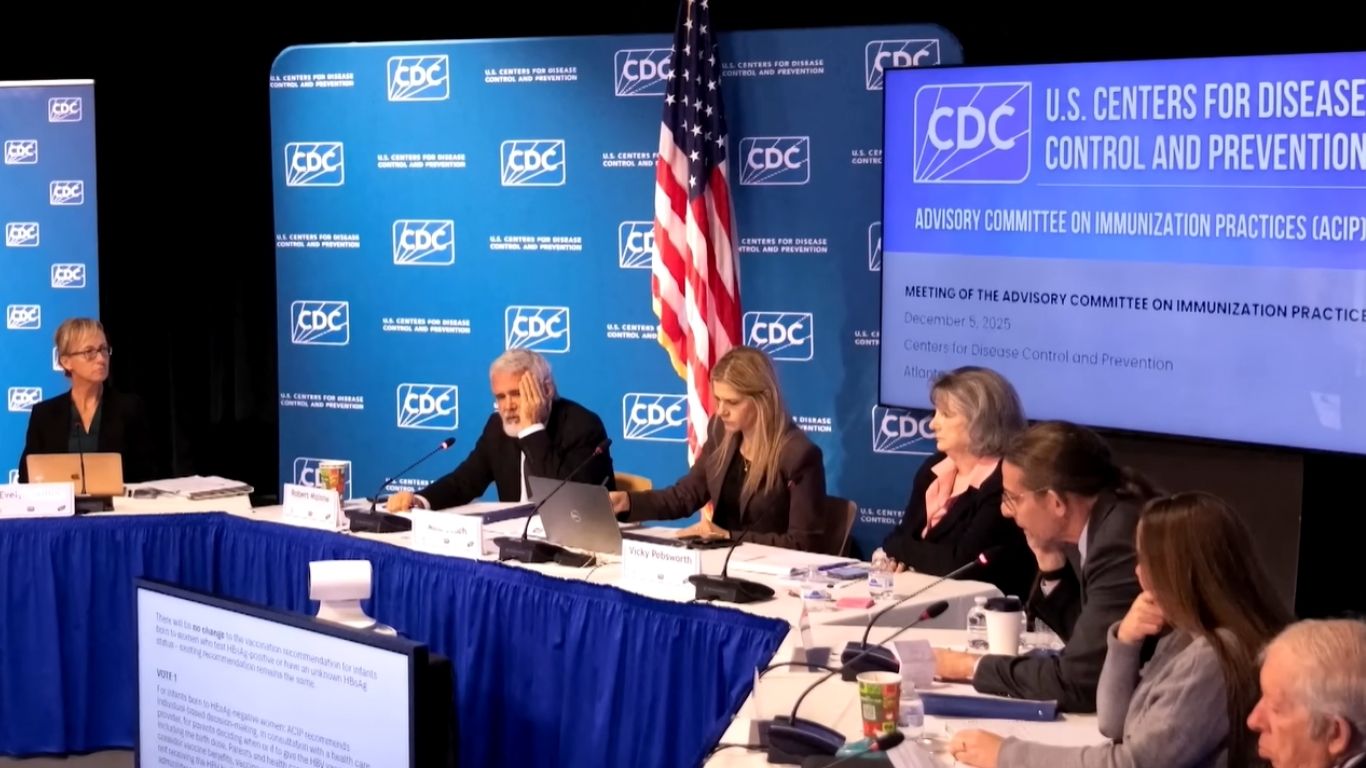
At the center of the case was Kennedy’s handling of the Advisory Committee on Immunization Practices, known as ACIP, the independent panel of vaccine experts that has guided U.S. vaccine policy since 1964. Shortly after taking office, Kennedy fired all 17 members of the committee and replaced them with a new slate that included several vaccine critics. The judge’s ruling blocked Kennedy’s 13 newly appointed ACIP members from continuing to serve and invalidated votes they had previously taken, including decisions to downgrade recommendations for hepatitis B vaccines for newborns and COVID-19 shots.
Kennedy and the CDC had also reduced the number of diseases for which routine childhood vaccinations are recommended from 18 to 11, dropping recommendations for hepatitis A, hepatitis B, RSV, dengue, and two types of bacterial meningitis. Kennedy also issued stricter rules for how vaccines are tested and moved to limit access to COVID-19 vaccines, particularly those using mRNA technology, for people under 65.
Murphy found that beyond the procedural violations, the newly reconstituted ACIP was itself unlawfully assembled. Of its 15 current members, the judge said that “even under the most generous reading, only six appear to have any meaningful experience in vaccines,” despite the committee’s own charter requiring expertise in vaccine use and research. “A committee of non-experts cannot be said to embody ‘fairly balanced points of view’ within the relevant scientific community,” Murphy wrote.
The ruling forced ACIP to postpone a meeting that had been scheduled to begin the day after the decision was issued. Murphy also stayed the appointment of 13 committee members Kennedy had installed since June 2025.
Dr. Andrew Racine, president of the American Academy of Pediatrics, called the ruling “a historic and welcome outcome for children, communities, and pediatricians everywhere.” More than 200 organizations, including the American Medical Association and the March of Dimes, had already announced they would disregard Kennedy’s revised schedule and continue following the AAP’s immunization guidelines.
The administration pushed back. HHS spokesman Andrew Nixon said the department “looks forward to this judge’s decision being overturned just like his other attempts to keep the Trump administration from governing.” Dr. Robert Malone, co-chair of Kennedy’s reconstituted ACIP, called Murphy a “rogue judge” and said the administration had strong grounds for appeal. Kennedy defended the changes, saying children are required to take “between 69 and 92 vaccines to stay in school in some states, and not one of them has been safety tested in a pre-licensing placebo-controlled trial.”
The case is widely expected to be appealed. A recent survey from the Annenberg Public Policy Center found that public trust in health agencies has declined during the current administration, and health officials in 30 states have already rejected at least some of Kennedy’s new recommendations.