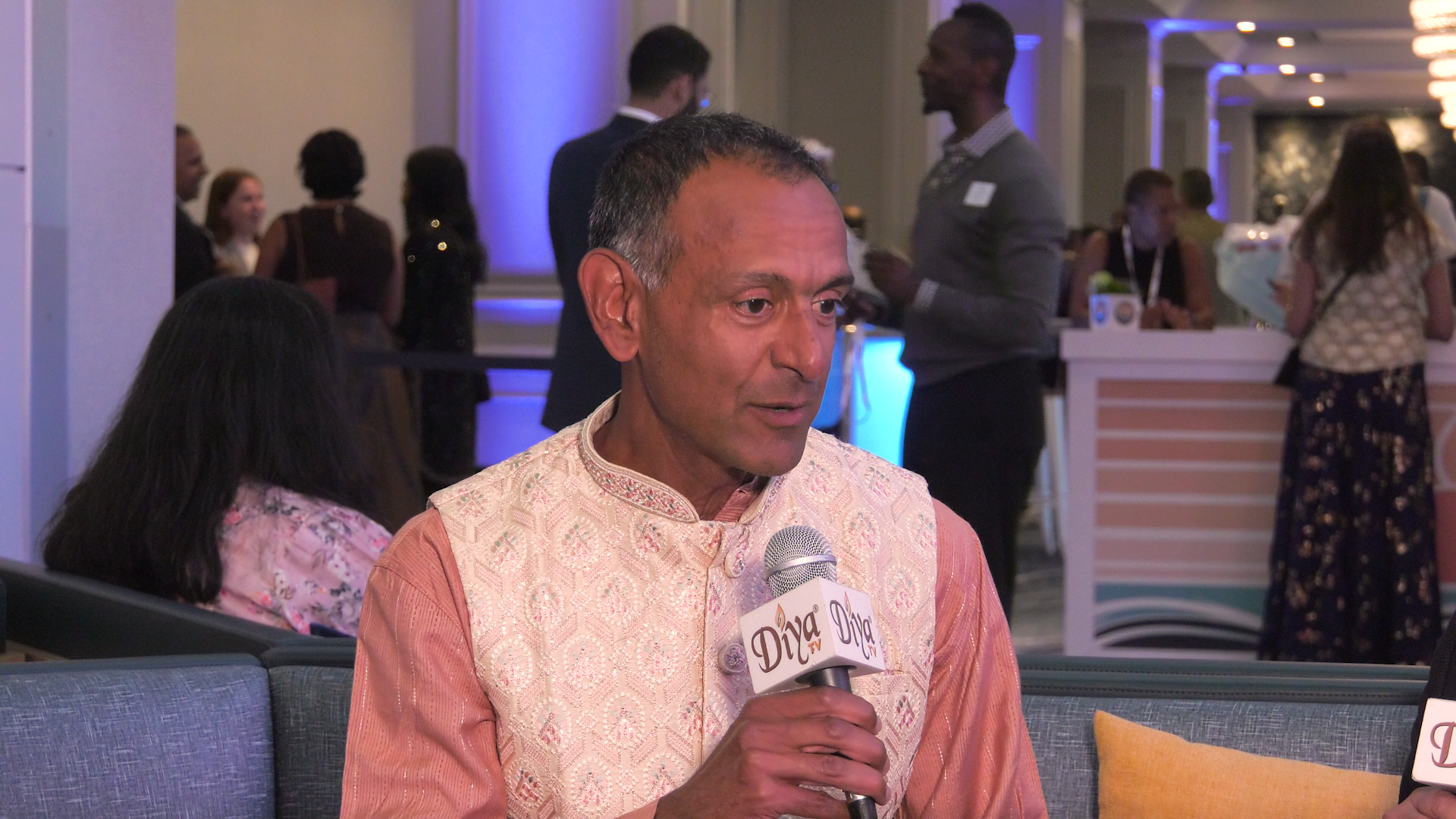
SAN DIEGO (Diya TV) — Just days before news broke that he would step down as chief legal officer of Coinbase, Paul Grewal reflected on a career that has taken him from the federal bench to the front lines of some of the technology industry’s biggest legal battles.
Speaking with Diya TV’s Ravi Kapur at the South Asian Bar Association’s national conference in San Diego, Grewal discussed his path from federal magistrate judge to senior legal executive at Meta and Coinbase, while offering a broader perspective on public service, judicial independence and the future of cryptocurrency.
The interview comes as Coinbase announced Grewal will leave his role after six years leading the company’s legal department. During his tenure, he helped steer the company through its high-profile legal battle with the U.S. Securities and Exchange Commission and became one of the cryptocurrency industry’s leading advocates in Washington. Grewal will remain an adviser to Coinbase, while Vice President of Legal Molly Abraham will succeed him as general counsel.
Grewal said his legal career was never carefully scripted. Entering the profession nearly 30 years ago, he found relatively few South Asians practicing law and credited organizations such as the South Asian Bar Association (SABA) with creating opportunities for mentorship and leadership.
“I’ve always been proud to practice law,” Grewal said, explaining that he wanted to chart his own path rather than follow more traditional career expectations.
That path led him to serve nearly six years as a United States magistrate judge in Northern California, where he presided over many of Silicon Valley’s most significant technology disputes. While the work was demanding, Grewal described judging as one of the greatest privileges of his career.
“Your job as a judge is to make the tough call,” he said, adding that judges must focus on faithfully applying the law rather than seeking public approval.
In 2016, Grewal left the bench to become deputy general counsel at Facebook, joining the company just before it entered years of intense regulatory scrutiny surrounding election interference, privacy concerns and the Cambridge Analytica scandal. Rather than viewing the period as a burden, he described it as “the professional opportunity of a lifetime,” saying it challenged him to develop new skills while helping navigate unprecedented legal issues.
Coinbase recruited Grewal in 2020, and he said the company’s commitment to working within regulatory frameworks set it apart from many cryptocurrency firms.
“We were going to follow the law,” Grewal said. “We were going to build an exchange that was licensed, that was regulated.”
That philosophy helped define Coinbase’s legal strategy during years of regulatory uncertainty. Reuters reported Grewal played a central role in defending the company against the SEC’s 2023 lawsuit, which was ultimately dismissed, and in advocating for federal legislation designed to establish clearer rules for digital assets.
During the interview, Grewal argued that stronger regulation—not less regulation—is essential for cryptocurrency to mature. He said governments should establish clear rules that protect consumers while encouraging innovation instead of relying primarily on enforcement actions after fraud occurs.
He also pointed to the rapid growth of digital assets, estimating that between 60 million and 70 million Americans have owned cryptocurrency and predicting blockchain technology will increasingly operate behind the scenes in everyday financial transactions.
Internationally, Grewal praised India’s rapid adoption of digital payments through the Unified Payments Interface (UPI), saying American policymakers can learn from India’s consumer-focused approach while both countries continue developing cryptocurrency regulations.
Throughout the conversation, Grewal returned to a theme that has shaped his career: embracing unfamiliar challenges. Whether leaving the federal bench for Big Tech or helping build legal frameworks for cryptocurrency, he encouraged young professionals to remain curious rather than becoming comfortable.
“I think some of the most rewarding moments of my career have come from when I decided to learn something new,” Grewal said. “You don’t have to love crypto or artificial intelligence, but you should understand them before deciding whether they make sense for your life.”
His departure marks the end of one of the cryptocurrency industry’s most consequential legal tenures. Law.com described Grewal’s six years at Coinbase as being defined by major courtroom victories, regulatory advocacy and the company’s efforts to shape U.S. cryptocurrency policy as digital assets moved further into the financial mainstream.