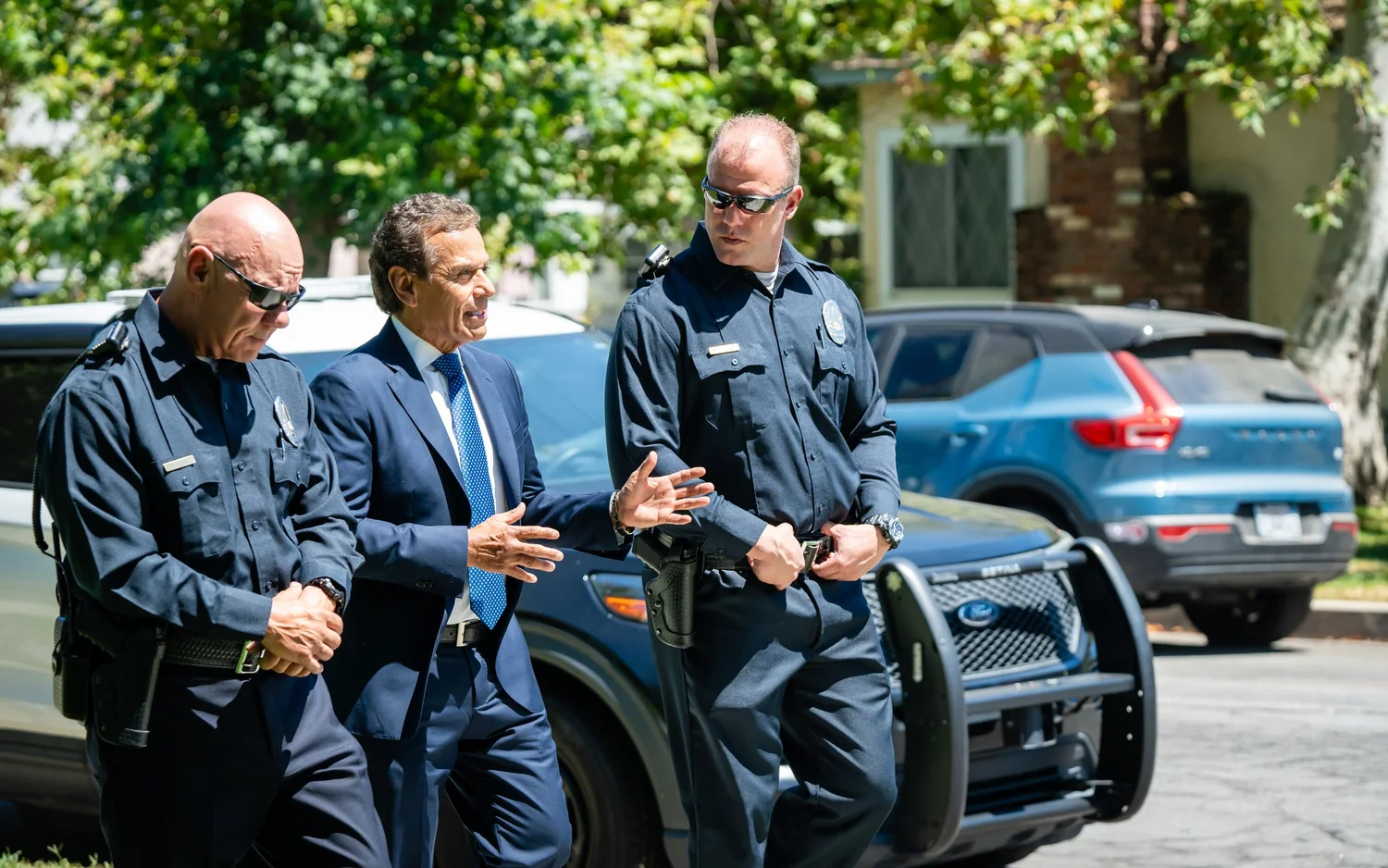
Antonio Villaraigosa, the former Los Angeles mayor and California Assembly Speaker now running for governor said California needs less political noise and more proven leadership — and that he is the candidate who can deliver both.
Villaraigosa, 71, grew up in East Los Angeles, raised by a single mother. He was expelled from one high school and dropped out of another before getting back on track with the help of an English teacher, eventually graduating from UCLA. After graduation he worked as a union organizer with the Service Employees International Union and United Teachers Los Angeles. He went on to serve as Speaker of the California State Assembly and became the first Latino mayor of Los Angeles in over 130 years.
In the interview with Diya TV’s Ravi Kapur on “The Public Interest,” Villaraigosa pointed to that long record of bipartisan work as central to his pitch. As Assembly Speaker, he said he balanced two budgets with a surplus — once alongside a Republican governor when California leaned red, and again with a Democratic governor as the state began turning blue. He also worked with Governor Arnold Schwarzenegger during his time as mayor of Los Angeles.
“I think there’s too much screaming in our politics,” Villaraigosa said. “People are tired of it. They want someone that brings us together to fix these problems. And so I think they want and need a proven problem solver.”
On his mayoral record, Villaraigosa cited a 48 percent drop in violent crime from when he took office to when he left, a 60 percent increase in the high school graduation rate, and what he described as more infrastructure built than any other American city during that period. He also pointed to Los Angeles ranking first among American cities in reducing greenhouse gas emissions under his watch.
As mayor, he hired nearly 1,000 new police officers and invested in crime prevention and gang intervention strategies that became a federal model. His results led President Obama to call him “one of the finest leaders” in America.
Villaraigosa acknowledged that voters who ultimately don’t support him are still people he intends to work with. “To all those people who in the end don’t vote for me, I want to work with you anyway,” he said. “I want to listen to you.”
The comments reflect a broader tone Villaraigosa has adopted throughout the campaign, positioning himself as a moderate willing to reach across the aisle at a time when partisan tensions are high nationally. He faces the challenge of reintroducing himself to California voters after more than a decade out of public office. He previously ran for governor in 2018, finishing a distant third in the primary behind Gavin Newsom and Republican John Cox.
The primary is June 2, 2026.
“I think we need more civility,” Villaraigosa said. “I think we need to listen more and not just talk.”