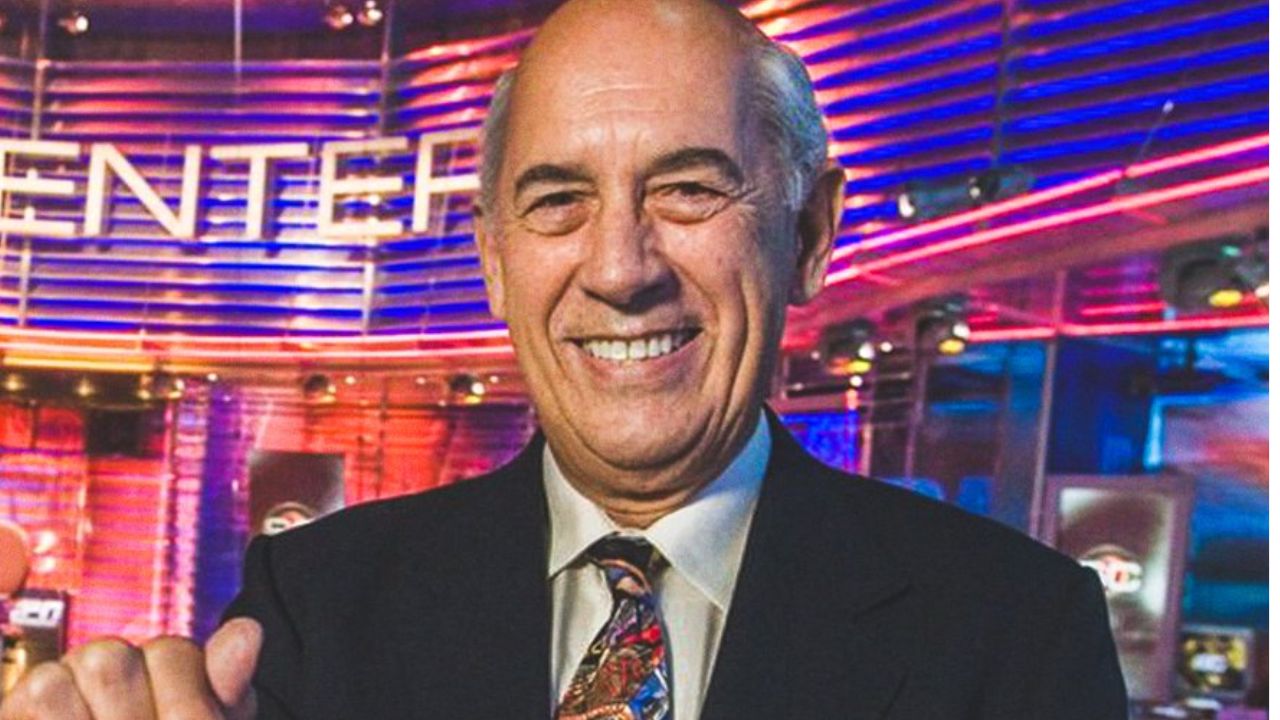
BRISTOL, Conn (Diya TV) — Bill Rasmussen, the sports broadcaster and entrepreneur who created ESPN, died Aug. 18, 2026, at age 93.
Rasmussen changed sports media forever when he imagined a 24-hour television network devoted entirely to sports. That idea led to ESPN, which launched in 1979 and grew into one of the world’s largest sports media companies.
“Bill was a remarkable man – a visionary and an innovator who conceived the idea of a network entirely devoted to sports,” ESPN Chairman Jimmy Pitaro said. “Quite simply, none of us would be here today if it wasn’t for Bill’s passion and all the hard work and entrepreneurial spirit he put into building ESPN.”
Pitaro also remembered Rasmussen as an important part of ESPN’s history. In 2019, Rasmussen threw the ceremonial first pitch at Fenway Park in Boston as part of ESPN’s 40th anniversary celebration.
Rasmussen served as ESPN’s founder and first president. He also helped establish the creative approach that remains central to ESPN today.
Rasmussen and his son Scott began exploring satellite television technology in 1978. During a drive through Connecticut, the two discussed ideas for programming on a newly acquired satellite transponder. Rasmussen then suggested creating a network focused only on sports.
The idea quickly grew. With financial support from Getty Oil Co., programming from the NCAA and an advertising deal with Anheuser-Busch, the new network prepared for its launch.
The Entertainment and Sports Programming Network, later known as ESPN, began broadcasting on Sept. 7, 1979. The network initially reached about 1.4 million homes. Its first program was SportsCenter, hosted by Lee Leonard and George Grande.
More than four decades later, SportsCenter remains ESPN’s signature program. The show also became one of the longest-running and most influential sports news programs in television history.
Rasmussen became ESPN chairman in July 1979. Chet Simmons, a former NBC Sports president, succeeded him as president. During Rasmussen’s leadership, ESPN expanded its programming and began offering round-the-clock sports coverage.
The network also gained national attention through its coverage of the early rounds of the NCAA men’s basketball tournament in 1980. That coverage helped ESPN build its reputation as a major sports broadcaster.
Veteran ESPN anchor Chris Berman, who joined the network shortly after its launch, called Rasmussen “our George Washington and a good friend.” Berman said Rasmussen brought optimism and gratitude to the young company.
Rasmussen left an active role at ESPN in October 1980. However, he remained involved in sports media and entrepreneurship. He later advised sports rights holders and media companies while developing new ventures.
In 1994, Sports Illustrated included Rasmussen among its “Forty for the Ages,” honoring sports figures who helped transform American sports. That same year, USA Today called him “The Father of Sports Television.”
Rasmussen also became an advocate for people living with Parkinson’s disease after publicly announcing his diagnosis in 2019. He worked with the American Parkinson Disease Association and The Michael J. Fox Foundation for Parkinson’s Research.
Born Oct. 15, 1932, in Chicago, Rasmussen attended DePauw University and earned a degree in economics. He later served in the U.S. Air Force and earned an MBA from Rutgers University.
His media career began at WTTT radio in Amherst, Massachusetts, in 1962. He later worked at WWLP-TV in Springfield, Massachusetts, where he served as sports director and news director. He also worked with the New England Whalers before launching ESPN.
Rasmussen received numerous honors during his career. He joined the Sports Broadcasting Hall of Fame in 2025. He also earned recognition from Rutgers University, DePauw University, the Connecticut Sports Museum and Hall of Fame, and Lambda Chi Alpha.
Rasmussen wrote two books about his career and ESPN’s creation. His latest book, ESPN: One Giant Leap for Fankind, came out in 2023. A documentary and book project about his life and the birth of ESPN also debuted in 2026.