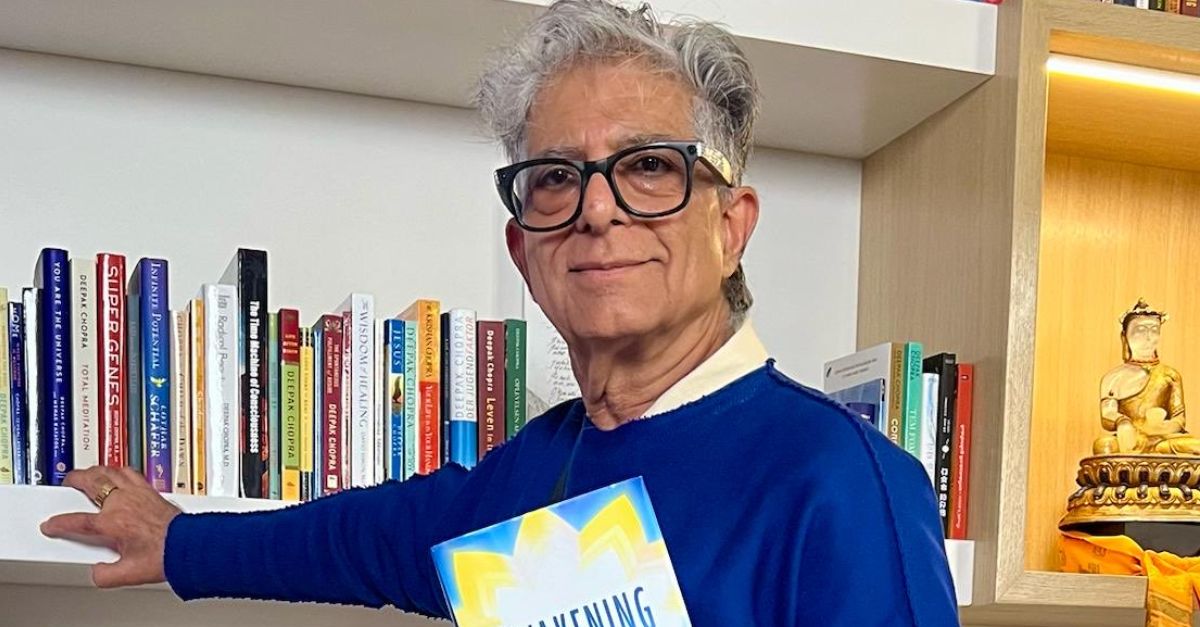
WASHINGTON (Diya TV) — Newly released records from the House Oversight Committee shed light on a series of email exchanges between Jeffrey Epstein and New Age author Deepak Chopra, revealing discussions about Donald Trump, confidential requests, and planned meetings over several years.
Congressional lawmakers made more than 20,000 pages of material from Epstein’s estate public on Nov. 19. The documents include emails, calendars, and notes. Among them are messages showing that Epstein and Chopra exchanged emails during and after the 2016 presidential election. The records show no accusations of wrongdoing against Chopra.
The release immediately sparked public interest due to the mention of Trump, as well as the timing of the correspondence. Much of the email traffic took place in late 2016, when national attention focused heavily on the election and on resurfaced allegations involving both Trump and Epstein.
In one November 2016 exchange, Epstein sent Chopra a link to a news story about a woman who had filed, then later withdrawn, a civil suit accusing Trump and Epstein of sexually assaulting her in 1994. She was thirteen at the time of the alleged incident.
Chopra asked Epstein whether the woman also dropped her claim against him. Epstein replied, “YuP.” Chopra responded, “Good.” The short exchange adds new detail to how Epstein communicated about the allegations during that period.
Other emails show Epstein calling Trump “evil beyond belief,” offering a rare glimpse into his personal view of the future president.
The files contain July 2016 emails in which Chopra asked Epstein for information about Marla Maples, Trump’s second wife. He described the conversation as confidential and said he trusted Epstein. The documents do not explain why Chopra made the request or whether Epstein provided any additional details.
The correspondence adds to a growing timeline of communication between the two men that appears more extensive than previously known.
Calendar entries from 2016 through 2019 show more than a dozen planned meetings between Epstein and Chopra. The records suggest they discussed possible collaborations on an app and a board game. The documents also reference conversations about Trump and other public figures.
Chopra has said publicly that his connection to Epstein began after an introduction by Barnaby Marsh of the Templeton Foundation. According to Chopra, Marsh described Epstein as a potential funder for research on the brain and consciousness.
Chopra has maintained that most of their meetings focused on meditation techniques to help Epstein manage insomnia. He said the sessions usually lasted about 30 minutes. The newly released materials appear to align with his timeline but show additional layers of contact.
After the document release, Chopra issued a statement stressing that he has nothing to hide. He said he wants full transparency and is willing to share information with authorized investigators. He also said he remains mindful of doctor–patient confidentiality but believes clarity is necessary.
Chopra insisted that all of his interactions with Epstein centered on meditation sessions and discussions about potential research funding. He said context is important to prevent speculation that could distort the nature of their meetings.
The release of the Epstein files has renewed public scrutiny of Epstein’s network and the many figures connected to him in varying capacities. The addition of Chopra’s emails adds another name to a complex web that spans finance, politics, science, and entertainment.
Lawmakers have said more information may become public in the coming weeks. For now, the new documents offer a clearer look at how Epstein operated and whom he contacted during key political moments. They also raise new questions about the broader scope of his relationships.
The House Oversight Committee has not announced further steps, but the material is expected to fuel continued reporting and investigation. As more details emerge, the public will likely learn even more about Epstein’s connections and the people who interacted with him during the years before his death.