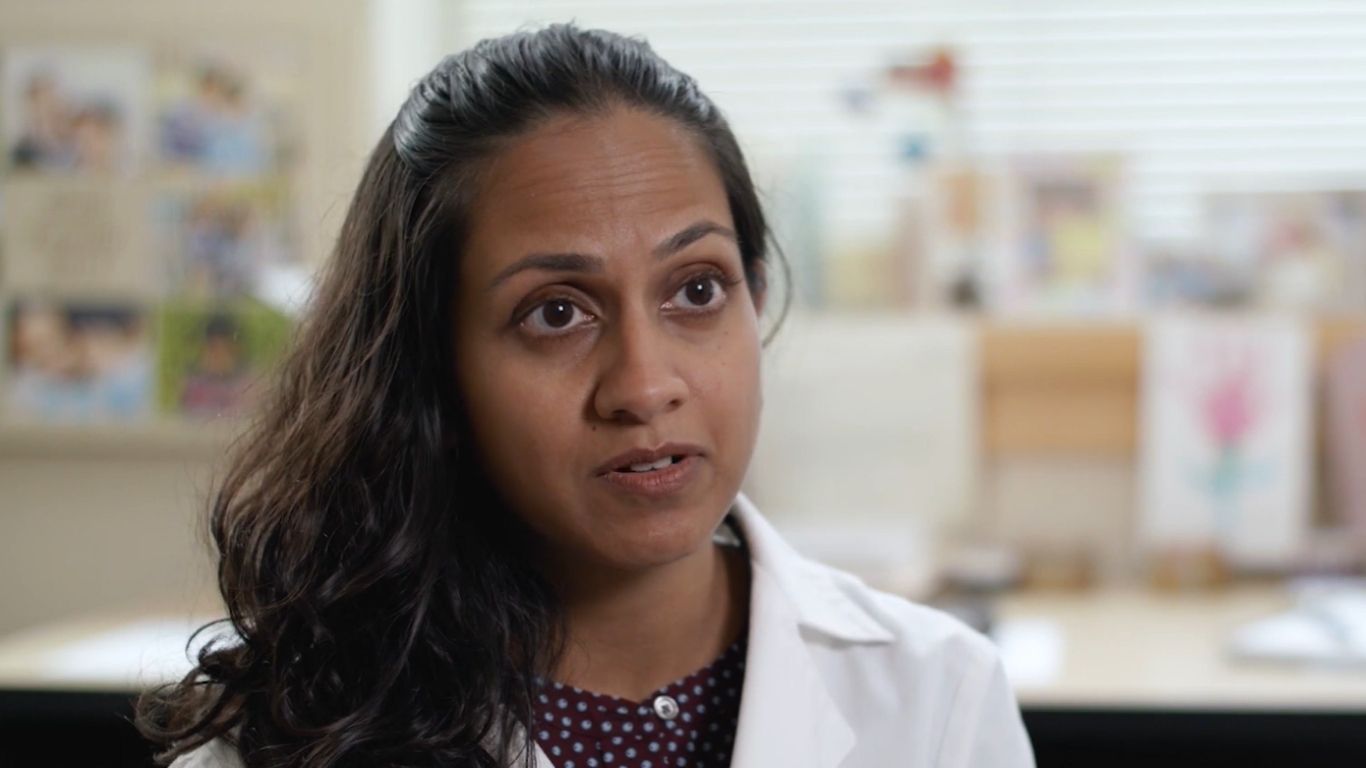
BALTIMORE, Md. (Diya TV) — Indian American pediatric oncologist Dr. Nirali N. Shah will join the University of Maryland School of Medicine this September to lead its Pediatric/Adolescent and Young Adult Cell and Gene Therapy Program. The nationally recognized cancer specialist currently serves at the National Cancer Institute, where she has built a strong reputation for advancing treatments for children and young adults with blood cancers.
The University of Maryland School of Medicine announced that Shah will serve as Professor and Director of the Pediatric/Adolescent and Young Adult Cell and Gene Therapy Program. In addition, she will take on the role of Associate Director for Translational Research at the University of Maryland Marlene and Stewart Greenebaum Comprehensive Cancer Center. She will also care for patients at the University of Maryland Golisano Children’s Hospital.
The appointment marks another major step for the university as it continues to expand advanced cancer care for young patients. It also strengthens the institution’s efforts to develop new therapies and bring promising treatments from research laboratories to hospital bedsides.
Shah has spent years studying blood cancers and developing innovative treatment options for children and young adults. She specializes in hematopoietic stem cell transplantation, early-stage clinical trials, and personalized immunotherapy. Her work focuses on finding safer and more effective ways to treat patients with difficult cancers.
At the National Cancer Institute, Shah serves as Head of the Pediatric Oncology Branch of the Hematologic Malignancies Section and as a Senior Investigator at the Center for Cancer Research. During her time at the institute, she has helped lead research that explores new immune-based therapies for pediatric cancers. As a result, many patients have gained access to cutting-edge treatment options through clinical studies.
Her move to the University of Maryland comes at an important time. The university continues to invest in pediatric cancer research while expanding specialized care for children, teenagers, and young adults. Officials believe Shah’s experience will help accelerate research and improve patient outcomes.
The Pediatric/Adolescent and Young Adult Cell and Gene Therapy Program aims to develop advanced treatments that target cancer cells more precisely. These therapies use the body’s own cells or genetic technology to fight disease. Researchers hope these approaches will improve survival while reducing side effects for patients.
In her new leadership role, Shah will guide research teams, oversee clinical programs, and support collaborations across the university. She will also help translate scientific discoveries into treatments that can benefit patients more quickly. Furthermore, her work will connect researchers, physicians, and clinical trial teams to speed the development of new therapies.
The University of Maryland Marlene and Stewart Greenebaum Comprehensive Cancer Center plays a central role in cancer research and patient care in the region. The center combines laboratory research with clinical expertise to develop innovative treatments. Shah’s appointment adds another nationally recognized physician-scientist to its leadership team.
Meanwhile, patients at the University of Maryland Golisano Children’s Hospital will benefit directly from her expertise. She will provide specialized care for children and young adults facing complex blood cancers and other serious diseases. In addition, she will help expand access to clinical trials that test emerging therapies.
Shah’s recruitment follows a historic investment in pediatric health care at the University of Maryland. In October 2025, philanthropist, entrepreneur, and civic leader Tom Golisano donated $50 million to support the children’s hospital. The university described the contribution as the largest philanthropic gift in the history of both the University of Maryland Medical System and the University of Maryland, Baltimore.
That donation has supported plans to strengthen pediatric services and expand research programs. Consequently, university leaders have continued recruiting top physicians and researchers to build nationally recognized programs for children and young adults.
The arrival of Shah reflects that broader strategy. Her experience in pediatric oncology, immunotherapy, and clinical research aligns with the university’s goal of delivering advanced, patient-centered care. Moreover, her leadership is expected to encourage new partnerships and attract additional research opportunities.
As Shah prepares to begin her new role in September, the University of Maryland expects her expertise to shape the future of pediatric cancer treatment. Her work will focus on expanding innovative therapies, advancing clinical research, and improving care for children, adolescents, and young adults facing cancer. Through research, collaboration, and patient care, she will help strengthen the university’s growing role as a leader in pediatric oncology and cell and gene therapy.