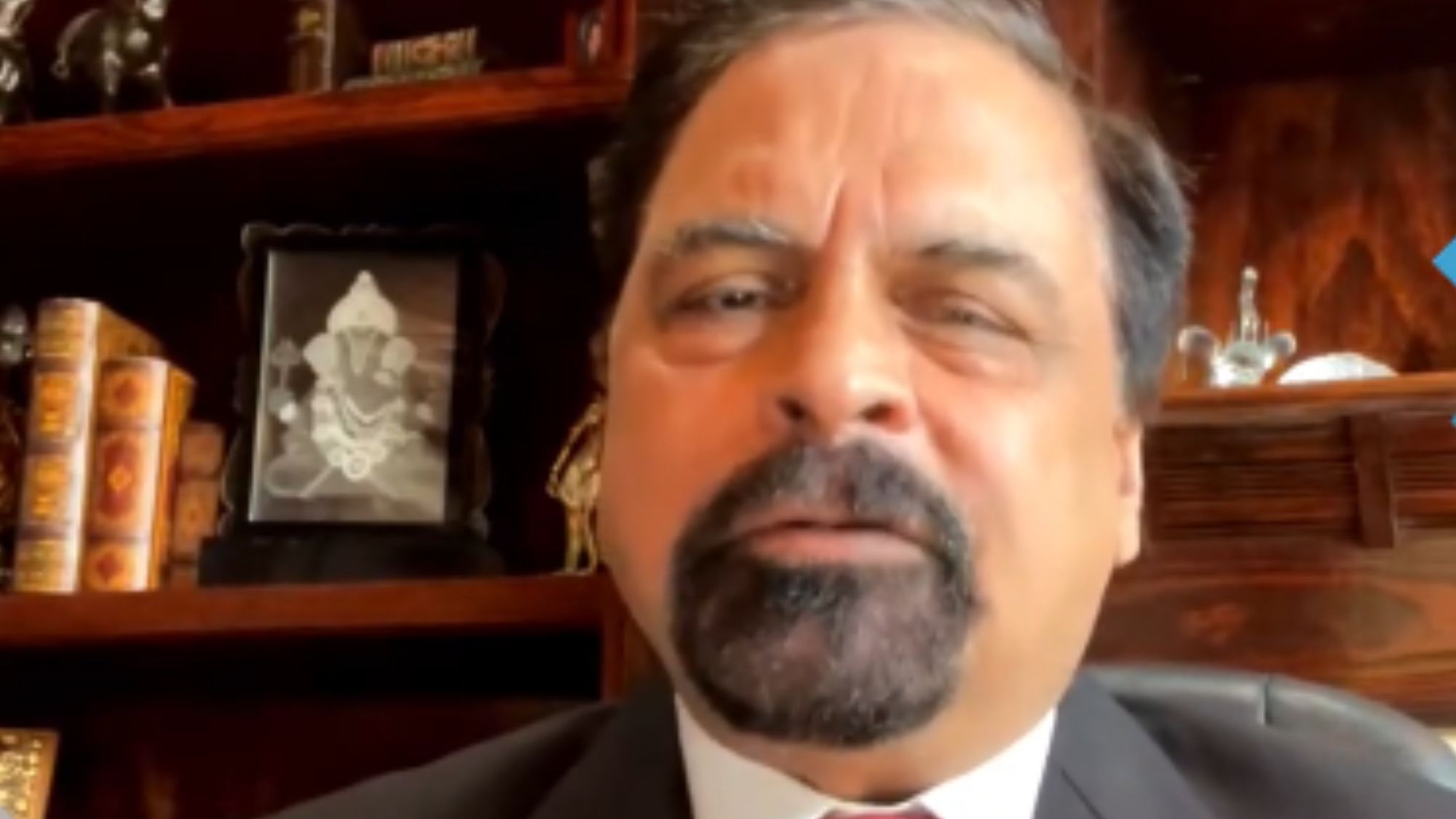
COVINGTON, Ky. (Diya TV) — Dr. Amit Chakrabarty officially began his term as president of the American Association of Physicians of Indian Origin (AAPI) during the closing ceremony of the group’s 43rd annual convention on July 26. The event took place at the Cincinnati Marriott at RiverCenter and the Northern Kentucky Convention Center in Covington, Kentucky.
More than 1,000 medical professionals from across the United States attended the three-day convention. AAPI, which represents over 100,000 physicians of Indian origin, is one of the largest ethnic medical associations in the country. Chakrabarty, a practicing urologist and longtime AAPI member, used his inaugural speech to outline his vision. He emphasized transparency, ethical leadership, and accountability.
“As President, I pledge to uphold transparency, ethical governance, and accountability,” he said during his address. “Let this not be the end of a ceremony—let it be the ignition of a purpose.”
He made it clear that his priorities include political advocacy, international collaboration, and greater involvement from younger physicians.
One of Chakrabarty’s key promises is to establish a well-funded AAPI Political Action Committee. The goal is to increase the organization’s influence in Washington, D.C., and advocate for pressing issues, including physician burnout and the green card backlog that affects many foreign-born doctors.
“We must invest heavily in advocacy,” Chakrabarty said. “Our voice must be stronger, our advocacy bolder, and our unity deeper than ever before.”
He believes a dedicated political strategy will help AAPI shape health care policies and secure a better future for physicians of Indian origin in the United States. A central part of Chakrabarty’s agenda is empowering younger members of the organization. He said AAPI must invest more in the Medical Student/Residents and Young Physician section.
“Without them, there will be no AAPI in 20 years,” he said. “We must give them real leadership roles within the organization.”
By involving young doctors and students, Chakrabarty hopes to build a sustainable and vibrant future for AAPI. Chakrabarty also highlighted the importance of global partnerships. He wants AAPI to play a bigger role in shaping health care policies in South and Southeast Asia. He said the organization must look beyond borders and work with international agencies and governments to improve health outcomes in underserved regions.
“AAPI should be a global movement,” he said. “Let us prove that leadership is not found in titles but in actions.”
Chakrabarty called AAPI more than just a professional body. He said it must become a movement that uses its collective power to stand for broader issues, both within and outside the medical field. He encouraged members to use their influence for social good, emphasizing that physicians of Indian origin can play a powerful role in shaping society.