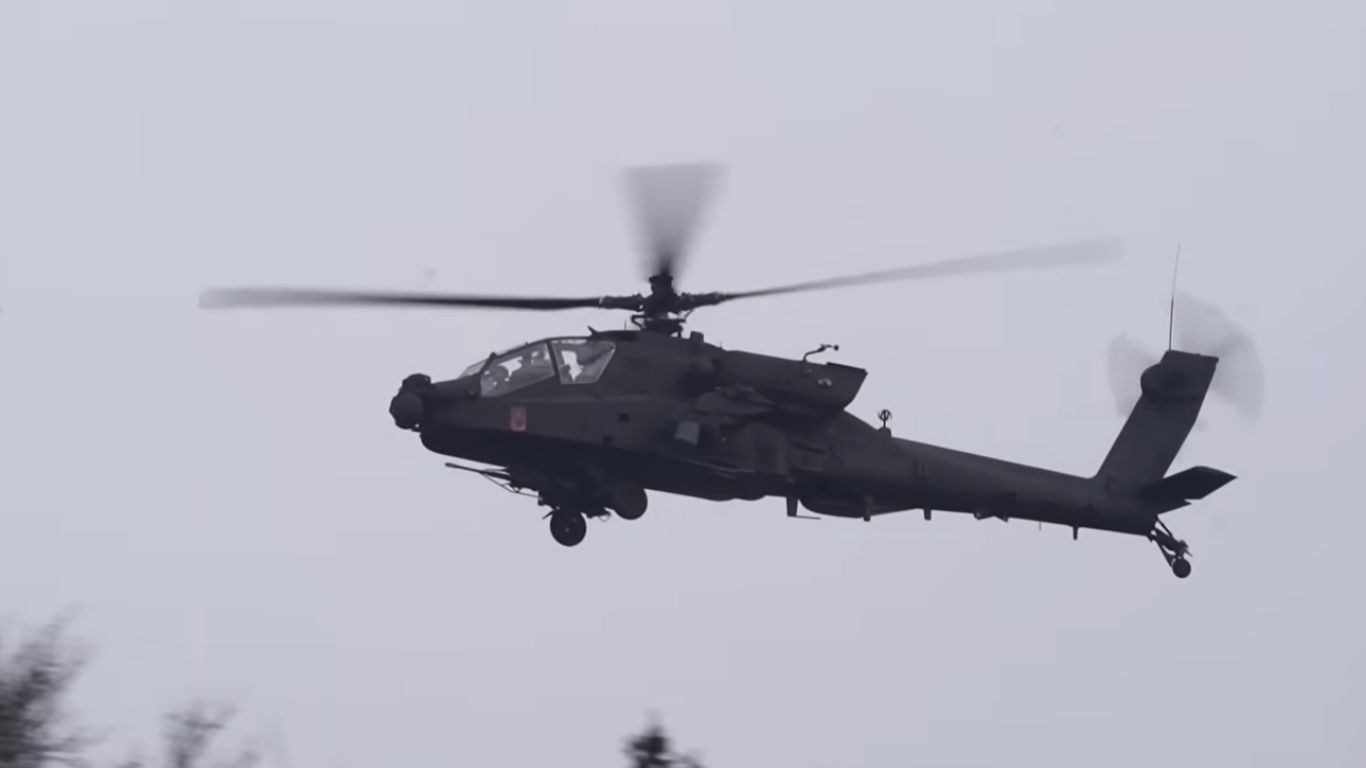
WASHINGTON (Diya TV) — The United States launched strikes on Iranian military targets Tuesday, just hours after an American Apache helicopter crashed near the Strait of Hormuz, sharply escalating tensions in the region.
The U.S. Central Command said the attacks were a “proportional response to unjustified Iranian aggression.” Explosions were reported along Iran’s Persian Gulf coast, including in Bandar Abbas, Qeshm, and Sirik, as well as near the Strait of Hormuz. The strikes came after President Donald Trump accused Iran of shooting down a U.S. Apache helicopter during a patrol mission over the strategic waterway. The latest military action marks another major development in the conflict between Washington and Tehran, which has intensified over the past several months.
According to reports, the United States began the operation at about 5 p.m. EST. The strikes targeted Iranian defense and radar systems. U.S. officials described the operation as limited and focused. They said the goal was to respond to what they called a direct attack on American military assets while avoiding a broader regional war.
The Strait of Hormuz remains one of the world’s most important shipping routes. A large share of global oil exports passes through the narrow waterway. Any military confrontation in the area raises concerns about energy supplies and regional security. Witnesses reported explosions in several coastal areas of southern Iran. Iranian authorities had not released a detailed assessment of the damage at the time of reporting.
Earlier Tuesday, Trump claimed Iran shot down a U.S. Apache helicopter during a patrol over the Strait of Hormuz. In a post on Truth Social, the president said he had been informed by military officials that Iranian forces brought down the aircraft during the previous night.
“I have just been informed by our Great Military that last night the Iranians shot down one of our highly sophisticated Apache Helicopters while patrolling over the Strait of Hormuz,” Trump wrote.
Trump said two pilots were aboard the helicopter when it went down. He added that both service members survived and did not suffer injuries. The president also vowed a response.
“Nevertheless, the United States must, of necessity, respond to this attack,” he wrote.
If confirmed, the helicopter incident would represent the first reported U.S. Apache helicopter loss since the conflict with Iran began in February.
The latest exchange highlights growing instability across the Persian Gulf region. Military analysts have warned that repeated confrontations near the Strait of Hormuz increase the risk of a wider conflict. The waterway serves as a critical route for international trade and energy shipments.
The United States has maintained a strong military presence in the region for decades. Washington argues that its forces protect freedom of navigation and regional stability. Iran has frequently criticized those operations and views them as a threat to its national security. The latest strikes could further strain relations between the two countries. Regional governments and international observers continue to monitor developments closely.
Despite the military escalation, Trump recently expressed optimism about a possible agreement with Tehran. Earlier this week, he said a deal could emerge “in another three days” and suggested negotiations were nearing completion. The president described the diplomatic effort as being in the “final throes” of securing peace.
However, Tuesday’s events have raised new questions about the future of those talks. The conflict between the United States and Iran has now lasted for more than 100 days. Both sides continue to exchange accusations while pursuing competing military and political objectives. As tensions rise, global attention remains fixed on the Strait of Hormuz and the broader Middle East. The coming days could determine whether the crisis moves toward diplomacy or deeper confrontation.