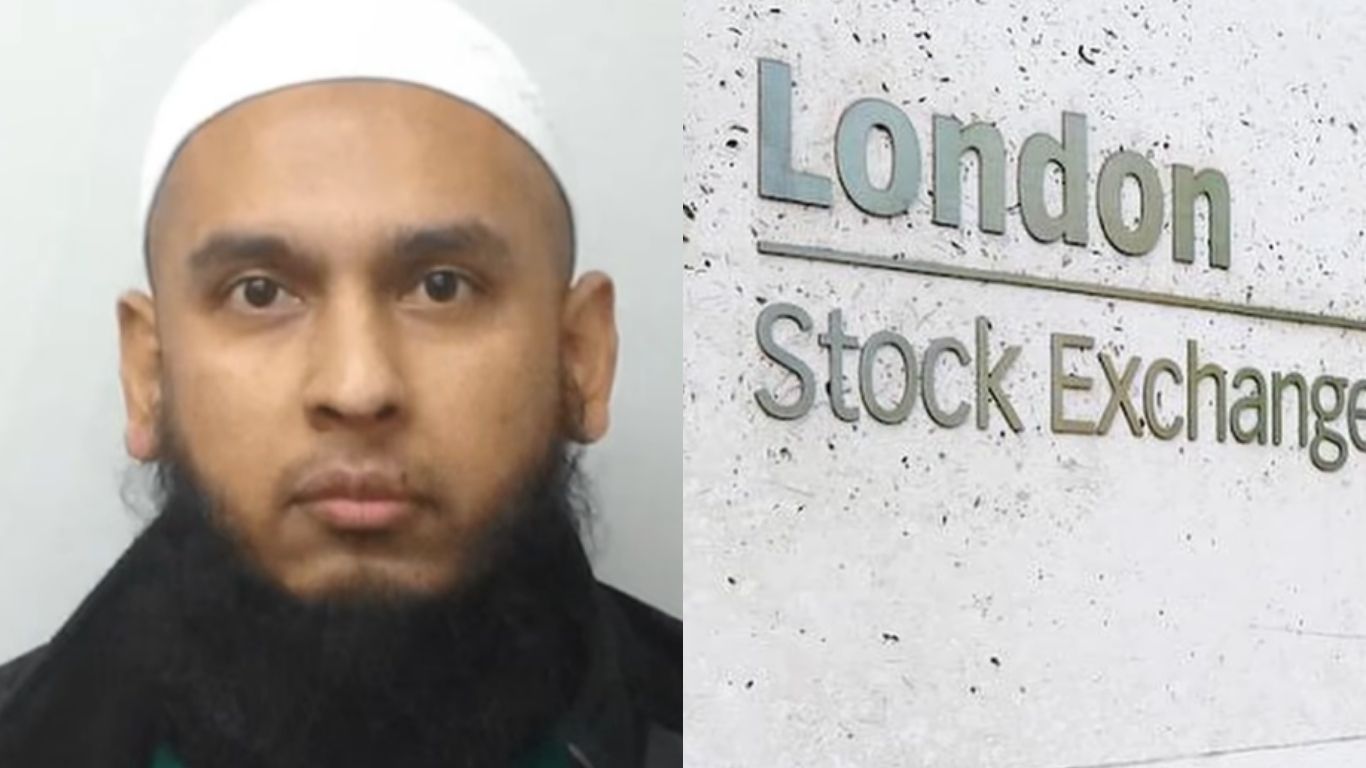
LONDON, U.K. (Diya TV) — A convicted terrorist involved in a plot to bomb the London Stock Exchange was allowed to remain in Britain on human rights grounds, according to a newly published immigration ruling. The case has raised fresh debate about national security, immigration law, and human rights protections in the United Kingdom.
Shah Rahman, a Bangladeshi national, was one of four extremists convicted in 2012 for planning an attack inspired by al-Qaida. A court jailed him for threatening to bomb the London Stock Exchange. Rahman later applied for asylum in 2017 after his release on license. Authorities rejected his asylum claim because of his criminal record and links to terrorism. International law bars people involved in serious crimes from receiving refugee status.
However, officials granted Rahman restricted leave to remain in the U.K. They based the decision on human rights law. The ruling states that deporting him to Bangladesh could expose him to torture or inhuman treatment. Under Article 3 of the European Convention on Human Rights, authorities must not remove individuals to countries where they face such risks. Rahman remained in Britain under strict conditions. He was released on license in June 2019.
In the same month, Rahman married Parveen Purbhoo, a Mauritian citizen. The couple held an Islamic ceremony at a mosque in East London. At the time, Purbhoo was visiting the U.K. Purbhoo later applied to enter Britain. Authorities refused her first application but approved her second. She returned to the U.K. in February 2020 but left soon after due to the COVID-19 pandemic.
In August 2021, she attempted to re-enter Britain to formalize the marriage in a civil ceremony. As a Mauritian citizen, she did not need a visa. She traveled using an electronic travel authorization. When she arrived at Heathrow Airport, officers searched her phone. They found material linked to the Islamic State group. The content included propaganda videos and footage of soldiers.
A police report said Purbhoo appeared unconcerned about the material. She told officers she wanted to learn more about it. She claimed she did not know how the content ended up on her phone. Despite the findings, authorities allowed her to enter the country. She then lived with Rahman.
In February 2022, police arrested Rahman again. Officials said he violated the terms of his release. He failed to report a mobile phone, an email account, and a bank account. Rahman later admitted that he used the unauthorized phone to contact his wife. He made private video calls to her without notifying the authorities. A forensic psychology report found that Purbhoo played a role in these violations. Investigators said she knew about the breaches and supported them.
In 2023, the U.K. government permanently excluded Purbhoo from entering the country. Officials cited national security concerns. She appealed the decision to the Special Immigration Appeals Commission. In a ruling published this week, judges upheld the government’s decision. The panel said Purbhoo failed to explain the extremist material found on her phone. Judges also noted her involvement in Rahman’s breach of legal requirements.
The ruling stated that her actions showed a willingness to ignore rules. Judges described this behavior as risky. They concluded that authorities reasonably assessed her as a national security threat. The court found that her exclusion from the U.K. was lawful and proportionate.
The case has sparked renewed debate over how Britain handles foreign nationals convicted of terrorism. Critics argue that human rights laws can limit the government’s ability to deport dangerous individuals. Supporters of these laws say they protect fundamental rights. They argue that the U.K. must follow international obligations, even in difficult cases. Rahman’s case highlights the tension between security and human rights. Authorities denied him asylum but allowed him to stay to avoid potential harm abroad.