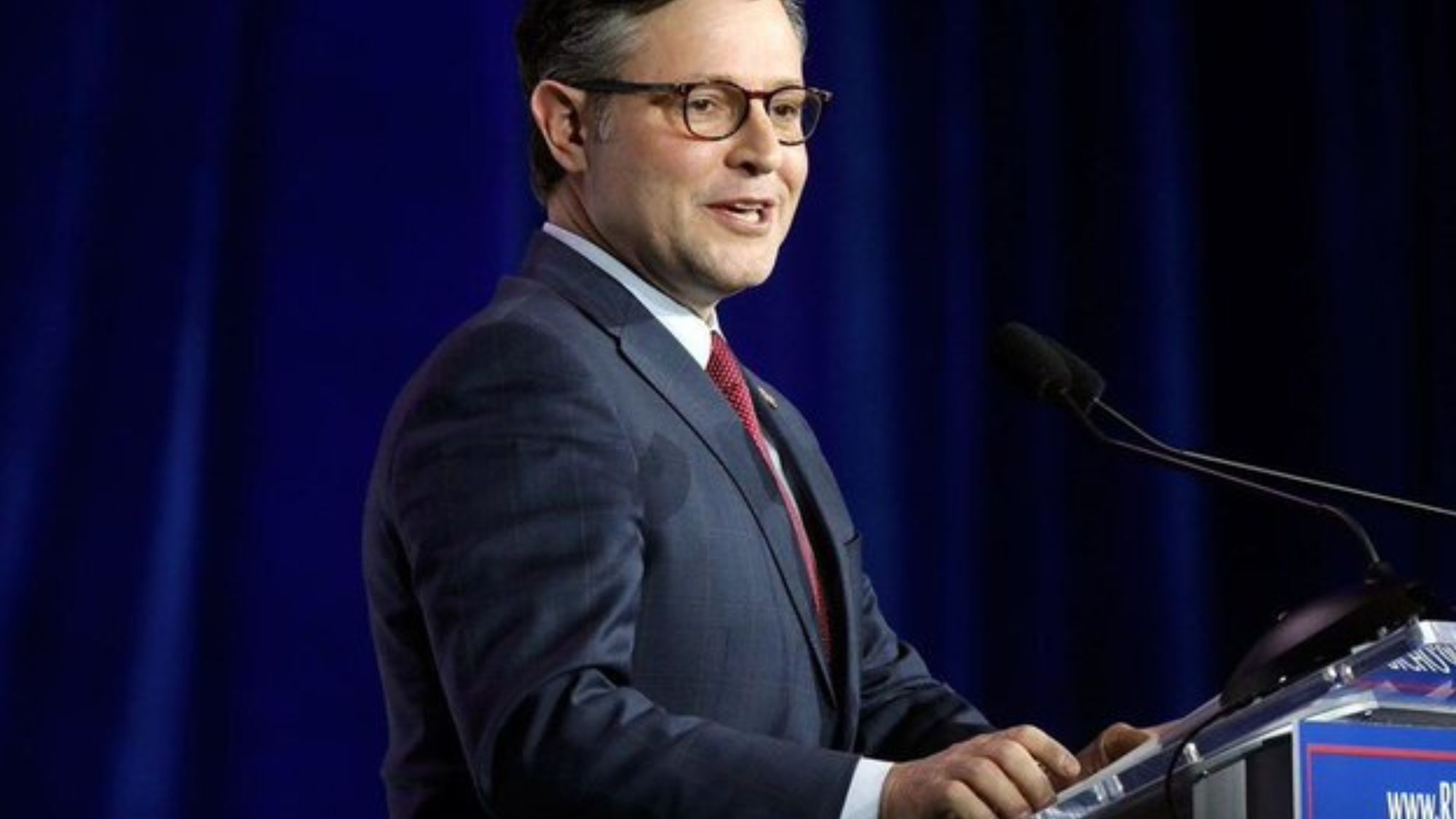
WASHINGTON (Diya TV) — Speaker Mike Johnson avoided a political setback Thursday after the House narrowly passed a controversial package of federal spending cuts. The vote followed a dramatic floor moment where Johnson convinced two Republican holdouts to change their votes. The bill, backed by President Donald Trump, slashes nearly $9 billion in previously approved government funding, including money for foreign aid, public broadcasting, and global health programs.
The GOP-led House was on track to reject the proposed spending cuts until Johnson had a tense conversation with Rep. Nick LaLota, a moderate Republican from New York. LaLota had initially voted no but flipped to yes after speaking with the Speaker. Rep. Mike Lawler, another New York Republican, also changed his vote after the huddle.
While LaLota declined to share exact details of his conversation with Johnson, he hinted the shift was tied to negotiations over the state and local tax (SALT) deduction—a top concern for Republicans in high-tax states like New York.
“I had some conversations with the Speaker that raised my level of confidence,” LaLota told CNN. He did not confirm whether any concrete promises were made.
The narrow win highlights how politically sensitive the issue of federal budget cuts remains. It also shows how centrist Republicans, especially those from swing districts, remain caught between party loyalty and local voter concerns.
The bill marks Congress’s first formal vote on Trump’s proposed “rescissions”—a rarely used tool to cancel previously approved spending. The cuts include $1.1 billion in future funding for the Corporation for Public Broadcasting, which supports PBS and NPR, as well as reductions in global AIDS programs like PEPFAR.
Though the measure passed the House, it faced pushback from some Republicans. Four GOP lawmakers voted no: Reps. Brian Fitzpatrick of Pennsylvania, Nicole Malliotakis of New York, Mike Turner of Ohio, and Mark Amodei of Nevada.
To appease critics, the White House dropped a $400 million cut to PEPFAR and vowed to protect funding for food aid, maternal health, and rural news stations.
Early Thursday morning, the Senate approved the revised version of the bill in a tight 51-48 vote. GOP Sens. Lisa Murkowski of Alaska and Susan Collins of Maine broke with their party and joined Democrats in voting no.
Because the Senate altered the bill, it now returns to the House for a final vote before it reaches Trump’s desk. The former president must sign the bill by Friday to avoid spending the money already approved by Congress.
Senate Majority Leader John Thune (R-S.D.) defended the move, saying, “This is just one-tenth of one percent of all federal spending, but it’s a step in the right direction.”
Despite its passage, many Republicans expressed frustration with the White House. Some said they were not given enough information about which programs would be cut.
Sen. Roger Wicker (R-Miss.), chair of the Armed Services Committee, warned that future requests must be more transparent. “Give us the specific amounts and the specific programs,” Wicker said on the Senate floor.
Sen. Susan Collins, who chairs the Senate Appropriations Committee, called the bill “a big problem” because lawmakers “don’t know what program reductions are in it.”
Democrats and some Republicans argue the rescissions package could hurt bipartisan cooperation in future government funding talks. Senate Minority Leader Chuck Schumer (D-N.Y.) warned that GOP lawmakers are caving to Trump’s demands at the expense of rural and public programs.
“Republicans are putting a blindfold over their own eyes and leading rural Americans off a cliff,” Schumer said.
PBS and NPR leaders condemned the cuts and urged the Senate to reject them. “The fight to protect public media does not end with this vote,” said PBS CEO Paula Kerger.
With just hours left before Trump’s Friday deadline, the House is expected to approve the revised package quickly. If signed, it will mark the first successful use of rescissions in more than three decades.