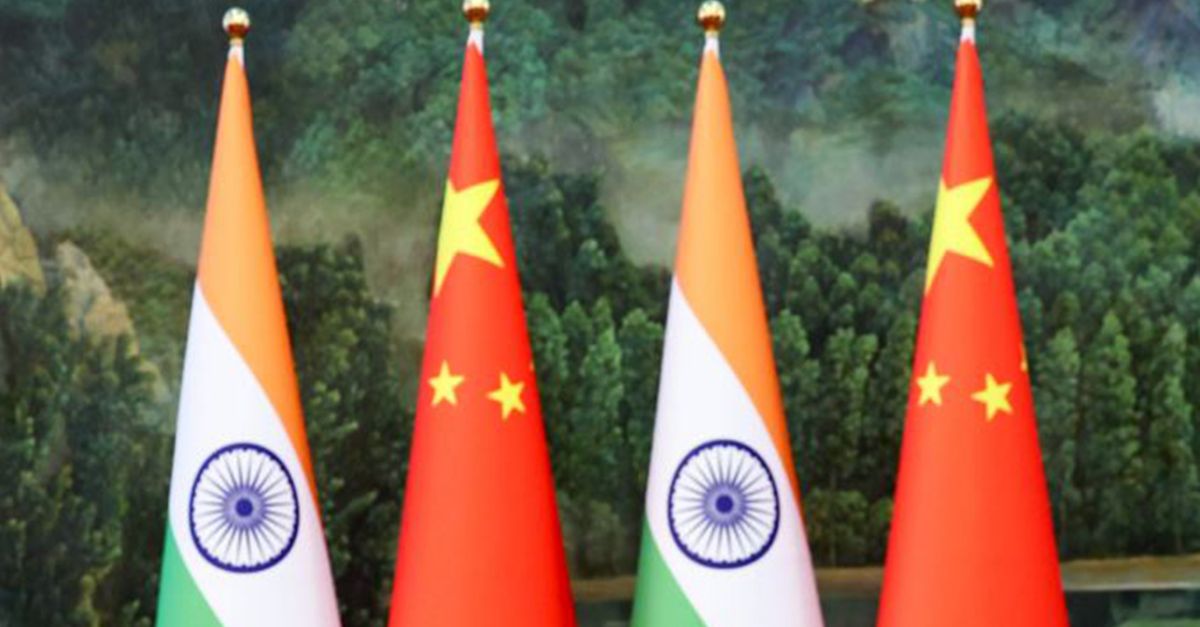
NEW DELHI (Diya TV) — A senior delegation from the Chinese Communist Party is in India for high-level political meetings, signaling a cautious but notable improvement in ties between Asia’s two largest countries after years of tension along their disputed border. The six-member delegation comes from the International Liaison Department of the Communist Party of China, or CPC. Vice Minister Sun Haiyan leads the group. The visit marks the first major party-to-party engagement since India and China began a visible thaw in relations in late 2024.
The delegation met leaders of India’s ruling Bharatiya Janata Party, or BJP, during its stay in New Delhi. It is also scheduled to interact with officials linked to the Rashtriya Swayamsevak Sangh, or RSS, which serves as the ideological parent of the BJP.
Such meetings add a political layer to China’s traditional state-to-state diplomacy. The Chinese Ministry of Foreign Affairs usually handles formal relations. The CPC’s International Liaison Department focuses on party-level contacts to support Beijing’s foreign policy goals. China has long used this channel to engage political parties across the world. In India, these interactions have remained limited and cautious, especially during periods of strain.
Historical records show that the CPC and the BJP have held intermittent talks since the late 2000s. BJP delegations visited China during that period. Chinese party officials also traveled to India for a dialogue with Indian political leaders. These contacts continued even when the BJP was not in power. Still, they never drew much public attention and often took place behind closed doors.
The current visit stands out because it comes after a prolonged freeze in bilateral ties. Relations sharply deteriorated after a deadly clash between Indian and Chinese troops in the Galwan Valley in eastern Ladakh in June 2020. That incident killed soldiers on both sides and led to a massive military buildup along the Line of Actual Control, or LAC.
A major shift came in October 2024. Indian Prime Minister Narendra Modi and Chinese President Xi Jinping met on the sidelines of the BRICS summit in Kazan, Russia. It marked their first formal bilateral meeting in five years.
That meeting helped reset the tone of engagement. Both leaders agreed to pursue disengagement along parts of the LAC. Military commanders and diplomats soon followed up with several rounds of talks. India and China later announced disengagement agreements in some friction areas. While challenges remain, officials on both sides described the process as constructive.
Since that breakthrough, New Delhi and Beijing have taken visible steps to rebuild confidence. In 2025, authorities resumed the Kailash Mansarovar pilgrimage. The journey holds deep spiritual value for many Hindus and has remained suspended since 2020. Officials are now discussing larger pilgrimage batches for 2026. The move has drawn positive reactions in India, where religious travel often carries diplomatic weight.
Both countries also restored direct flight connectivity between mainland China and India. Airlines restarted select routes that had remained grounded for years. Visa rules have eased for tourists, business travelers, and students, helping people-to-people contact recover.
The year 2025 saw a packed schedule of high-level exchanges. External Affairs Minister S. Jaishankar traveled to China for meetings linked to the Shanghai Cooperation Organization, or SCO. National Security Adviser Ajit Doval and Defense Minister Rajnath Singh also attended SCO-related events.
Prime Minister Modi visited China for multilateral summits during the year. These trips signaled India’s willingness to engage, even while maintaining caution on core security concerns. On the Chinese side, Foreign Minister Wang Yi visited India for key talks. He met senior Indian leaders and emphasized the need for stable and predictable ties.
Analysts see the CPC delegation’s visit as part of a broader effort to normalize engagement. Party-to-party talks allow both sides to share perspectives beyond formal diplomacy. They also help test political comfort levels during sensitive phases. The meetings do not erase big differences. Border disputes and strategic rivalry remain. Still, the visit shows that India-China relations have entered a more stable phase.