NEW DELHI (Diya TV) — Israeli Prime Minister Benjamin Netanyahu has pointed to Israel’s popularity in India as proof that the country is not globally isolated despite growing criticism over the wars in Gaza and the wider Middle East conflict.
During an interview with CBS News’ “60 Minutes,” Netanyahu said India remains strongly supportive of Israel. He recalled his 2018 visit to India with his wife, Sara Netanyahu, and described the trip as a “love fest.”There are places where Israel is still respected,” Netanyahu said. India has 1.4 billion people, and Israel is very popular there. PM Modi was greeted with great affection here. And I went to India with my wife, and it was a love fest.”
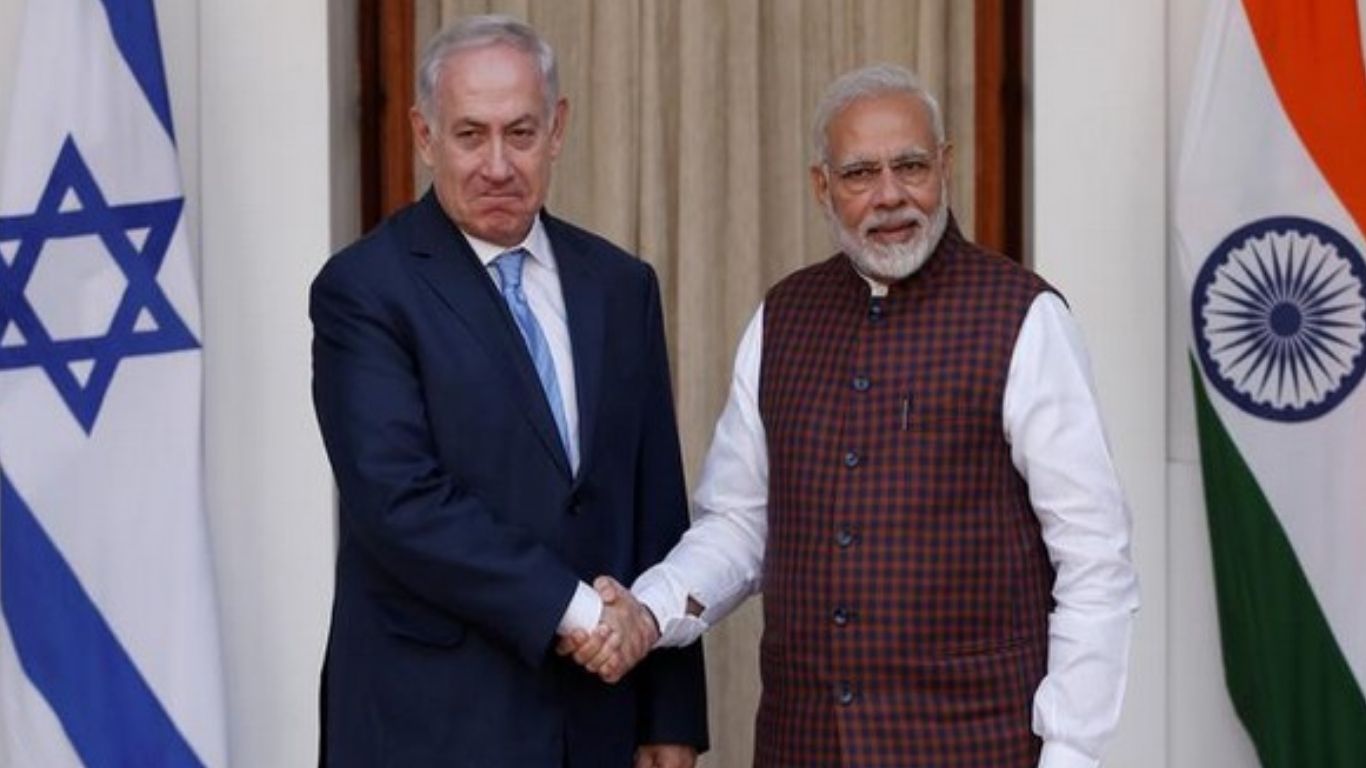
Netanyahu’s remarks renewed focus on the close relationship between India and Israel under Prime Minister Narendra Modi. The two countries have expanded cooperation in defense, technology, agriculture, and trade over the past decade.
Modi became the first Indian prime minister to visit Israel in 2017. Netanyahu then visited India in 2018 for a five-day trip that received major public attention. The visit included public roadshows, business meetings, and cultural events in several Indian cities.
India and Israel have continued to strengthen strategic ties even as the global debate over the Israel-Hamas war has intensified since 2023. Netanyahu used India as an example while defending Israel against claims that the country has become diplomatically isolated because of the ongoing violence in Gaza, Lebanon, and the West Bank.
International criticism of Israel has increased sharply since the start of the Gaza conflict in 2023. Human rights groups and several governments have raised concerns about civilian deaths and humanitarian conditions in the Palestinian territories.
According to a recent survey by the Pew Research Center, 60% of U.S. adults now hold an unfavorable opinion of Israel. The number rose from 53% a year earlier. The survey also showed declining confidence in Netanyahu among Americans. About 59% of respondents said they had little or no confidence in him to handle world affairs responsibly.
The poll found growing criticism among younger Americans across political lines. Majorities of Republicans and Democrats under the age of 50 reportedly expressed negative views of both Israel and Netanyahu. The Israeli leader rejected suggestions that public opinion changes reflect a broad diplomatic collapse for Israel. Instead, he argued that online disinformation campaigns are shaping perceptions.
During the interview, Netanyahu accused Pakistan-based social media networks of spreading anti-Israel narratives online.“Countries that want to weaken the American-Israeli alliance are manipulating social media with bot farms,” he said. Netanyahu claimed many social media posts criticizing Israel are not genuine opinions from American users. He alleged that coordinated online operations create fake accounts to influence debate in the United States.
“They post like, ‘I’m a red-blooded Texan who supported Israel, but now I can’t stand them,’” Netanyahu said. “Then you check, and it’s a guy sitting in a basement in Pakistan.”Pakistan has not officially responded to Netanyahu’s allegations.
The Israeli prime minister’s comments also echoed long-standing concerns in India over online misinformation campaigns linked to Pakistan. Indian officials and analysts have previously accused Pakistani networks of spreading fake news and anti-India propaganda on social media platforms.
India has historically supported the Palestinian cause while also maintaining strong ties with Israel. In recent years, New Delhi has deepened defense and economic cooperation with Tel Aviv without fully abandoning its traditional diplomatic position on Palestine.
Since the Gaza war began, India has repeatedly called for restraint, humanitarian aid, and a two-state solution while condemning terrorism. India remains one of Israel’s key defense partners and an important market for Israeli technology and security cooperation. Public support for Israel among many Indians has also grown in recent years, especially on social media.