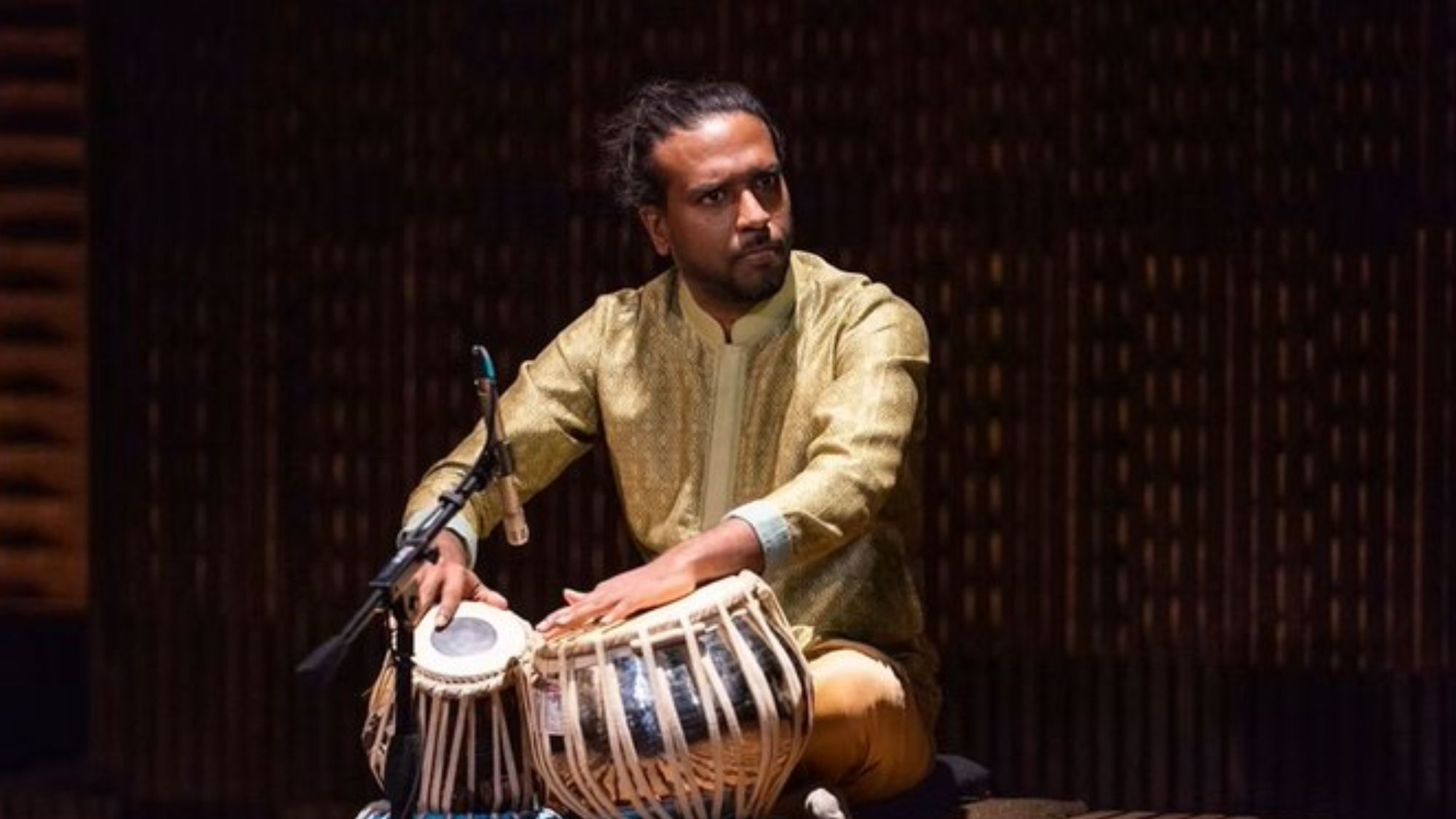
NEW YORK (Diya TV) — Tabla maestro Avirodh Sharma has been inducted as a Voting Member of the Recording Academy, the organization behind the Grammy Awards.
Sharma becomes the first Indo-Caribbean American tabla artist to earn this honor. His achievement gives him a voice alongside global music legends like Beyoncé, Quincy Jones, and John Legend. But Sharma’s induction is more than symbolic. It marks a strategic breakthrough in bringing Indian classical music into the heart of the U.S. music industry, valued at $28 billion.
Sharma believes Indian classical music holds untapped potential in the American market. “The West still views it as exotic,” he says. “But it enriches the mind and soul. That’s the value we need to translate.”
His mission is to reposition classical Indian music not just as art but as a scalable and commercially viable genre. As the son of the founders of the East Indian Music Academy Inc. in New York, Sharma grew up immersed in classical sounds. Now, he’s making those sounds relevant to new audiences.
He says students who learn Indian music through his academy have shown academic improvement. “We’ve done studies with universities,” he explains. “Some students went from C+ grades to A- after months of learning music.” Sharma is not just a performer. He’s a visionary. With Grammy-nominated albums and collaborations with legends like Vikku Vinayakram and Mira Nair, he blends tradition with innovation.
Through his label, Globalstan Records, Sharma is building what he calls a “tech-enabled music enterprise.” The goal is to fuse classical Indian and world music with electronic elements. He utilizes immersive audio, 3D sound, and algorithmic distribution to reach a global audience.
“Indian percussion has been trapped in a niche for too long,” Sharma says. “We need to think beyond tradition. Today’s musician must be a producer, a technologist, and an entrepreneur.”
Sharma says the music business must evolve to support artists in niche genres. At Globalstan, he is pioneering smart contracts, digital rights management, and cloud-based production tools to protect creators and ensure fair compensation. Streaming, he says, helps artists gain reach but not income. “Streaming builds reach, not wealth,” Sharma explains. He focuses instead on building a full artist portfolio — from concerts to education and licensing.
“Today’s artist has to be multi-dimensional,” he says. “You need to be a recording artist, a performer, a content creator, a music producer, and a composer.”
Sharma’s global sound reflects his Caribbean-Indian roots and his deep classical training. Albums like Crossing Continents showcase how tabla can fit into global electronic music while still honoring tradition. He views technology as a tool to enhance, rather than replace, human creativity. “AI is like money,” he says. “It can build something beautiful or break something valuable. It depends on how we use it.”
He warns against overusing AI in creative fields. “If it handles 100% of the work, it’s no longer your work,” he says. Sharma also worries about the impact of AI on education. “Copying from ChatGPT doesn’t teach students how to think. That’s dangerous,” he says. Still, he supports AI when used wisely. “It can analyze music tone, do live sound checks, and save time,” he says. “But the key is balance, like cooking. Too much spice ruins the dish.”
Through Globalstan Records, Sharma wants to redefine how world music is produced and consumed. His label leverages cross-platform analytics and data-driven artist development strategies to scale music globally. The aim is clear: turn Indian classical music from a niche art into a mainstream business. Sharma believes the time is right. Sponsors are showing interest, and audiences are growing.
“Indian classical music is still in its infancy in America,” Sharma says. “But it’s starting to walk.”