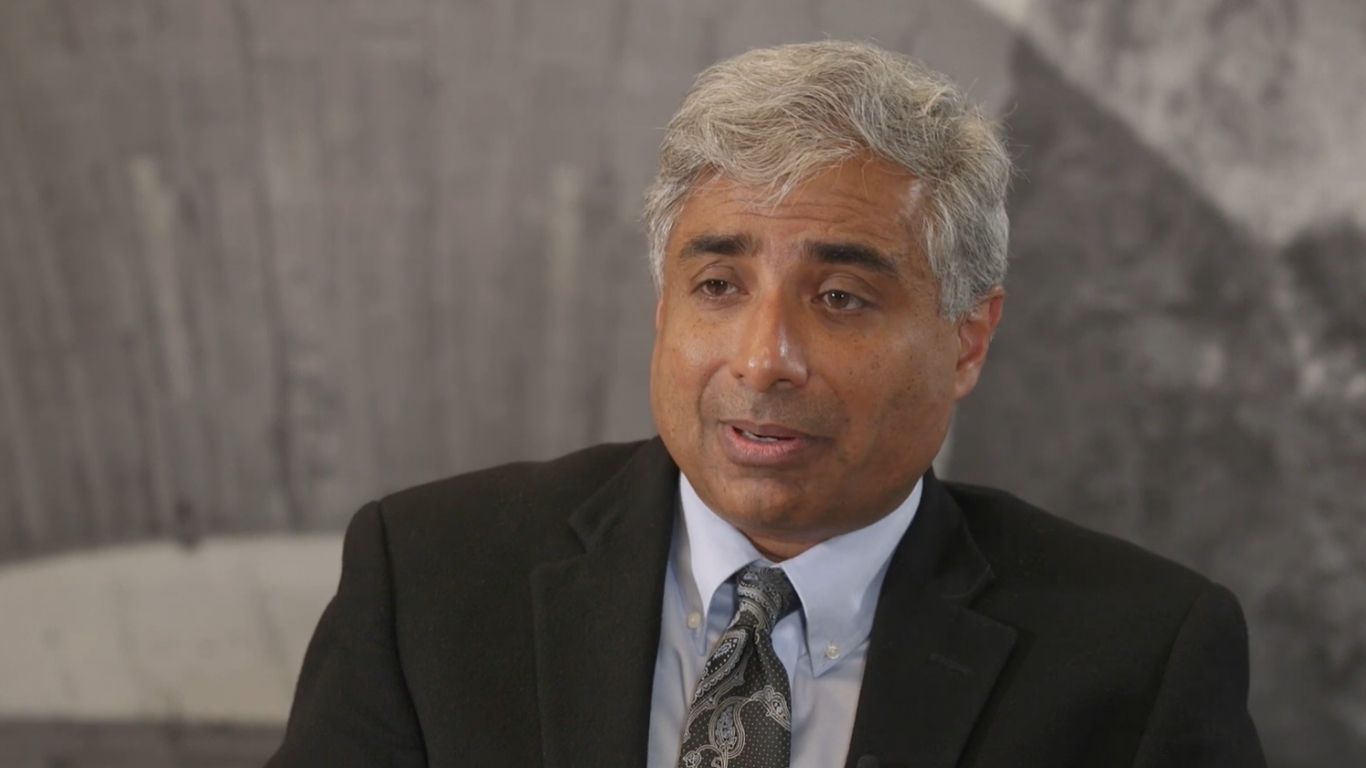
GAITHERSBURG, Md. (AP) — Engineer and academic Arvind Raman has officially taken charge as the 18th director of the National Institute of Standards and Technology (NIST), marking a new chapter for one of the United States’ leading science agencies. Raman took the oath of office on June 30 after the U.S. Senate confirmed his nomination on May 18. He also began serving as the fifth Undersecretary of Commerce for Standards and Technology.
The appointment places Raman at the head of an agency that plays a key role in advancing scientific research, technology standards, and innovation across the country. NIST supports industries ranging from artificial intelligence and quantum computing to cybersecurity, manufacturing, and biotechnology.
U.S. Commerce Secretary Howard Lutnick welcomed Raman to the Department of Commerce and praised his background in research and leadership. Lutnick said Raman’s experience will help strengthen American technology and manufacturing while supporting future innovation.
Raman thanked President Donald Trump and Lutnick for their confidence in him. He said NIST has earned its reputation through its unique mission and the work of its scientists and staff. He also said he looks forward to expanding partnerships with businesses, entrepreneurs, universities, and government agencies. In addition, he pledged to help speed up innovation and strengthen the nation’s technology leadership.
Before joining NIST, Raman served as the John A. Edwardson Dean of Engineering at Purdue University. He accepted that role in 2023 after spending more than two decades on the university’s engineering faculty. He first joined Purdue as an assistant professor in 2000. Later, the university named him the Robert V. Adams Professor of Engineering. Throughout his academic career, he earned several awards for excellence in teaching and research.
During his time as dean, Purdue Engineering reached several major milestones. The college awarded more engineering degrees each year than any other university in the country. It also attracted a record number of applications from prospective engineering students. At the same time, Purdue reduced the average time needed to complete a bachelor’s degree in engineering to less than four years. Furthermore, the university kept tuition frozen for 14 consecutive years. Research funding, philanthropic support, and national rankings also improved under Raman’s leadership.
Raman built a strong research career before entering university leadership. His work focused on atomic force microscopy, human biomechanics, and electronics manufacturing. Early in his career, he also worked with NIST researchers on nanotechnology projects. Those collaborations gave him firsthand experience with the agency’s research programs and scientific mission.
As NIST director, Raman will guide the agency’s work with industry, universities, and federal partners. He will oversee efforts to develop reliable measurements, technical standards, and new technologies that support American businesses and scientific progress. In addition, he will help expand research involving artificial intelligence, semiconductors, quantum computing, biotechnology, cybersecurity, and advanced manufacturing. Those fields continue to shape the future of the U.S. economy and global competitiveness.
Raman has received several honors throughout his career. He earned the Gustus Larson Memorial Award from the American Society of Mechanical Engineers and the Keeley Fellowship from the University of Oxford. He also received a National Science Foundation CAREER Award, one of the nation’s top honors for early-career researchers. Purdue named him a Faculty Scholar in 2008. Later, the American Society of Mechanical Engineers elected him as a fellow in 2012. This year, the American Association for the Advancement of Science also named him a fellow.
Raman’s educational background reflects decades of academic achievement. He earned a Bachelor of Technology degree from the Indian Institute of Technology Delhi. After that, he completed a master’s degree in mechanical engineering at Purdue University. He later received his doctorate in mechanical engineering from the University of California, Berkeley.
This year also marks NIST’s 125th anniversary. Since its founding, the agency has supported U.S. innovation by developing trusted standards, advancing scientific research, and helping industries create safer and more reliable products.