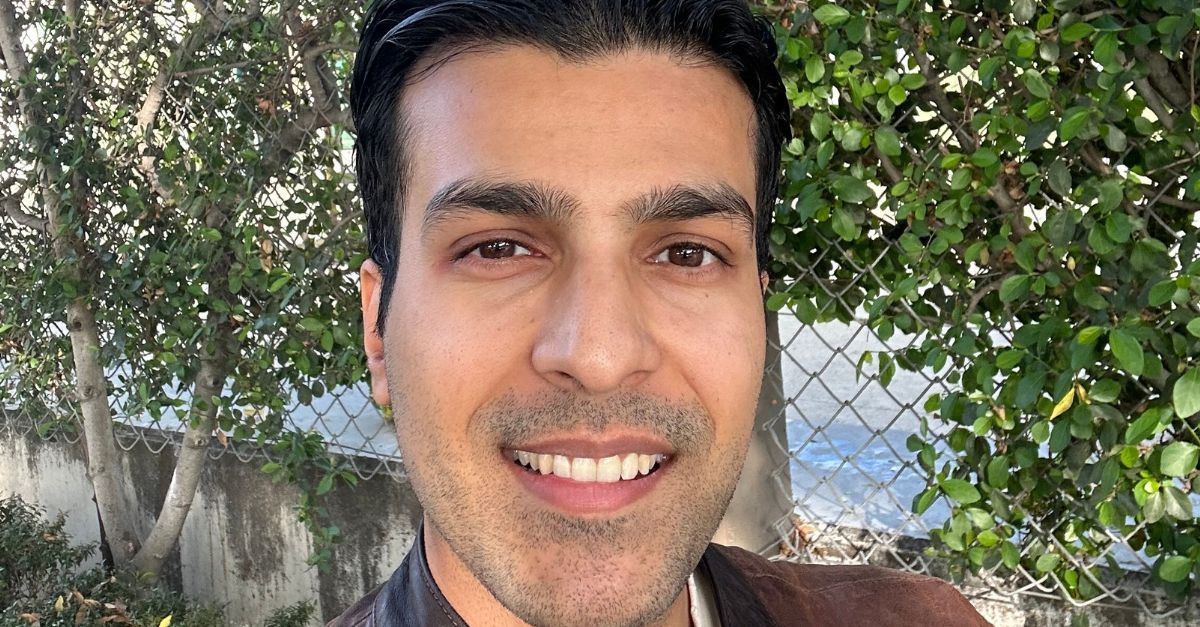
LOS ANGELES (Diya TV) — Voting rights attorney and Democrat Anuj Dixit has ended his campaign for the U.S. House of Representatives, bringing an early close to his bid for California’s 48th Congressional District. Dixit said the approval of Proposition 50, which reshaped the district’s boundaries, forced him to step back from the race.
Dixit announced his decision on Wednesday, saying the new district lines made the race “geographically reshaped.” Voters passed Proposition 50, also called the Election Rigging Response Act, on Nov. 4 with more than 64 percent support. The measure temporarily replaces California’s independent maps with maps drawn by the Democratic-led Legislature. State leaders said the change was designed to counter Republican gerrymandering in other states.
The redrawn map shifted Dixit’s home base in Riverside County and the Coachella Valley into the district held by Rep. Darrell Issa, a long-time Republican. Dixit had originally planned to challenge Rep. Ken Calvert in California’s 41st District.
Dixit, the son of Indian immigrants and a six-year veteran of the U.S. Air Force, built his campaign around economic fairness and election integrity. He grew up on March Air Force Base in Riverside County. On his campaign website, he described himself as the son of an immigrant and Air Force veteran who dedicated his legal career to giving the middle class “a voice.”
He called for breaking up monopolies, banning corporate PAC contributions, and strengthening economic opportunities for working families. In his statement announcing the end of his campaign, he thanked supporters and reaffirmed his commitment to fighting for voting rights.
“My commitment to safeguarding every individual’s voice in our democracy—and to confronting those who seek to undermine that fundamental right—remains unwavering,” Dixit said.
Dixit had built strong early momentum. He raised $430,000 in his first five months, making him the second-highest fundraiser among Democratic primary candidates who did not self-fund. He secured endorsements from Rep. Marilyn Strickland, ASPIRE PAC, Indian American Impact Fund, AAPI Victory Fund, and the Asian American Action Fund.
A poll released by Equality PAC last month showed him trailing Issa and several Democratic challengers, but his campaign remained competitive. Had he stayed in the race and won, he would have become the first LGBTQ Indian American elected to Congress, according to the Bay Area Reporter.
Several Democrats remain in the contest to unseat Issa. The candidate list includes Brandon Riker, Ammar Campa-Najjar, Marni Von Wilpert, Abel Chavez, Ferguson Porter, Curtis Morrison, Suzanne Marie Dr Till, and Whitney Shanahan, according to filings with the Federal Election Commission.
Dixit pledged to help the Democratic Party flip the seat in next year’s election. “The choices our leaders make today will define the strength of our democratic institutions and the economic opportunity available to our community,” he said. “For these reasons, I will do everything I can to help flip this seat from red to blue next November.”
Proposition 50 remains under legal scrutiny. The U.S. Justice Department sued California, arguing that the new maps rely on race as a proxy for partisan outcomes, which would violate federal law. While the use of redistricting for political reasons is legal, districts cannot be redrawn primarily on racial grounds.
California Gov. Gavin Newsom defended the measure as a way for voters to “fight back” against maps drawn under former President Donald Trump’s administration in Republican-led states. A recent court ruling tied to Texas’ redistricting fight has added uncertainty to Proposition 50’s future, but Newsom said he remains confident the state will prevail.
Dixit, a graduate of UCLA and Columbia Law School, said his work to protect democratic rights will continue beyond his halted campaign. His personal story includes the loss of his grandparents in the 1988 Pan Am Flight 103 bombing and a coming-out journey he described as “ups and downs” but ultimately supported by family.
He said he still believes in the American Dream, even as he sees it slipping out of reach for many families. His next steps remain open, but his message stays the same: protect democracy, strengthen economic opportunity, and give every voter a voice.