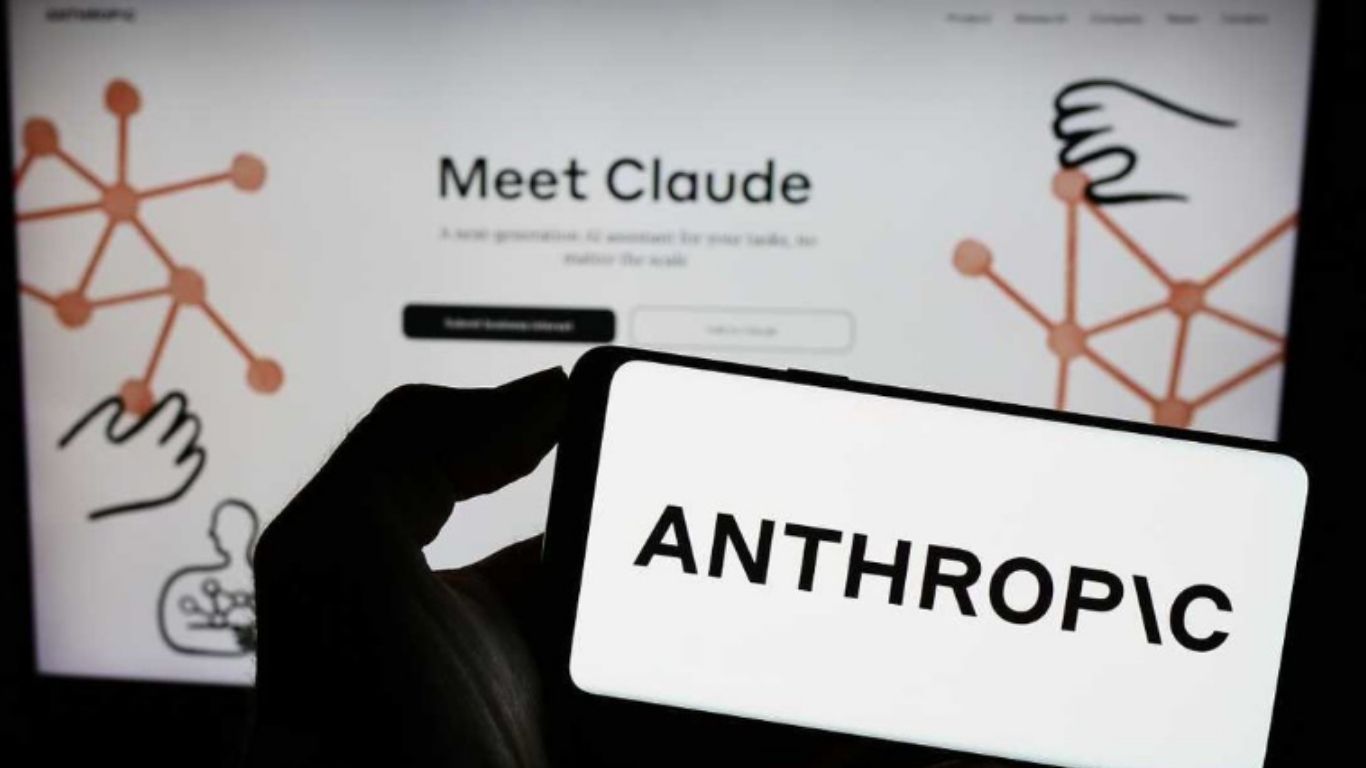
SAN FRANCISCO (Diya TV) — Anthropic is adding invisible watermarks to content created by its Claude chatbot. The move could make it easier for users, schools and businesses to identify AI-generated work.
The company announced the change this week as AI companies face growing pressure to improve transparency. Anthropic joins OpenAI and Google in developing ways to show when people use artificial intelligence to create digital content.
The new system will add machine-readable marks to text from supported Claude models. It will also add digital provenance information to certain files. Anthropic says the system will launch with new Claude models released in the European Union on or after Aug. 2.
However, the change will not stay limited to Europe. Anthropic says it will apply the marking system to supported Claude services worldwide. These services include the Claude platform, API, Claude Code, Claude Cowork and Claude Tag.
For text, Claude will place an invisible pattern directly into the words it generates. Users will not see the mark, and Anthropic says it will not change the meaning, quality, or readability of the text.
The watermark can also travel with text. For example, it can remain when users copy and paste Claude-generated writing into another document. In some cases, the signal may survive editing as well.
Still, Anthropic warns users not to treat the watermark as absolute proof that Claude created a piece of writing. People can use Claude to proofread, translate, summarize, or edit text that they wrote themselves. As a result, original human writing could also contain a Claude watermark after processing.
The system has another limitation. Heavy editing can remove the watermark. Paraphrasing, translation, or combining the text with other material can also weaken the signal. Short passages may not contain enough text for the system to detect a reliable watermark.
Therefore, a positive result does not always mean that Claude created the original work. Likewise, a negative result does not prove that AI played no role.
Anthropic also plans to add signed provenance metadata to supported files. The company says the system will cover formats such as SVG, PNG and JPG. The metadata will follow the Coalition for Content Provenance and Authenticity, or C2PA, standard.
This information can show whether Claude processed a file. It can also indicate whether someone changed the file after Claude handled it.
Anthropic says it is working on support for existing Claude models. It also plans to offer tools that let users and third parties check for the watermarks.
The move follows similar efforts from other major AI companies. Google already uses its SynthID technology to place invisible watermarks in AI-generated text. OpenAI has also used SynthID for some AI-generated images and audio, although it has not publicly announced a comparable text detection system.
The push for AI content labeling has gained attention as generative AI becomes more common in schools, workplaces and online media. Students can use chatbots to produce essays, while professionals can use them to create reports, emails and other material.
For that reason, AI watermarking could become an important part of digital content verification. Yet the technology will not replace human judgment. Users will still need to consider how someone created, edited, and shared a piece of content.
Anthropic’s new Claude watermarking system offers another way to trace AI-generated material. At the same time, its limitations show why no single detection method can reliably determine the full history of digital content.