WASHINGTON (Diya TV) — White Americans are projected to become less than half of the U.S. population by 2050, marking a major demographic shift driven by immigration, migration patterns, and declining birthrates, according to new U.S. Census Bureau projections.
The data show the United States moving toward a more diverse population over the next several decades. Experts say the trend reflects long-term changes already visible in many states and major cities across the country. In 1980, white Americans made up about 80% of the U.S. population. Census projections show that the number will fall to 47% by 2050 and 44% by 2060. During the same period, the share of non-white residents is expected to continue rising.
The change would make non-white groups the majority in the United States for the first time.
Several states have already crossed the threshold where white residents no longer make up the majority of the population.
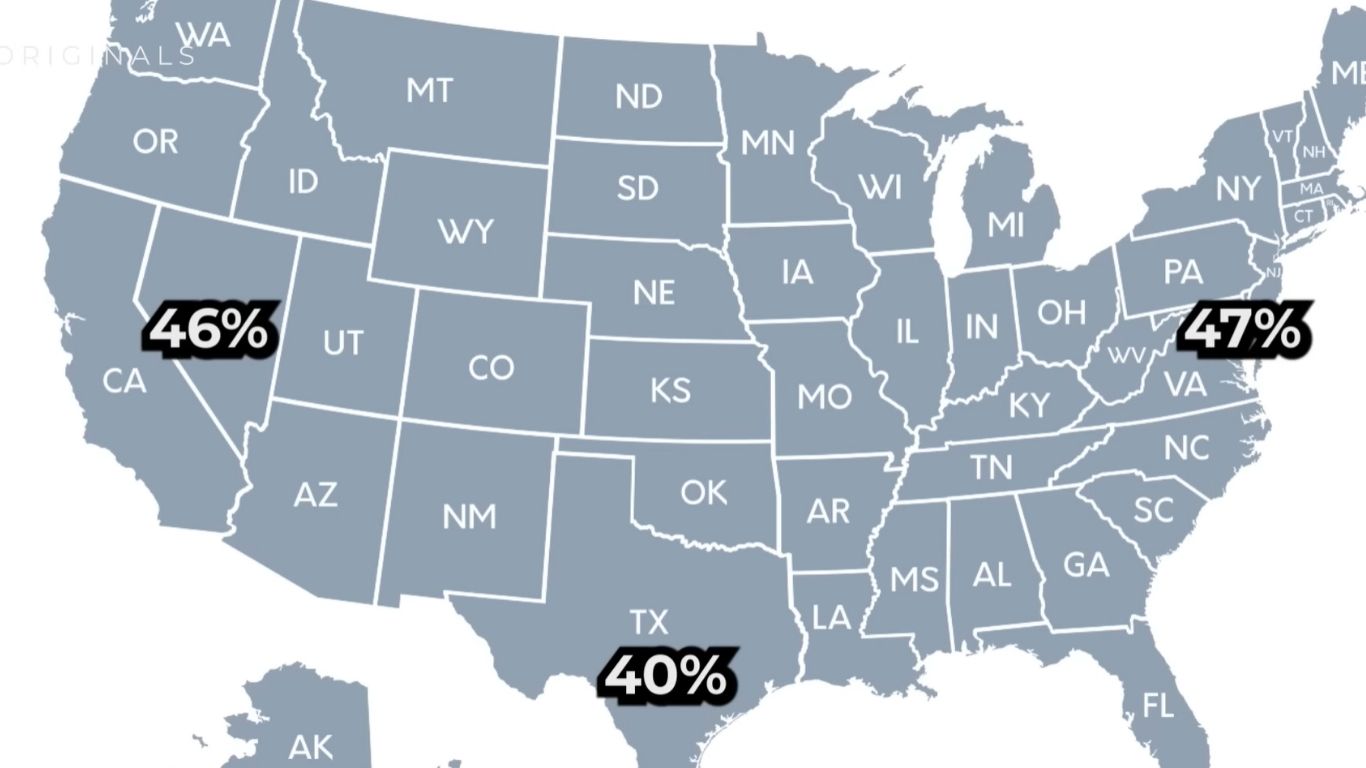
In 2000, only California, Hawaii, and New Mexico had white populations below 50%. Hawaii has never had a majority white population. At that time, white residents accounted for 46% of California’s population and 45% of New Mexico’s. By 2020, the shift had expanded to more states. Census figures showed white populations falling to 47% in Maryland, 46% in Nevada, and 40% in Texas. Projections now show even broader changes by 2050. New York is expected to see its white population decline to 46%. New Jersey is projected to fall to 37%, while Connecticut is expected to reach 45%.
Other states forecast to move below the 50% mark include Delaware at 47%, Florida at 39%, Georgia at 37%, Arizona at 43%, Illinois at 49%, Oklahoma at 49%, and Washington state at 49%. The projections suggest the trend will continue beyond 2050. By 2060, white residents are expected to become a minority or near-minority in 24 states. Alaska is projected to reach 50% white population by 2060. Louisiana is expected to stand at 51%, while Massachusetts could fall to 46%. Minnesota and Mississippi are both projected at 51%. North Carolina is forecast at 49%, Rhode Island at 47%, and Virginia at 47%.
Population experts say immigration remains one of the biggest factors behind the demographic transformation. International migration has increased population growth in many states, especially in the South and West. Internal migration between states has also reshaped communities and local economies. At the same time, birthrates among white Americans have declined in recent decades. Minority populations, including Hispanic, Asian, and multiracial groups, continue to grow faster in many parts of the country. The Census Bureau projections highlight how those trends combine to change the nation’s racial makeup over time. Researchers say the changes will likely influence politics, education, housing, and the labor force in the coming decades. Businesses and local governments are also expected to adapt to increasingly diverse populations.
Despite the national shift, some states are projected to remain overwhelmingly white for decades. West Virginia remains the least ethnically diverse state in the country. In 2020, about 89% of its population was white. By 2050, that number is expected to decline only slightly to 86%. Other rural states in parts of the Midwest and Appalachia are also projected to see slower demographic changes compared with fast-growing states such as Texas, Florida, and Arizona. Experts say urban areas will continue leading most population growth and diversity trends.
The latest Census Bureau projections reflect decades of steady demographic change across the United States. Large metropolitan regions have already become more racially and ethnically diverse, especially among younger generations. Schools in many cities now serve student populations where no single racial group holds a majority. Analysts say the changing population could reshape consumer markets, voting patterns, and cultural trends nationwide.
The projections do not mean the white population will disappear or sharply decline in raw numbers in every state. Instead, they show faster growth among other racial and ethnic groups over time. By mid-century, the United States is expected to look far different from the country it was in 1980. Census experts say the numbers point to a nation becoming more multicultural with each passing decade.