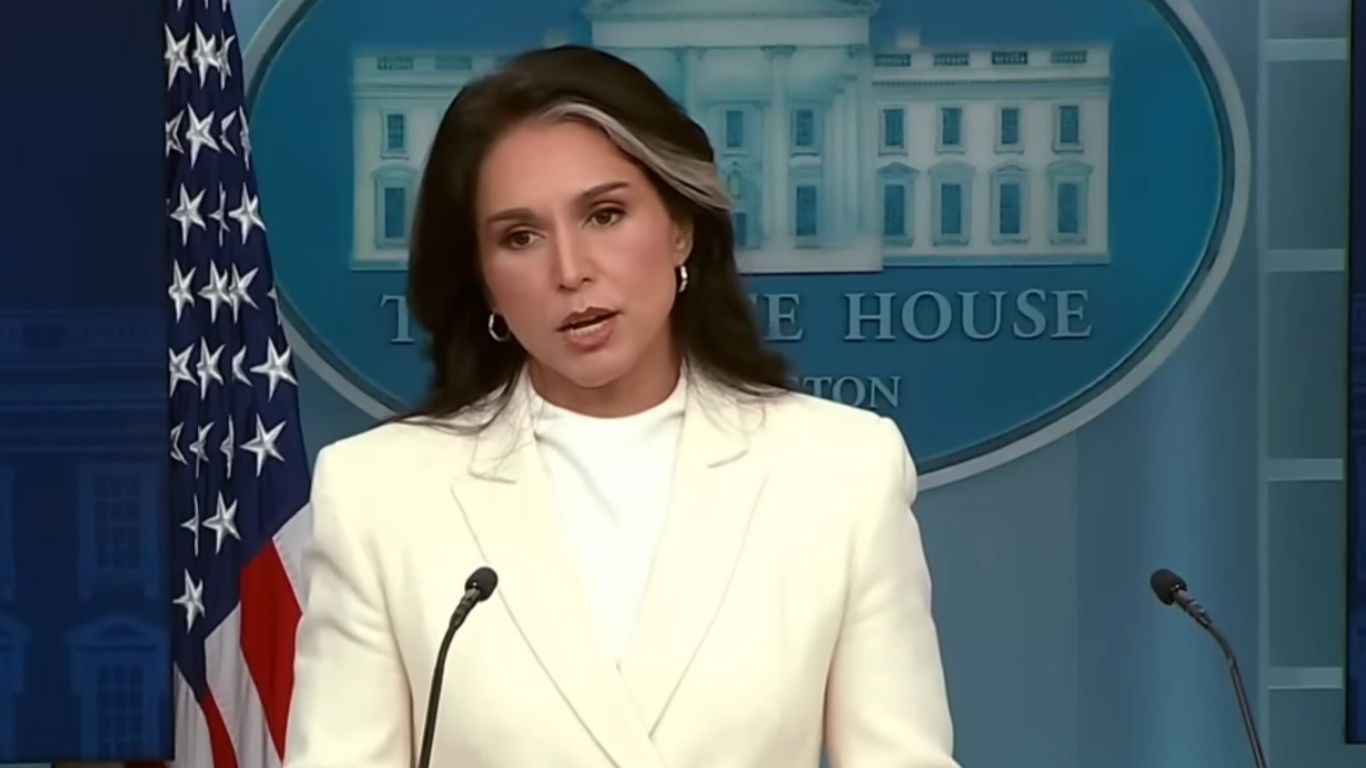
WASHINGTON (Diya TV) — Director of National Intelligence Tulsi Gabbard on Monday released declassified Intelligence Community documents that she says expose major flaws in the 2019 impeachment process against President Donald Trump. The documents, according to Gabbard, reveal what she described as a “false narrative” built on secondhand information and procedural failures within the Intelligence Community. The release has reignited debate over the origins and handling of the impeachment inquiry tied to Trump’s July 2019 call with Ukrainian President Volodymyr Zelensky.
In a public statement, Gabbard accused intelligence officials of misusing their authority. She said “deep state actors” created a misleading account that Congress later used to justify impeachment proceedings. Gabbard also criticized former Intelligence Community Inspector General Michael Atkinson. She claimed he failed to follow proper procedures and allowed political bias to influence his actions.
“Inspector General Atkinson failed to uphold his responsibility,” Gabbard said. “He put political motivations over the truth.”
She argued that the case highlights broader concerns about the politicization of intelligence agencies and the whistleblower system.
The declassified records raise new questions about how the whistleblower complaint moved through official channels. According to Gabbard, Atkinson relied heavily on secondhand accounts rather than direct evidence. Her office said Atkinson interviewed only four individuals during the review. None had firsthand knowledge of Trump’s phone call with Zelensky. One interviewee reportedly had ties to earlier intelligence work and professional connections within the FBI.
Gabbard also said the whistleblower had prior contact with Democratic lawmakers before filing the complaint. She noted that the individual identified as a registered Democrat and had professional links to former Vice President Joe Biden. The complaint later became central to the impeachment inquiry led by House Democrats.
A key issue involves Atkinson’s decision to label the complaint as an “urgent concern.” Gabbard said that the designation did not meet legal standards. She stated that the Department of Justice had advised that the complaint did not qualify under the required definition. The law limits such concerns to intelligence activities, not presidential conduct.
Despite that guidance, Atkinson forwarded the complaint to Congress and made a criminal referral to the Justice Department. Officials later determined the referral did not support criminal charges against Trump. Gabbard also said Atkinson did not seek access to a transcript of the call, which critics argue was a basic investigative step.
The documents also highlight changes to whistleblower procedures at the time. Gabbard’s office said the Intelligence Community removed a requirement for firsthand knowledge shortly after the events in question. She argued that the change made it easier for complaints based on indirect information to move forward. Critics say this shift may have influenced how the Trump case unfolded.
The impeachment process gained momentum in 2019 under then-House Speaker Nancy Pelosi and House Intelligence Committee Chairman Adam Schiff. Lawmakers cited the whistleblower complaint and related testimony as the basis for launching the inquiry. The House later voted to impeach Trump. The Senate ultimately acquitted him, ending the trial without removal from office.
Gabbard said releasing the documents supports transparency and accountability in government. She argued that exposing alleged misconduct will help prevent future abuses of power.
“Exposing these tactics strengthens our democratic system,” she said.
The release has drawn mixed reactions. Supporters of Trump say it confirms long-standing concerns about political bias within federal agencies. Critics argue the documents do not change the core facts that led to impeachment.
The debate reflects ongoing divisions over the role of intelligence agencies and the limits of oversight in politically sensitive investigations. As more details emerge, the newly declassified records are likely to fuel continued scrutiny of one of the most contentious episodes in recent U.S. political history.