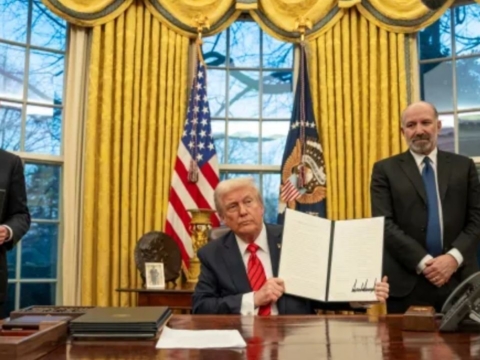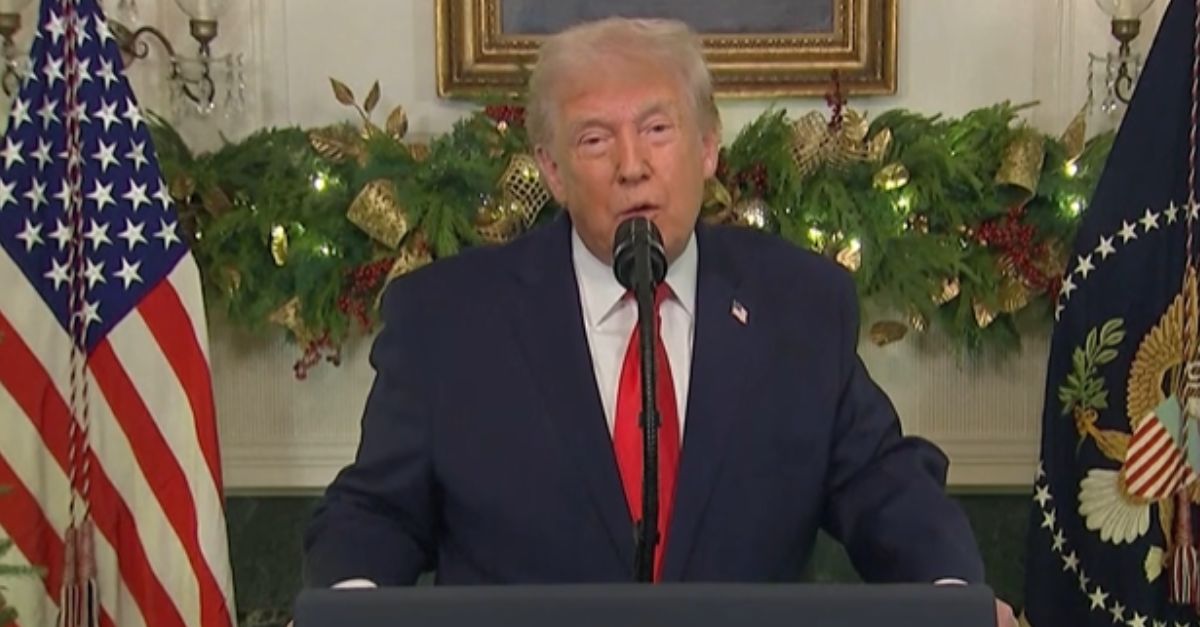
WASHINGTON (Diya TV) — President Donald Trump’s announcement of a $1,776 “Warrior Dividend” for U.S. service members before Christmas sparked headlines and praise. But the funding source behind the payments tells a different story from the one the president outlined during his televised address.
While Trump suggested the money came largely from tariff revenues, the payments are instead being issued from a military housing supplement that Congress approved months ago. The funds were already allocated as part of a sweeping tax and spending package signed into law in July.
Trump announced last Wednesday that more than 1.45 million active-duty service members would receive $1,776 checks before Christmas. He framed the payments as a special bonus and tied the amount to the year 1776, honoring the nation’s founding.
“One million, four hundred and fifty thousand military servicemembers will receive a special ‘warrior dividend’ before Christmas,” Trump said. “In honor of our nation’s founding in 1776, we are sending every soldier $1,776.”
The Pentagon confirmed that many troops have already received the payments.
Despite Trump’s comments, administration officials later clarified that the payments are not funded by tariff revenue. Instead, the Pentagon is disbursing the money from a $2.9 billion military housing supplement.
That supplement was included in Trump’s “One Big Beautiful Bill Act,” which extended and expanded tax cuts and adjusted housing allowances for service members. A senior administration official said the president directed Secretary of War Pete Hegseth to issue the funds as a one-time boost to the basic allowance for housing.
The payments apply to active-duty service members in pay grades O-6 and below. Eligible reservists must have served at least 31 days on active-duty orders as of Nov. 30. The total cost of the program is expected to reach about $2.6 billion.
Trump credited tariffs as a major reason the government could afford the payments. He said import taxes had brought in more revenue than expected and helped support the dividend.
“We made a lot more money than anybody thought because of tariffs,” Trump said. “Nobody deserves it more than our military.”
The claim fits into a broader message Trump has pushed since imposing sweeping tariffs on imports in April. He has repeatedly argued that tariffs protect U.S. industries, bring manufacturing back home, and raise revenue for the federal government.
Members of the U.S. Coast Guard will also receive a one-time payment, though through a different process. The Department of Homeland Security announced Thursday that Coast Guard members will receive $2,000 “Devotion to Duty” payments.
Unlike the Warrior Dividend, these payments are taxable. Most recipients will take home an amount close to $1,776 after taxes. DHS said the funds will be classified as special duty pay and covered by a government funding measure Trump signed in November after a 43-day shutdown.
The military bonuses are part of a longer pattern. Trump has floated several ideas to send direct payments to Americans using tariff revenue. At times, he suggested every taxpayer could receive a $2,000 tariff dividend.
However, analysts have questioned whether the math works. A November analysis by the Tax Foundation estimated Trump’s tariffs would raise about $158.4 billion in 2025 and $207.5 billion in 2026. That total falls far short of what would be needed to send $2,000 payments nationwide while also reducing the federal deficit. Trump also briefly proposed a “DOGE dividend” earlier this year, tied to cuts made by the Department of Government Efficiency. That idea did not advance.
The announcement comes as Trump faces pressure over high prices. Inflation peaked at a four-decade high in June 2022 during President Joe Biden’s term and later eased. But it has remained elevated under Trump, partly due to tariffs that raised import costs. Economists warn that sending large cash payments could further fuel inflation by increasing consumer spending. Republicans made similar arguments in 2021 when criticizing pandemic stimulus checks under Biden.