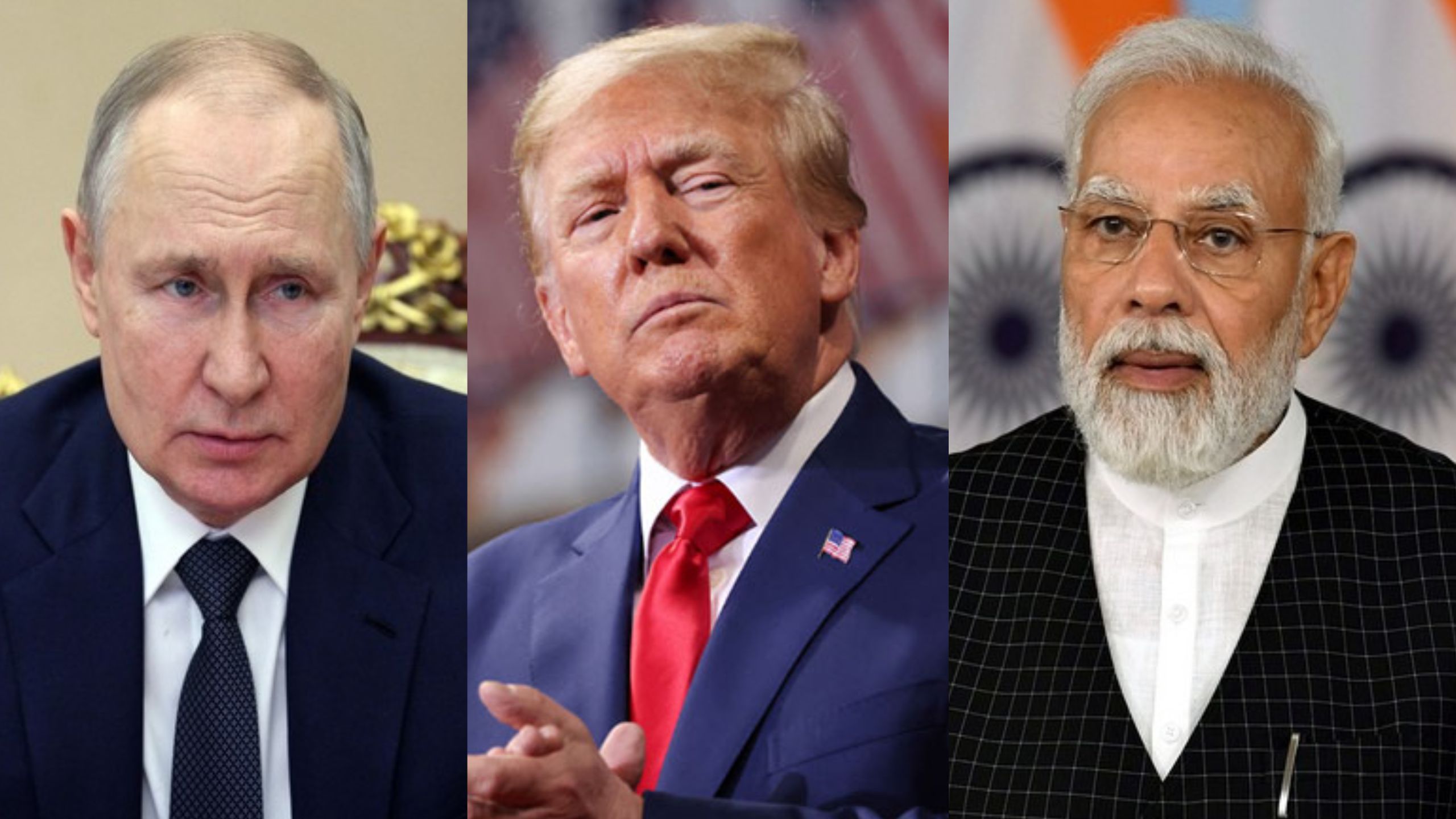
WASHINGTON (Diya TV) — The U.S. Treasury Secretary has warned that Washington could increase secondary tariffs on India, with the decision hinging on President Donald Trump’s upcoming meeting with Russian President Vladimir Putin. Treasury Secretary Scott Bessent told Bloomberg TV on Wednesday that the U.S. may raise penalties on India if talks in Alaska fail to deliver progress on ending the war in Ukraine.
“We’ve put secondary tariffs on Indians for buying Russian oil. And I could see, if things don’t go well, then sanctions or secondary tariffs could go up,” Bessent said.
The Trump administration has already imposed a 25% tariff on Indian imports and an additional 25% penalty on oil and weapons bought from Russia. With the new measures, Indian goods now face tariffs as high as 50%.
India has strongly rejected the move. Officials in New Delhi described the tariffs as “unfair, unjustified, and unreasonable.” They said the country’s oil purchases were tied to national energy security.
Trade negotiations between India and the U.S. stalled earlier this month after Washington raised concerns over Russian crude imports. Trump also accused New Delhi of indirectly funding Moscow’s war in Ukraine. Talks are set to resume later this month, with U.S. negotiators scheduled to arrive in India on Aug. 25. That is just two days before the 50% tariff rate takes effect.
But experts warn that discussions may again hit a roadblock. India has refused to ease restrictions on its agriculture and dairy markets. That position has long been a sticking point in bilateral trade.
The tariffs, set to begin on Aug. 27, would make India the most heavily taxed U.S. trading partner in Asia. Analysts say the move could act like an embargo, cutting into key export industries such as textiles and jewelry. Some predict India’s economic growth could drop by as much as half a percentage point.
Trump and Putin are meeting Friday in Anchorage, Alaska. The White House says the goal is to push for a ceasefire in Ukraine, where fighting has raged for more than three years. Trump has warned of “severe consequences” if Russia refuses to agree to a peace plan. He has also floated the idea of a territorial swap, though Ukraine has rejected any deal that would cede land to Moscow.
Ukrainian President Volodymyr Zelenskyy has said his government must be directly involved in any talks. European officials also worry that a one-on-one meeting could produce a deal that benefits Russian interests.
Bessent urged European allies to back Washington’s stance. “The Europeans need to join us in these sanctions. The Europeans need to be willing to put on these secondary sanctions,” he said. India’s imports of discounted Russian crude have climbed sharply since the war began. Russian oil made up just 3% of India’s total imports in 2021 but surged to nearly 40% by 2024.
Indian officials defend the purchases as essential. They argue the country, home to more than 1.4 billion people, must secure affordable energy to shield millions from rising global fuel prices. But Washington views the imports as a challenge to its sanctions strategy. The U.S. has tried to cut Moscow’s revenue streams while pressing allies to support Ukraine.
Trump has long criticized India’s trade practices. He has called the country a “tariff abuser” and promised to cut the $45 billion U.S. trade deficit with Asia’s third-largest economy. Bessent added fuel to the debate this week by describing India as “a bit recalcitrant” in trade negotiations. The White House says the tariffs are part of a broader strategy to boost the U.S. economy and push for fairer global trade.
For India, the coming weeks could prove critical. If Trump’s talks with Putin collapse, pressure on New Delhi may intensify. With tariffs already set at 50%, industries dependent on U.S. markets face an uncertain future.
The Trump-Putin meeting in Alaska could reshape both the Ukraine war and U.S.-India trade ties. A breakthrough on peace may ease economic tensions, but a failed summit could deepen the standoff.
India insists its energy security comes first. Washington says the stakes go beyond oil, framing the issue as part of a global push against Moscow. As the Aug. 27 deadline approaches, the trade relationship between the U.S. and India stands at its most fragile point in years.