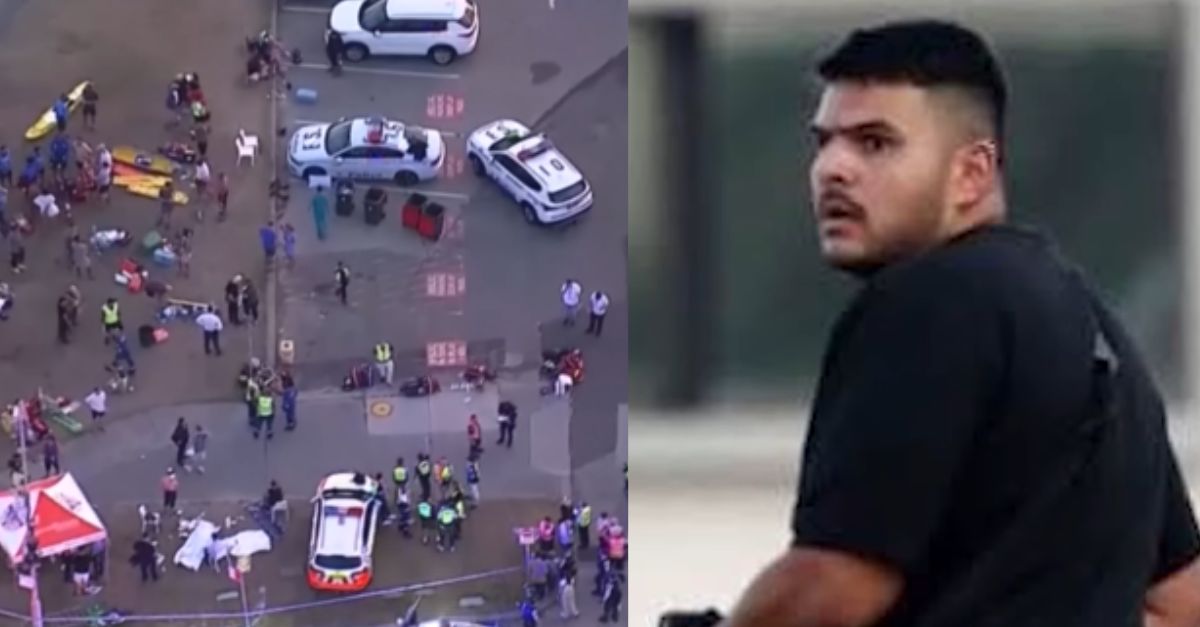
SYDNEY, Australia (Diya TV) — Australian authorities are questioning the family of Sajid Akram, a man originally from Hyderabad, India, after he and his son, Naveed, carried out one of the nation’s deadliest mass shootings. The attack at Bondi Beach targeted people celebrating the Jewish festival of Hanukkah, leaving 15 dead and 42 others injured.
Sajid Akram, 50, and his 24-year-old son opened fire on Sunday, police said. Naveed Akram is listed as an Australian citizen on immigration records. Australian Prime Minister Anthony Albanese said the pair were driven by “Islamic State ideology” and that the attack aimed to spread fear among Jewish communities.
Telangana police confirmed that Sajid Akram is originally from Hyderabad. Authorities said he migrated to Australia in November 1998 in search of employment. The police noted that Sajid had limited contact with family in India over the past 27 years and visited only six times, mainly for family matters or property issues. He did not travel to India when his father passed away.
Telangana police said Sajid had no adverse record in India and that his family had no knowledge of his radical beliefs. “The factors that led to the radicalisation of Sajid Akram and his son, Naveed, appear to have no connection with India or any local influence in Telangana,” the statement added.
Before the shootings, the pair reportedly traveled to the Philippines. Australian media reported that authorities are investigating whether they met Islamist extremists during the trip. Manila’s immigration department confirmed the Akram duo spent almost all of November in the Philippines, with their final destination listed as Davao, a province known for Islamist insurgencies.
Authorities discovered a car registered to Naveed near the beach, containing improvised bombs and two homemade Islamic State flags, New South Wales Police Commissioner Mal Lanyon said. Prime Minister Albanese said Naveed, an unemployed bricklayer, was flagged by Australia’s intelligence agency in 2019. However, he was not considered an imminent threat. Albanese explained that intelligence officials had interviewed Naveed, his family, and people around him, but he was not a person of concern at the time.
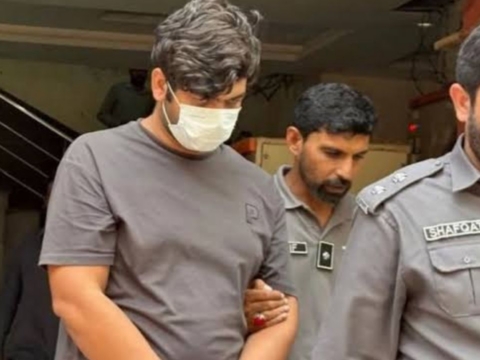
On the day of the attack, Naveed reportedly told his mother he was going on a fishing trip. Instead, he and his father hid in a rental apartment before launching the shooting. Armed with long-barrelled guns, the pair fired at beachgoers and a nearby park for roughly 10 minutes. Police fatally shot Sajid during the attack, while Naveed remains in a coma under police guard. The victims include a 10-year-old girl and two Holocaust survivors. Authorities said 42 others were hospitalized with gunshot wounds and injuries.
The tragedy has sparked debate over Australia’s gun laws. Sajid Akram legally owned six guns, and national leaders have agreed to review and tighten gun ownership rules. Australia has experienced a few mass shootings since the 1996 Port Arthur attack, which led to strict gun control measures, including a buyback scheme and limits on semi-automatic weapons. However, critics say laws may not be keeping pace with online gun sales and the rise in private ownership.
Many Australians have expressed concern about rising antisemitism. Israel’s ambassador to Australia, Amir Maimon, said the country has seen an increase in antisemitic incidents. Israeli Prime Minister Benjamin Netanyahu linked Australia’s recognition of Palestinian statehood earlier this year to heightened tensions.
In the wake of the Bondi Beach attack, more than 7,000 Australians lined up to donate blood, according to the Red Cross. A makeshift memorial next to the beach has grown, with mourners placing flowers and paying tribute to the victims.
Prime Minister Albanese called the attack a stark reminder of the dangers posed by extremist ideology and said authorities are working to prevent such tragedies in the future.