WASHINGTON (Diya TV) — A high-profile civics competition hosted by the U.S. Department of Education has sparked questions about fairness after a Connecticut student challenged the scoring of his answers.
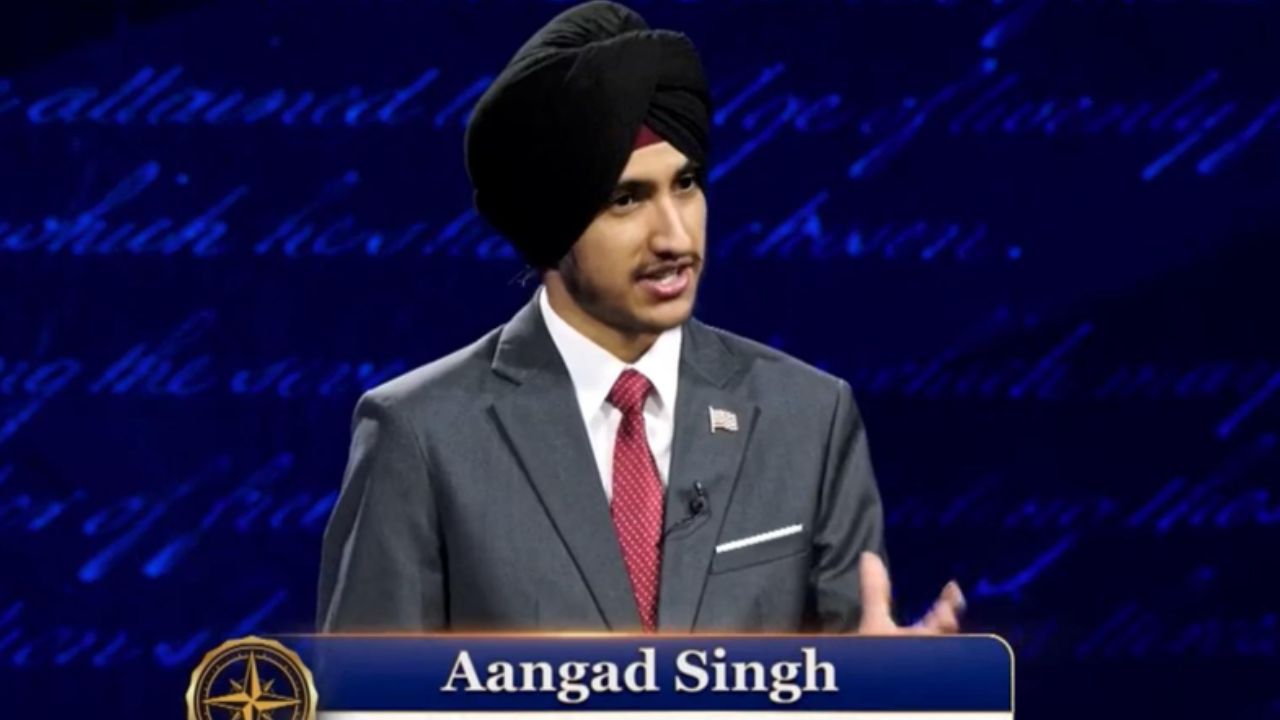
Fifteen-year-old Aangad Singh said he spent months preparing for the Presidential 1776 Award, a national civics competition created to test students on the U.S. Constitution. His family even skipped vacations so he could focus on studying. They also took extra precautions during an illness at home to help him stay healthy before the event.
The competition reached its televised finale at the Kennedy Center in Washington on June 9. TV personality Mario Lopez hosted the program. Aangad competed against seven other students. During the contest, judges ruled that he answered several questions incorrectly. As a result, he did not advance to the next round.
However, Aangad and his family later questioned the scoring. They said at least one of his answers deserved credit. They also believe a different score could have allowed him to continue in the competition. Therefore, they asked the Education Department to review the results.
The issue gained national attention after NOTUS reported the family’s concerns. Soon afterward, members of the Congressional Asian Pacific American Caucus criticized the contest on X. The group questioned why judges marked what they described as correct answers as incorrect. Lawmakers also criticized the department for refusing to review the scoring and described the competition as “rigged.”
Still, constitutional law experts who reviewed the disputed questions remain divided. Some believe the judges made the correct decisions. Others argue that at least one response may have deserved a different interpretation. As a result, the disagreement continues without a clear consensus.
Aangad said students who answer questions correctly should receive credit. He added that he joined the competition because he wanted to deepen his understanding of the country’s founding principles instead of simply winning a prize.
“I did it mainly for the learning aspect of it, going deep into our history,” Aangad said in an interview with The Washington Post.
His father, Bhalindar Singh, said the family immigrated from India in the early 2000s with strong faith in the American system. He said they always follow the law, pay taxes, and work hard. Therefore, they expected the same commitment to fairness from public institutions.
After watching the televised broadcast on June 30, the family discussed how to respond. Eventually, they sent an email to the Education Department on July 14. They requested a review of the scoring process and asked for more information about the judges’ decisions.
According to the family, the department did not respond for several days. Then, an agency official replied by email. The official thanked Aangad for participating and pointed to the contest rules, which state that judges’ decisions are final and binding. The department did not announce any further review of the results.
The Presidential 1776 Award formed part of a broader effort to mark the nation’s semiquincentennial, or 250th anniversary. The Education Department introduced the civics competition earlier this year in partnership with a constitutional education organization. Students first completed an online multiple-choice exam. Next, successful participants advanced to an in-person oral round. Finally, the top contestants competed during the televised event at the Kennedy Center.
The contest also offered major rewards. The top three finalists shared $250,000 in scholarship money. In addition, they earned the opportunity to visit President Donald Trump in the Oval Office.